
Collections
The collections we care for
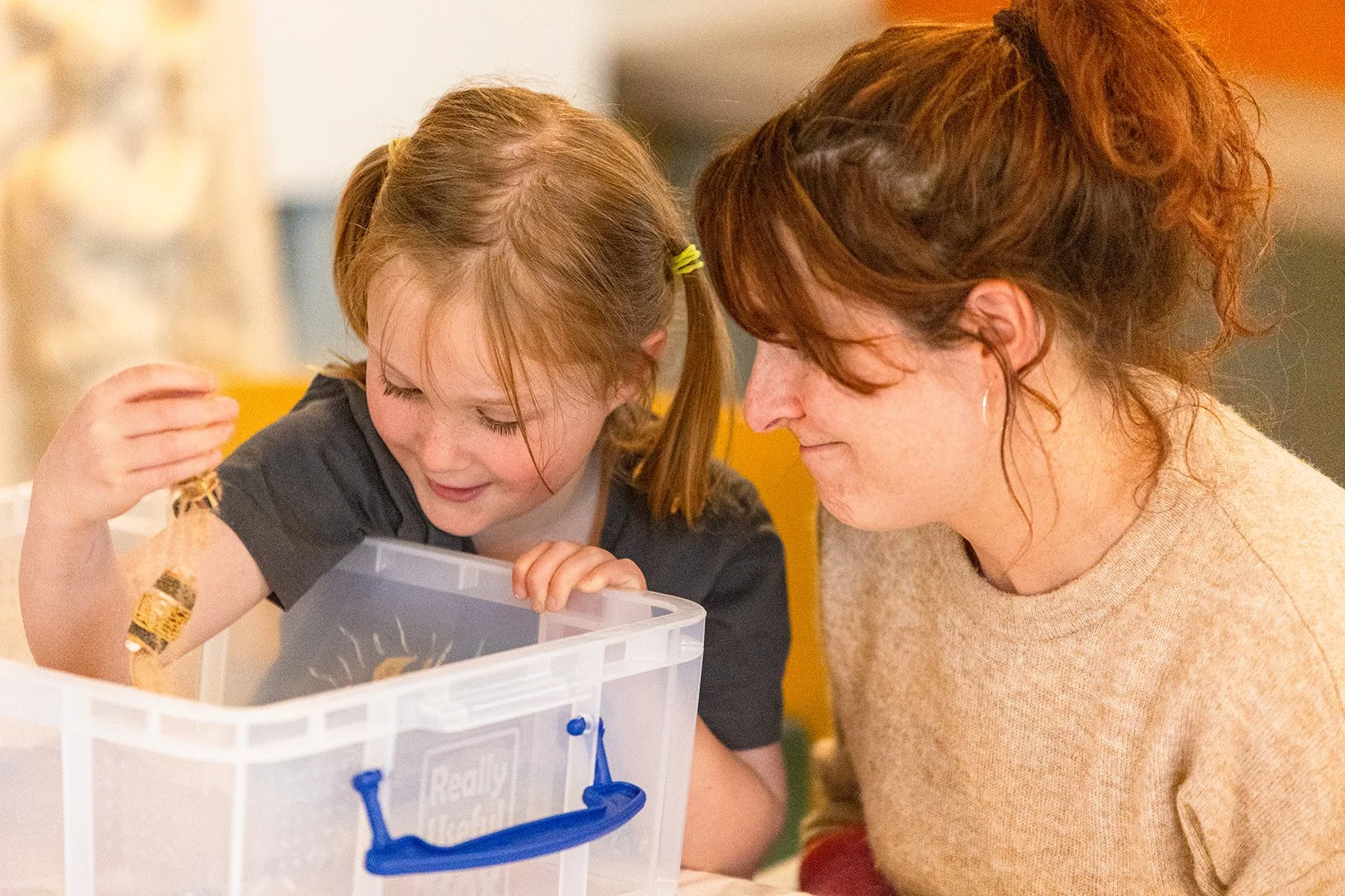
The collections we care for are far more than a series of objects in glass cases.
They tell rich stories about what it means to be human, provide connections between cultures and generations, and help us to better understand some of the most pressing issues of our time.
As one of the UK’s largest university museums, we provide a home for around 4.5 million objects across a variety of fields, but these aren’t our collections, they’re yours.
We look after them for the benefit of all and that’s why much of our work is focused on making collections more accessible, using them to connect communities with their cultural heritage, to foster understanding and belonging, and to underpin research that has a positive impact on the lives of people both locally and globally.
As part of this, it’s important we are honest about the origins of collections, in order to acknowledge harm but also to encourage healing. Although Manchester Museum was borne of civic pride, it was also borne of Empire, colonial violence and extraction, so while the collections housed here can undoubtedly spark joy and celebration, they can also cause pain.
Our work on repatriation, restitution and Indigenisation aims to recognise this. All of the collections at Manchester Museum are open to the possibility of unconditional return to communities of origin, but we have also worked hard to remove barriers to access by taking collections to schools, care homes and places of worship, putting our work at the heart of communities.
Through collaboration with those communities, we hope to use these incredible collections to better inspire future generations and ensure the Museum remains a rite of passage for future young Mancunians.
Explore our collections
-
![Gold-colored snake-shaped metal bracelet on a white surface.]()
ARCHAEOLOGY
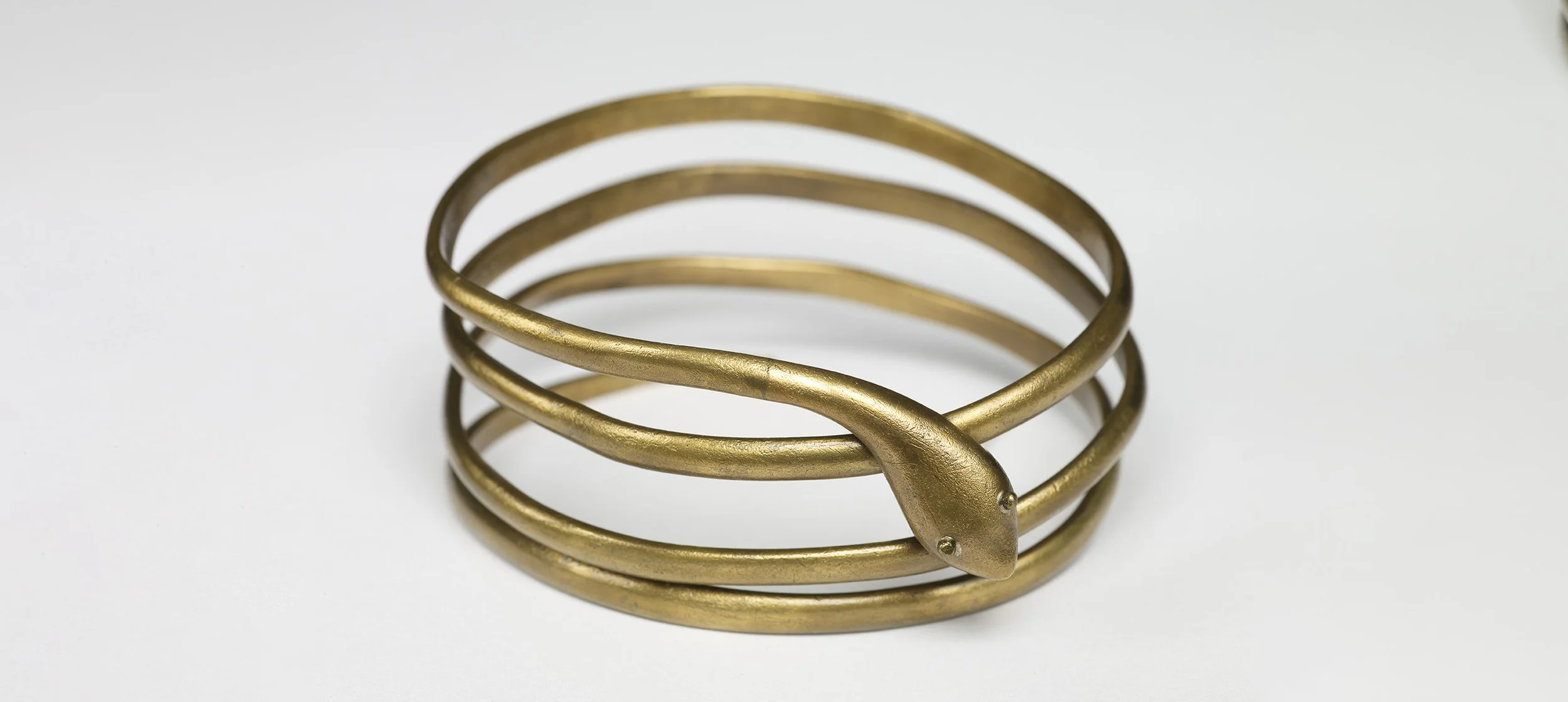
The Archaeology gallery asks important questions about who narrates the past with interventions addressing pressing societal challenges.
-
![Wooden arrow tips with painted faces and symbols, facing each other.]()
ARCHERY
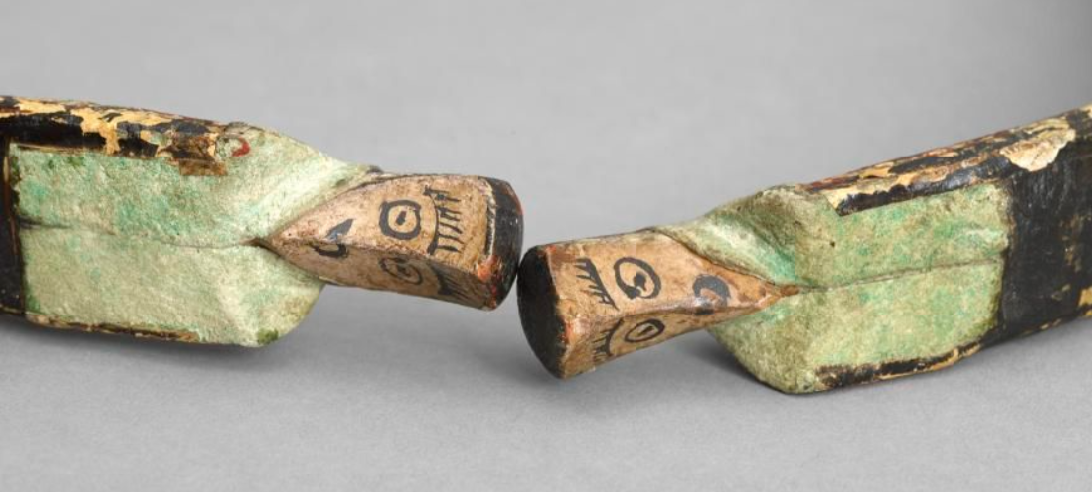
The core of the collection was donated in 1946 by Ingo Simon, a life-long researcher into the development of the bow, and a skilled and dedicated archer.
-
![Illustration of a red chrysanthemum flower, partially opened, with a yellow center, alongside a pink flower bud and a red flower petal.]()
BOTANY
The botanical collection forms a physical record of where plants and fungi have been found and encompasses around 750,000 specimens.
-
![Cross-section of a pink and brown mineral or gemstone with concentric circles and a rough outer edge.]()
EARTH SCIENCES
Fossil, meteorite, mineral and rock specimens from all over the world help us understand space, our planet and the diversity of life on Earth.
-
![A collection of various colorful butterflies, mainly blue, black, orange, and yellow, displayed on a wall.]()
ENTOMOLOGY
The Museum houses a wide range of collections, including Egypt and Sudan, archaeology, earth sciences, entomology, archery, botany, living cultures, zoology, numismatics, and the Vivarium.
-
![Ancient Egyptian-style sculpture of a deity with a lioness head holding an ankh, seated on a chair, made of greenish stone with weathered details.]()
EGYPT AND SUDAN
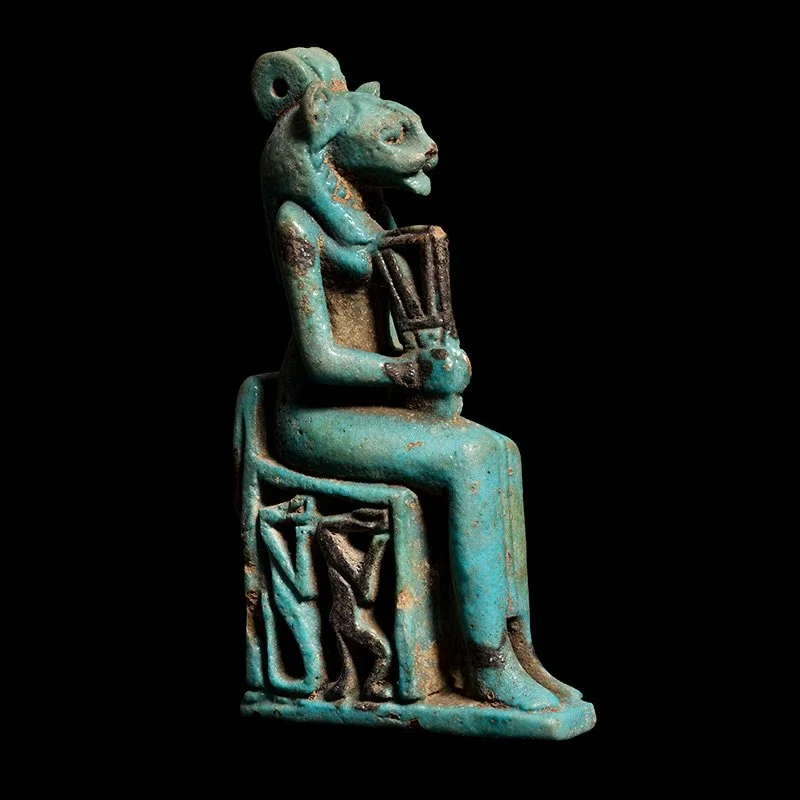
The outstanding collection of Egyptian and Sudanese objects cared for by the Museum is one of the largest in the UK. It illustrates both everyday life and preparations for the afterlife.
-
![Close-up of a Fiji banded iguana resting on a wooden surface.]()
HERPETOLOGY
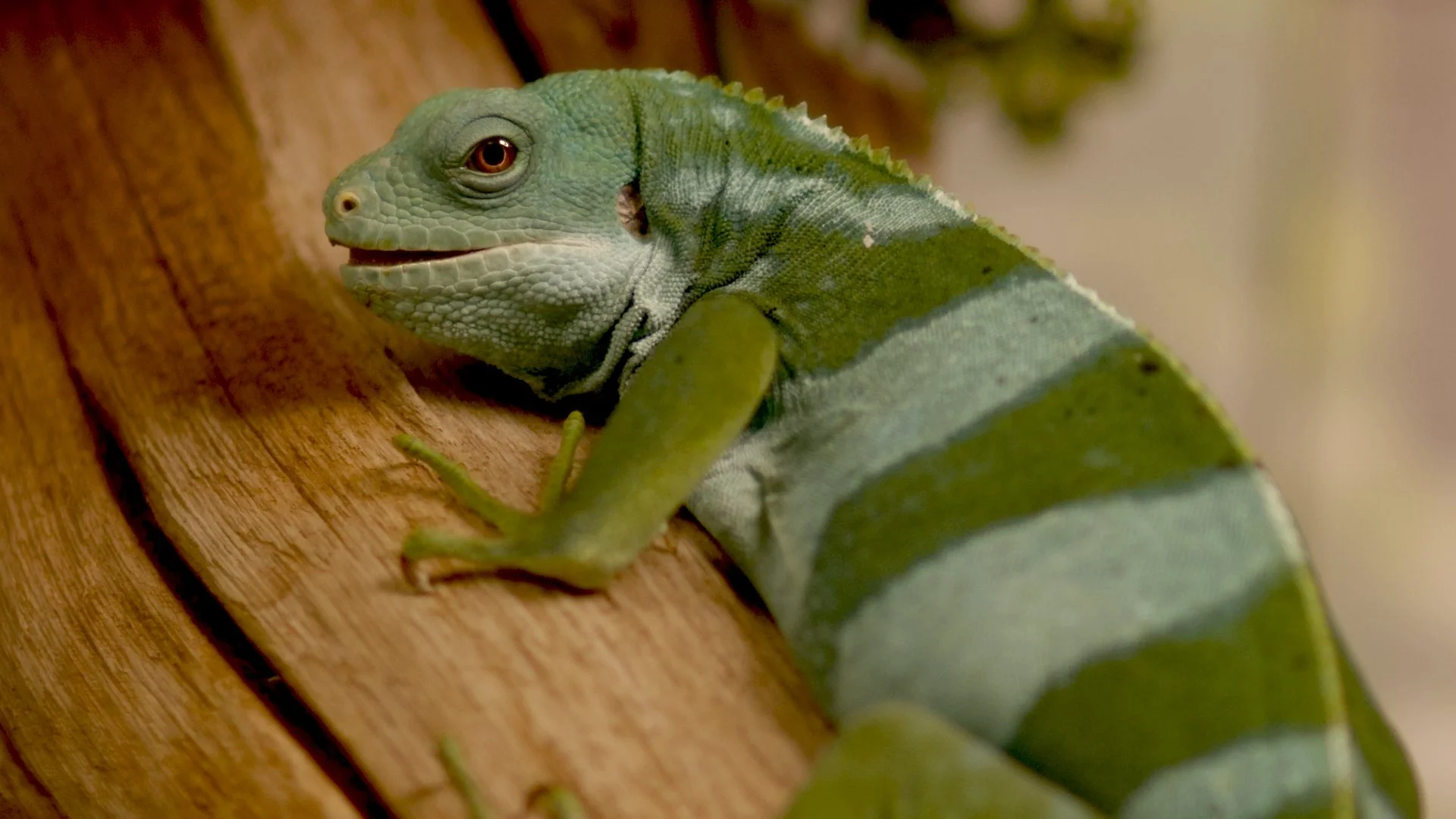
The Vivarium houses a collection of live amphibians and reptiles including many critically endangered species. It is unusual for a museum to care for live animals, but Manchester Museum has done so for 60 years, offering a unique opportunity to see rare and beautiful creatures and watch conservation in action.
-
![Close-up of a golden Buddha face sculpture with a dark background.]()
LIVING CULTURES
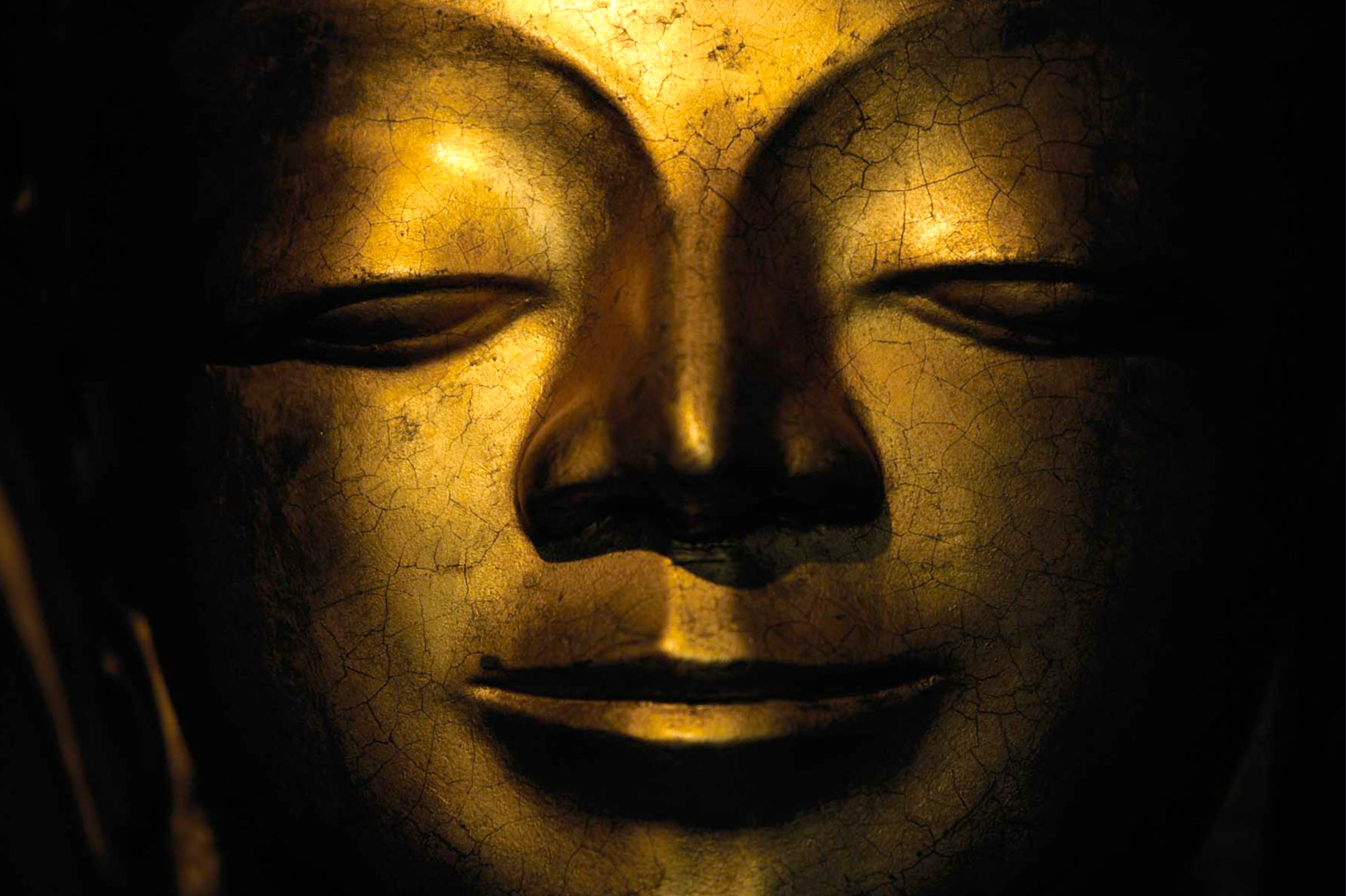
The Living Cultures collection features objects from around the world, with particular focus on objects from Caribbean, Africa diaspora, and Australia.
-
![A small, worn metal coin with greenish patina, featuring a figure holding a bow, and partially visible text on the left side.]()
NUMISMATICS
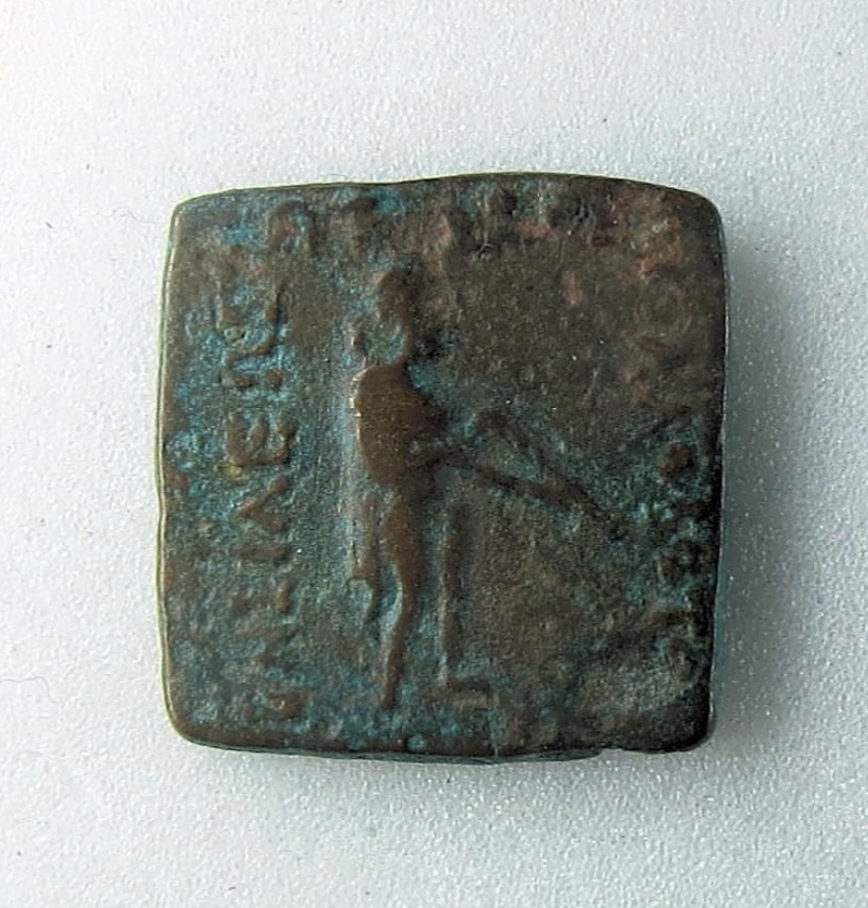
The Museum has a significant numismatics collection, which includes a large number of Roman coins found locally, a major portion of the Knott Mill hoard, and donations such as the William Sharp Ogden collection of Roman Alexandrian coins.
-
![Profile of a tiger with orange fur and black stripes, looking to the left.]()
ZOOLOGY
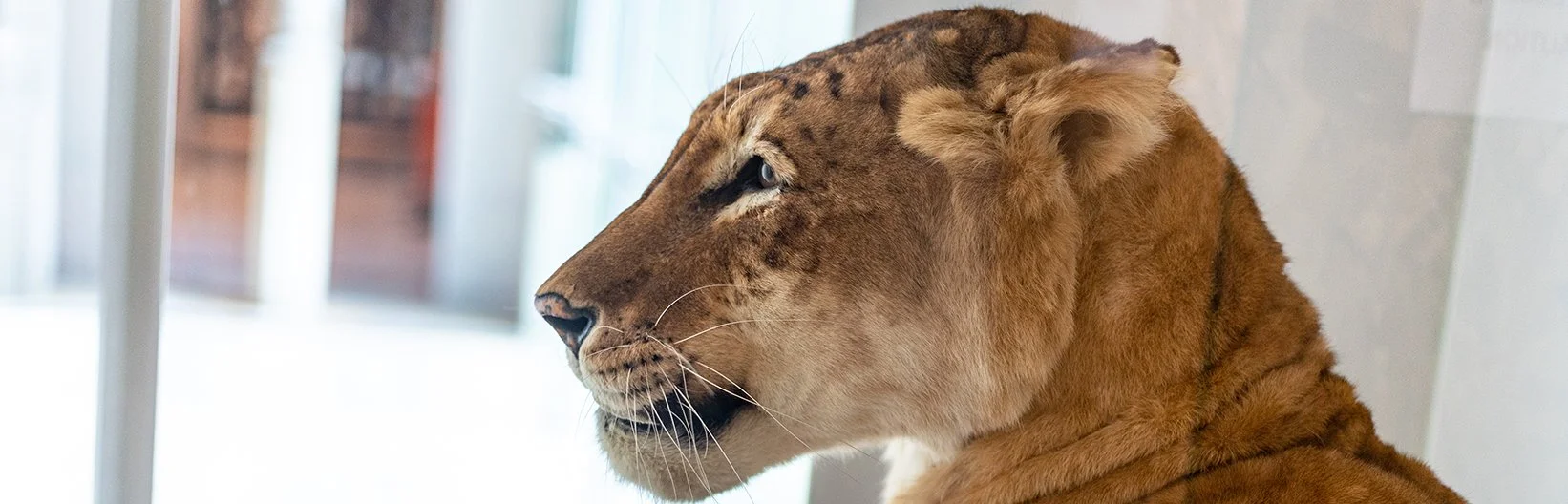
From aardvarks to zebras, whales to microscopic single-celled animals, the zoology collection includes about one million specimens, helping us to understand more about changes to biodiversity, environment and relationships between animals.


Collections access
Manchester Museum is home to 4.5 million objects across a wide range of collections, only a percentage of which are on display in our galleries. In order to encourage the widest possible access to our collections, we offer visits to our dedicated Research Studio for anyone wanting to view our collections in-person. Visits to our collections stores may also be offered where appropriate.
If you want to view the collections, whether for research, personal interest, art projects, or otherwise, please get in touch using the form below. Requests will be fulfilled according to the availability of the relevant curatorial staff; we therefore ask for plenty of advance notice to locate and prepare the material required. Please refer to our collections search and include as much detail as possible in your initial request so we can find material best suited for your visit.
The history of collections at Manchester Museum
The Museum was opened in 1887 to house collections that had belonged to the Manchester Natural History Society, whose museum in the city centre had closed c. 1872.
The origins of the collections housed at the Museum can be traced back to the formation of the Manchester Society for the Promotion of Natural History in the 1820s. The collections of the Manchester Geological and Mining Society were transferred in 1850. Following the decline of the Society, the collections were transferred to Owens College (now The University of Manchester) in 1867 and a museum was built in 1885 to house these collections.
Foundational collections and financial support came from early textile industrialist John Leigh Phillips whose success in textile manufacturing rested on cotton grown by enslaved people. At the height of British colonial power, the Museum’s collections grew significantly. The early 20th century collecting frenzy and the Museum’s role as a colonial repository saw botany, Egyptology, archaeology and anthropology collections grow at pace.
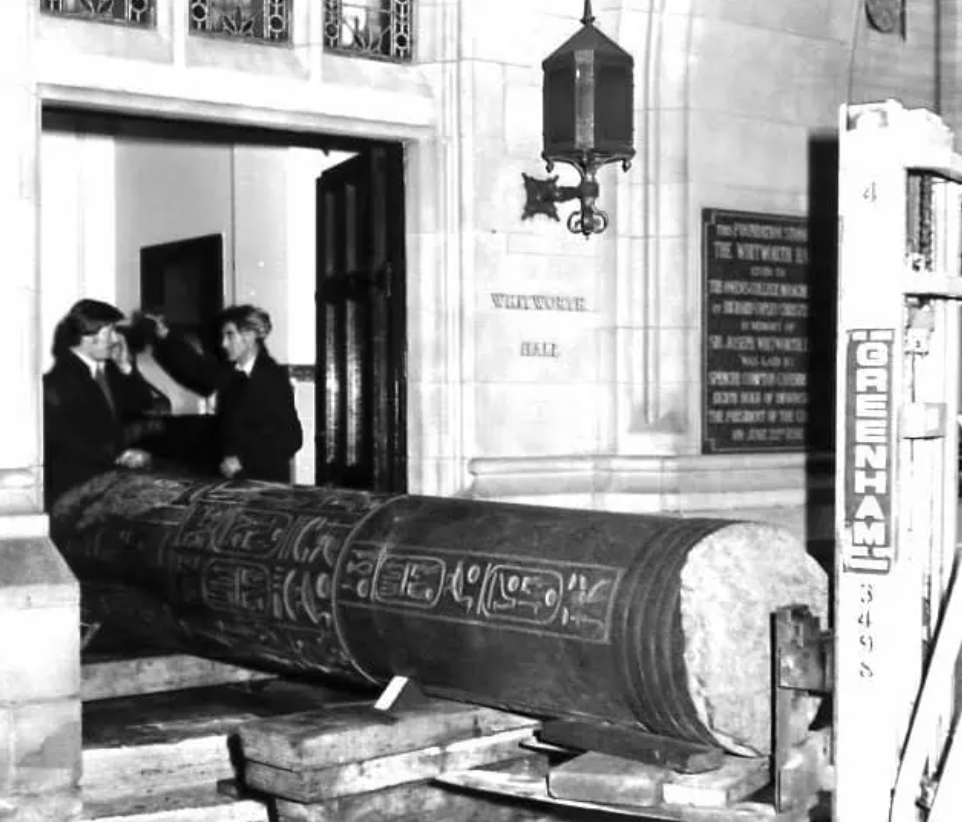
THE MUSEUM’S ANCIENT EGYPTIAN COLUMN ARRIVES ON SITE.

JAMES CRAYTHORNE STANDS ALONGSIDE MAHARAJAH
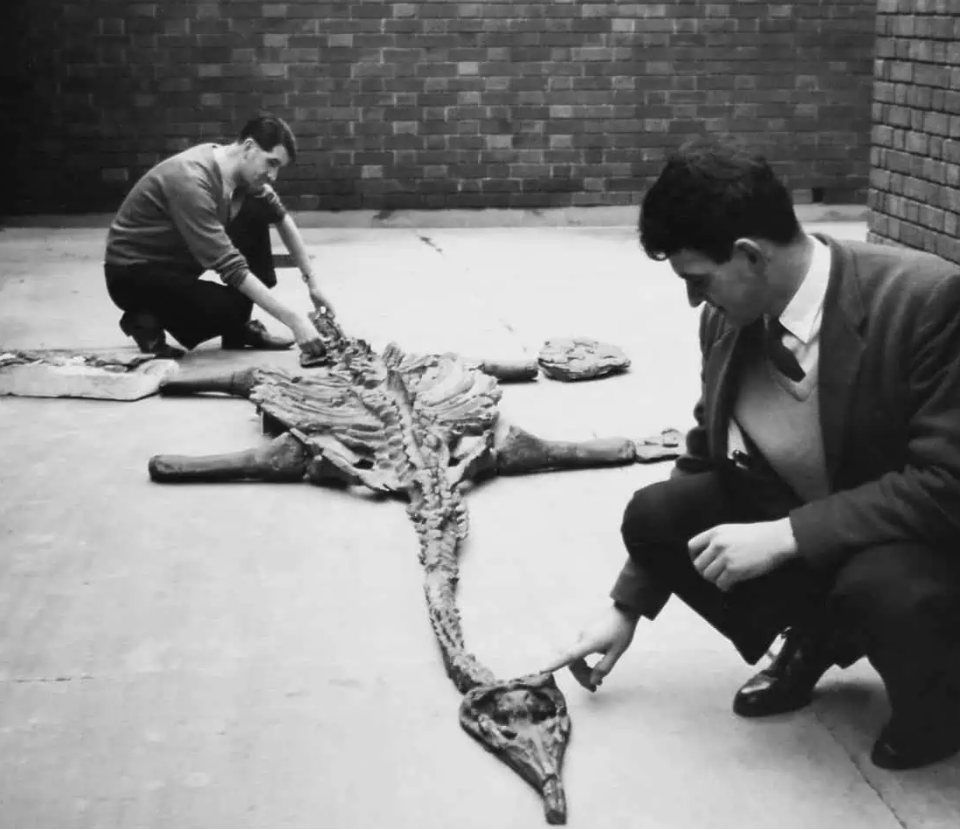
MUSEUM CURATORS PIECE TOGETHER THE SKELETON OF A PLESIOSAURUS
A new extension was built for the archaeology and Egyptology collections in 1912, and another for the ethnology (now living cultures) collection in 1927.
The collections have been developed mainly through donation, bequest and field collecting or research by staff in both the Museum and the wider University. Collecting activity was highest during the late 19th and early 20th centuries, although collecting has continued at lower levels in all collecting areas since that time.
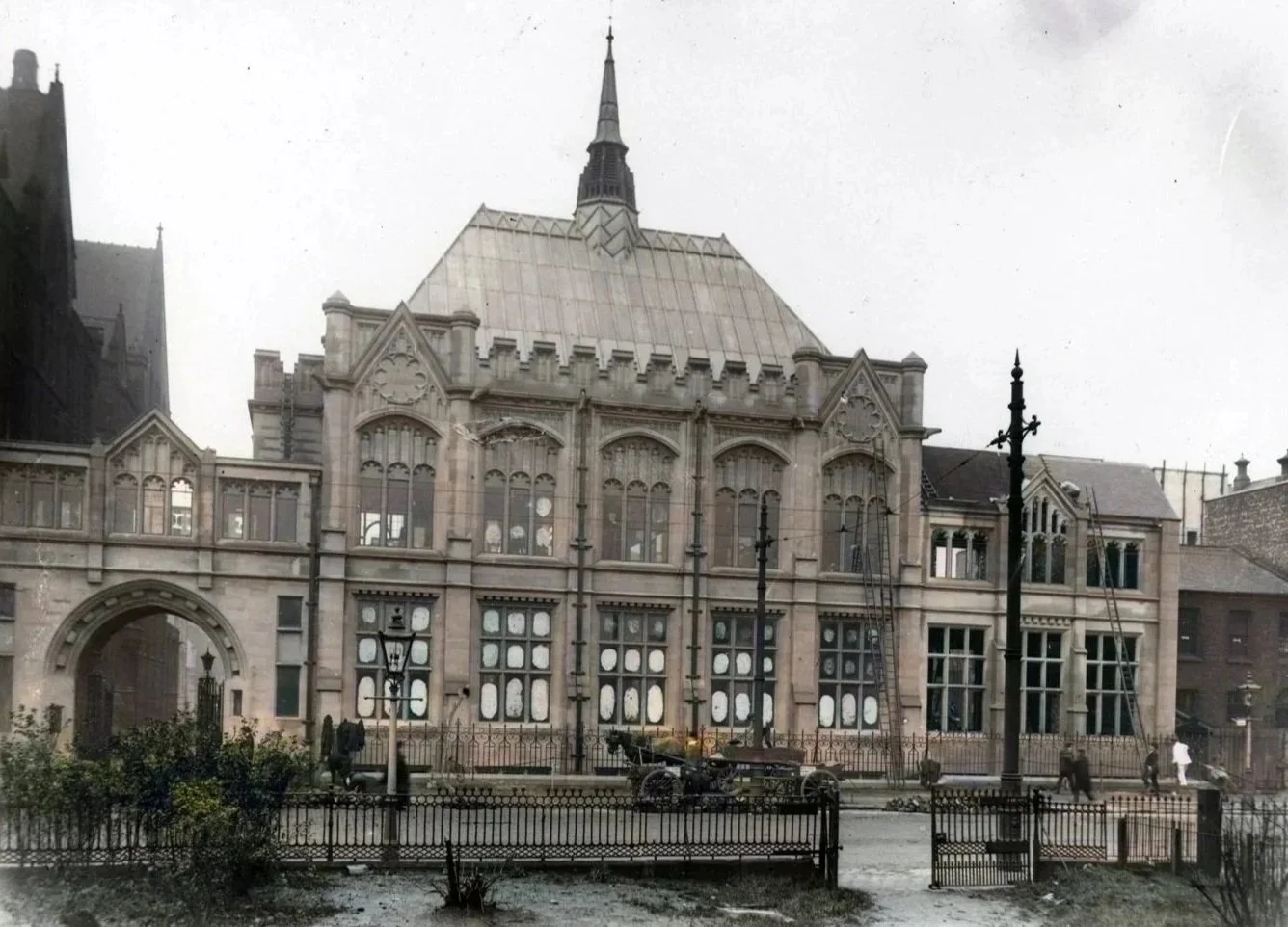
THE MUSEUM’S EXTENSION AND BRIDGE WERE COMPLETED IN 1912.
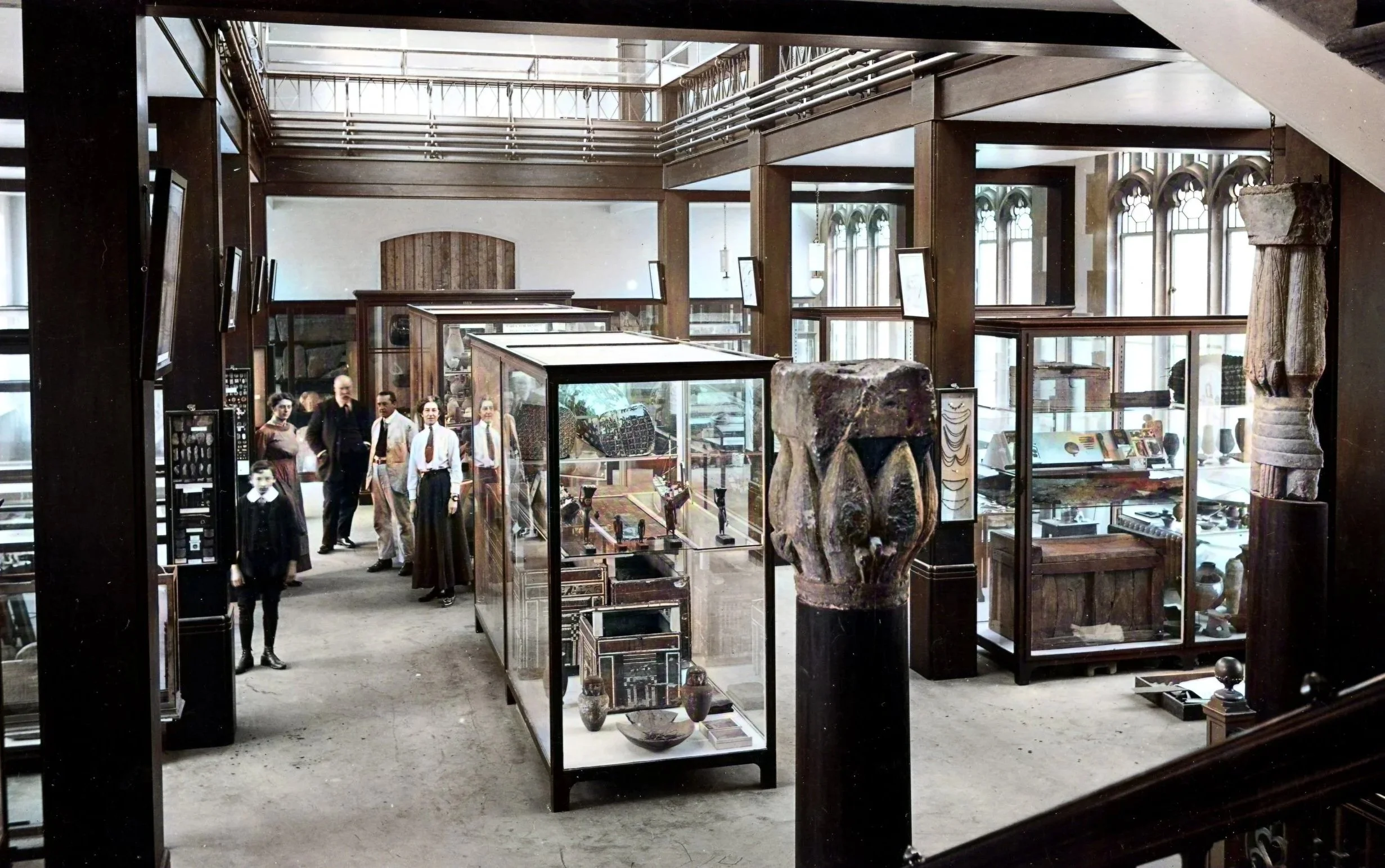
THE MUSEUM’S FIRST COLLECTIONS HAD BELONGED TO LOCAL COLLECTOR JOHN LEIGH PHILIPS.
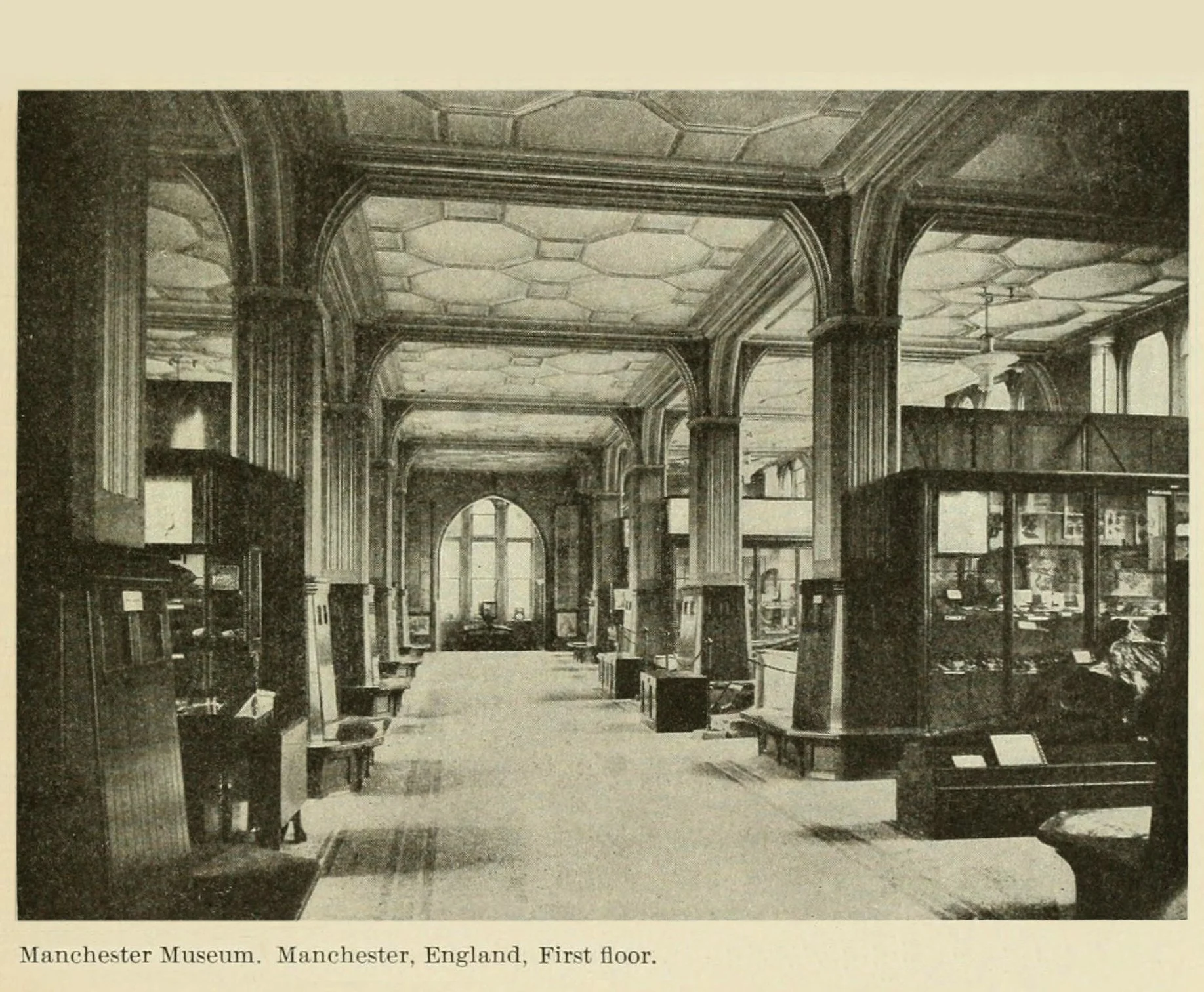
THE MUSEUM’S FOSSILS GALLERY.
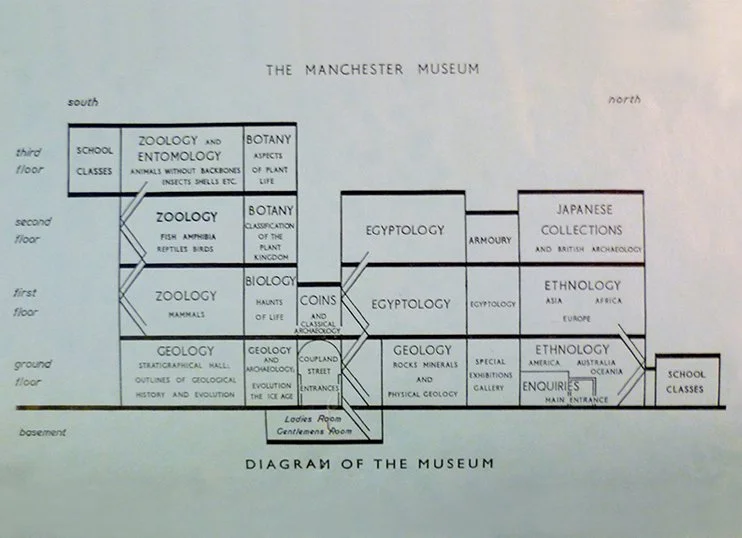
THE MUSEUM FLOOR DIAGRAM FROM 1961.
The Museum has had associations with a number of leading figures. Its existence is due to Thomas Henry Huxley, who advised the Manchester Society for the Promotion of Natural History that its collection should be passed to Owens College. The first curator was Huxley’s acolyte William Boyd Dawkins.
The latest large extension came in 1977 when the museum acquired the premises vacated by the University Department of Metallurgy. This Edwardian baroque building had been designed in 1908 by Charles Heathcote and Sons as the Dental Hospital. In 2003 the Museum opened a new entrance building, off Coupland Street, and the Café was developed in the former Dental Hospital building.
The Museum reopened its doors to thousands of visitors in February 2023, following a £15 million renovation as part of the hello future project. This one-of-a-kind transformation – generously supported by our community of donors – has revolutionised how the Museum works, giving communities the opportunity to co-create exhibitions that are unique and empowering learning spaces for all.
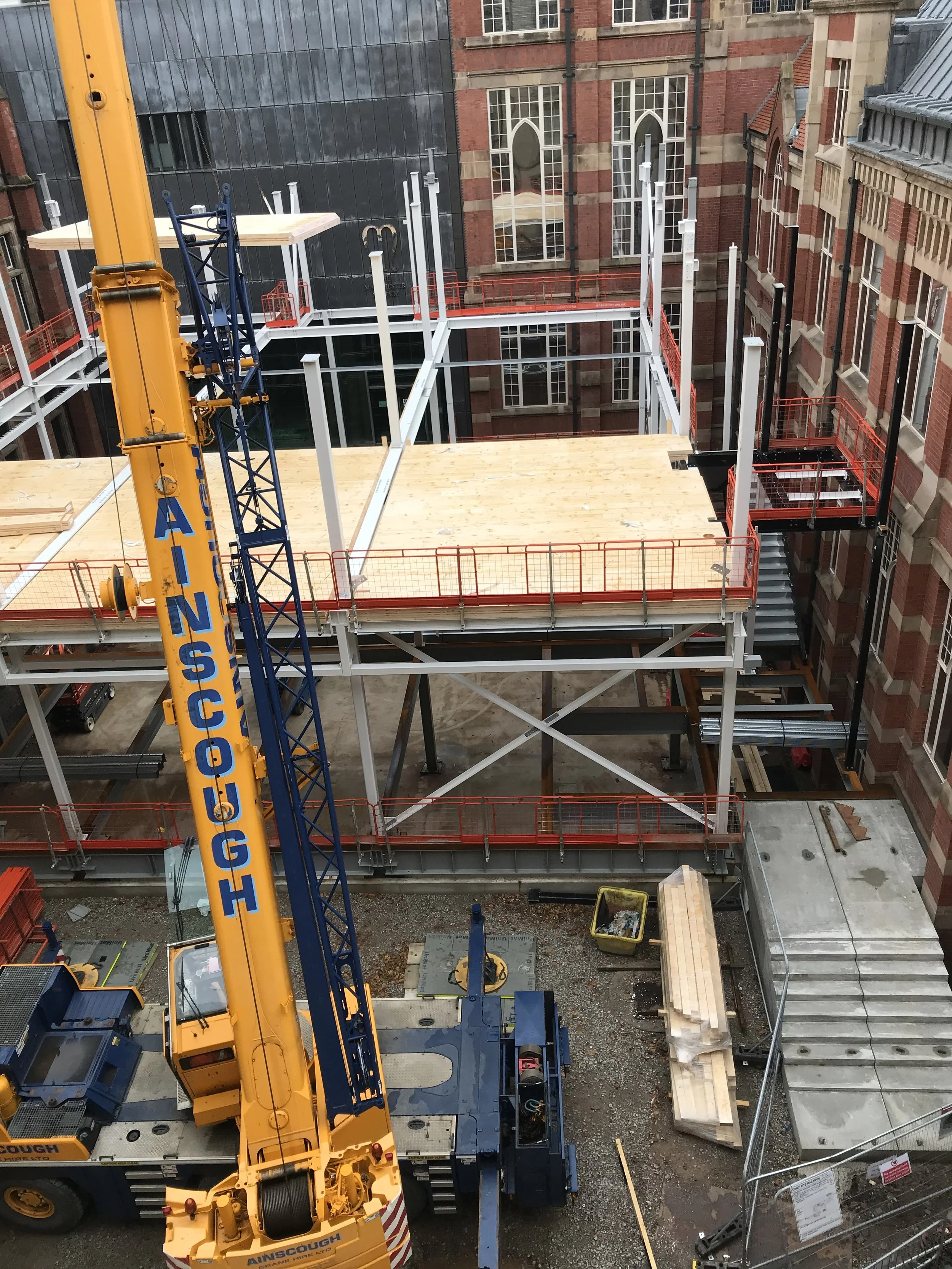
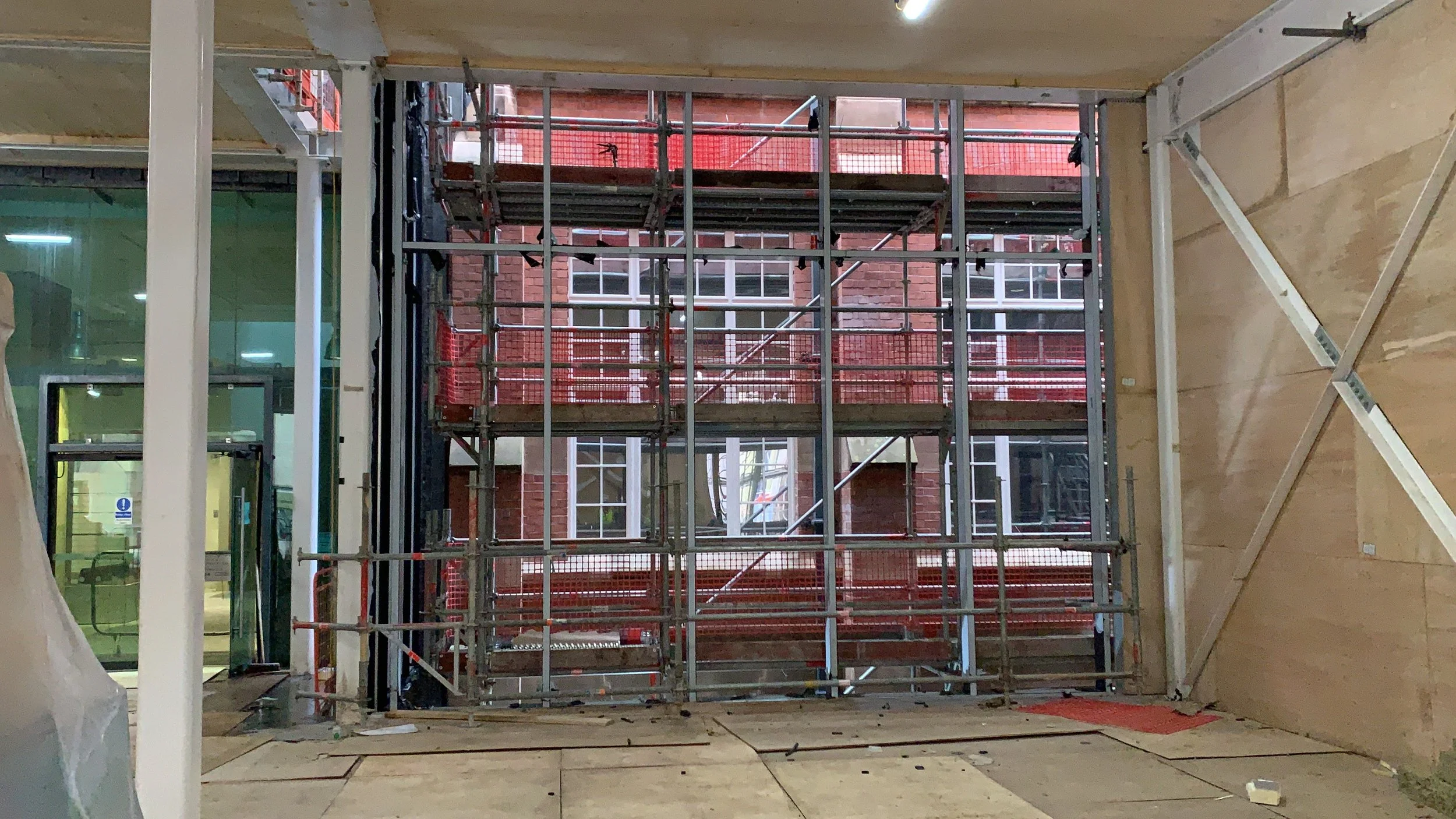
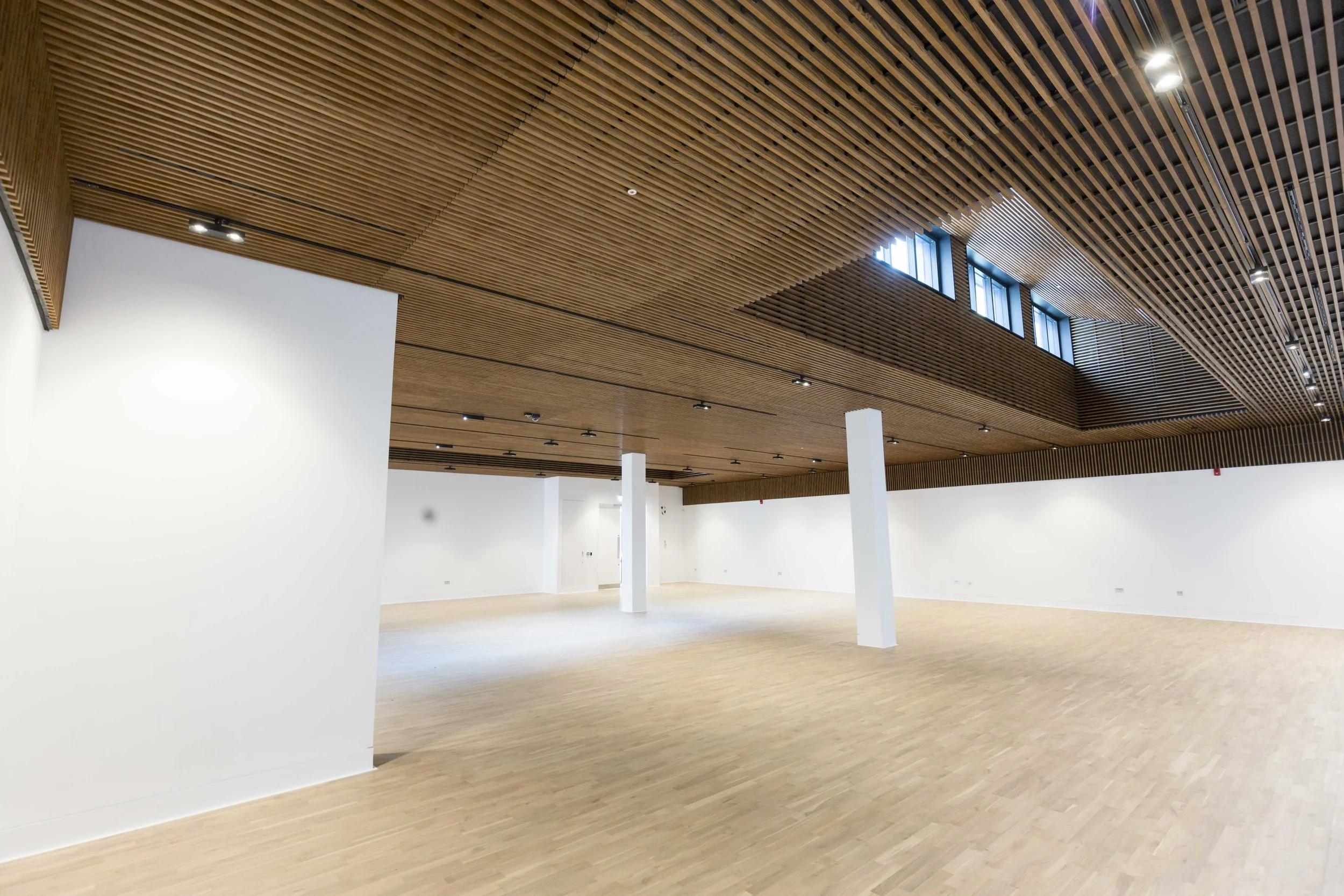
CONSTRUCTION BEGINS ON THE HELLO FUTURETRANSFORMATION IN NOVEMBER 2019.
The transformation offered the Museum the opportunity of a new entrance on Oxford Road, and with that a complete reconfiguration of the ground floor including a brand new exhibition hall. Two new galleries were also created that focused on embedding diverse perspectives within the Museum. The first being the Lee Kai Hung Chinese Culture Gallery, generously supported by Dr Lee Kai Hung, a retired Hong Kong businessman and honorary graduate of the University. Another being the British Museum partnership South Asia Gallery, which was co-curated with local communities and is the first permanent collection in the UK celebrating the experiences, contributions and histories of the South Asian diaspora communities.
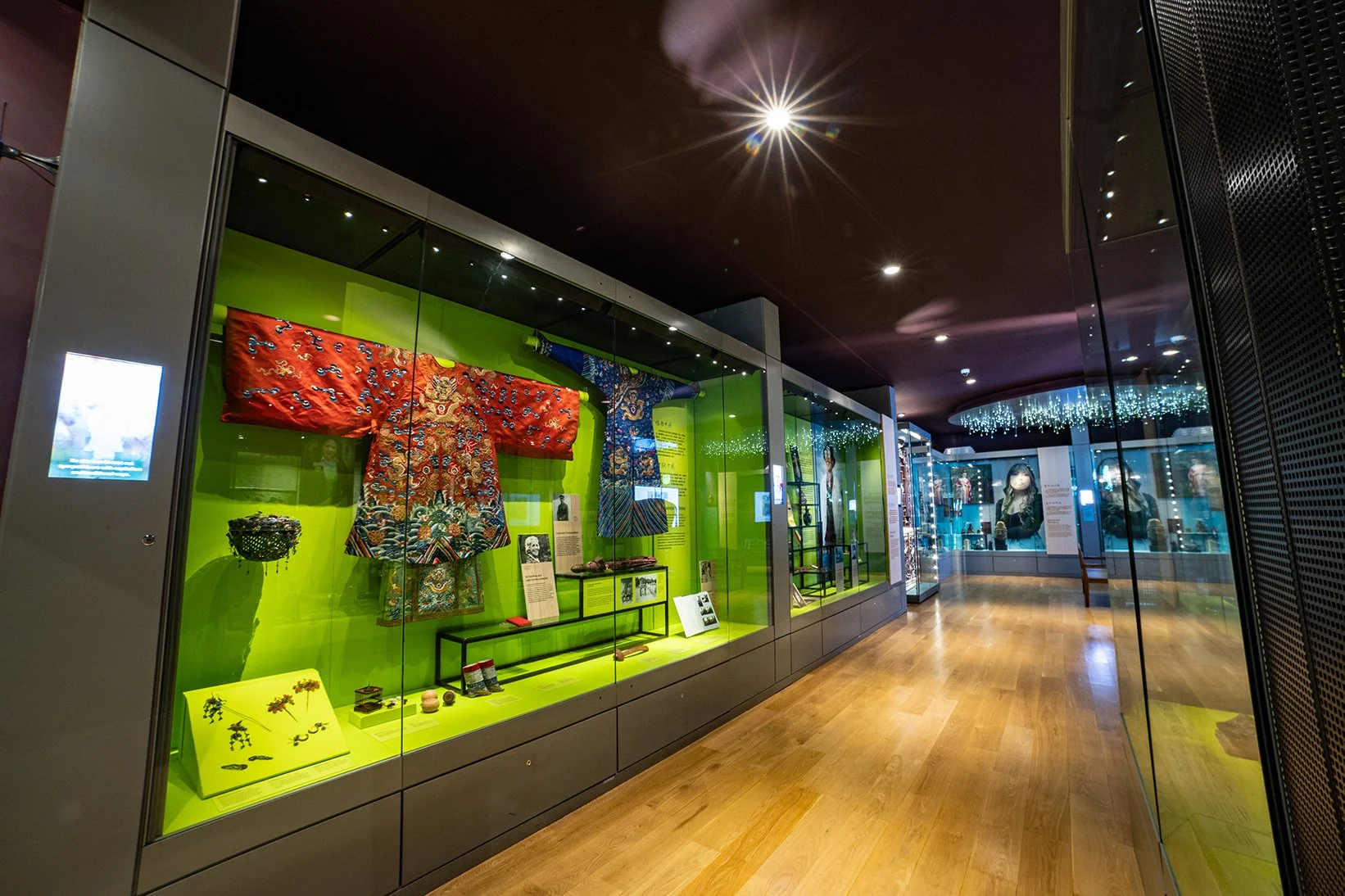
THE LEE KAI HUNG CHINESE CULTURE GALLERY.
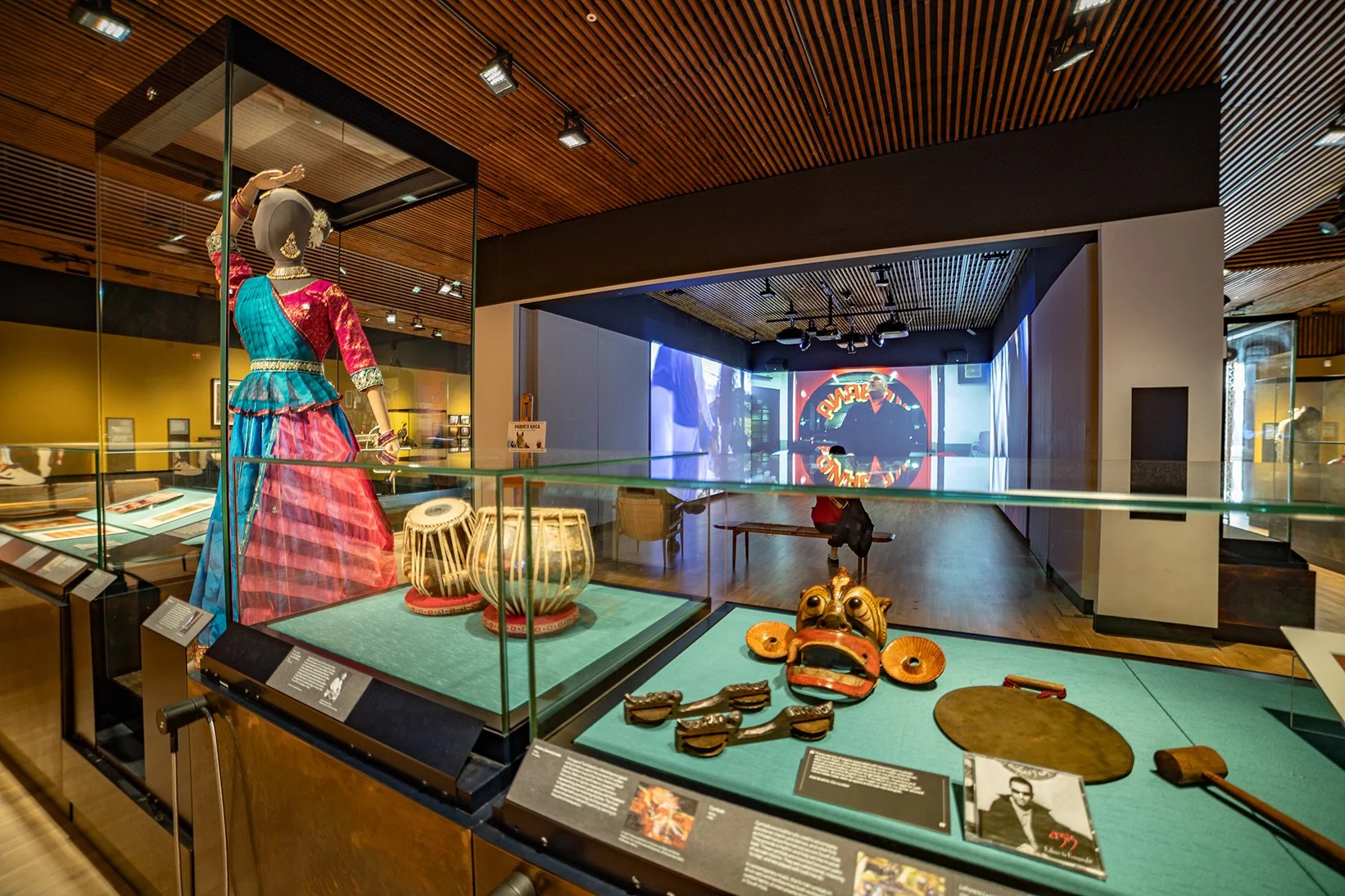
THE SOUTH ASIA GALLERY.