
Entomology
COLLECTION
CURATOR: DIANA ARZUZA BUELVAS
Manchester Museum’s worldwide collection of insects and other arthropods contains a great variety of organisms, such as insects, spiders, scorpions, centipedes, millipedes, thicks, mites, and crustaceans.
The collection is estimated to house some two and a half million specimens and is one of the largest entomological depositories in the UK, including over 2300 insect species represented by type specimens. The origin of Manchester’s insect collection date back to the foundation of the Museum by the ‘Manchester Society for Promotion of Natural History’ in 1821. The oldest insect specimen at the Manchester Museum is the pill-beetle collected by William Kirby, the founder-father of the British Entomology, and described by T. Marsham in his Entomologica Brittanica in 1802.
AN INTRODUCTION TO THE ENTOMOLOGY COLLECTION, WITH DIANA ARZUZA BUELVAS, CURATOR OF ENTOMOLOGY.
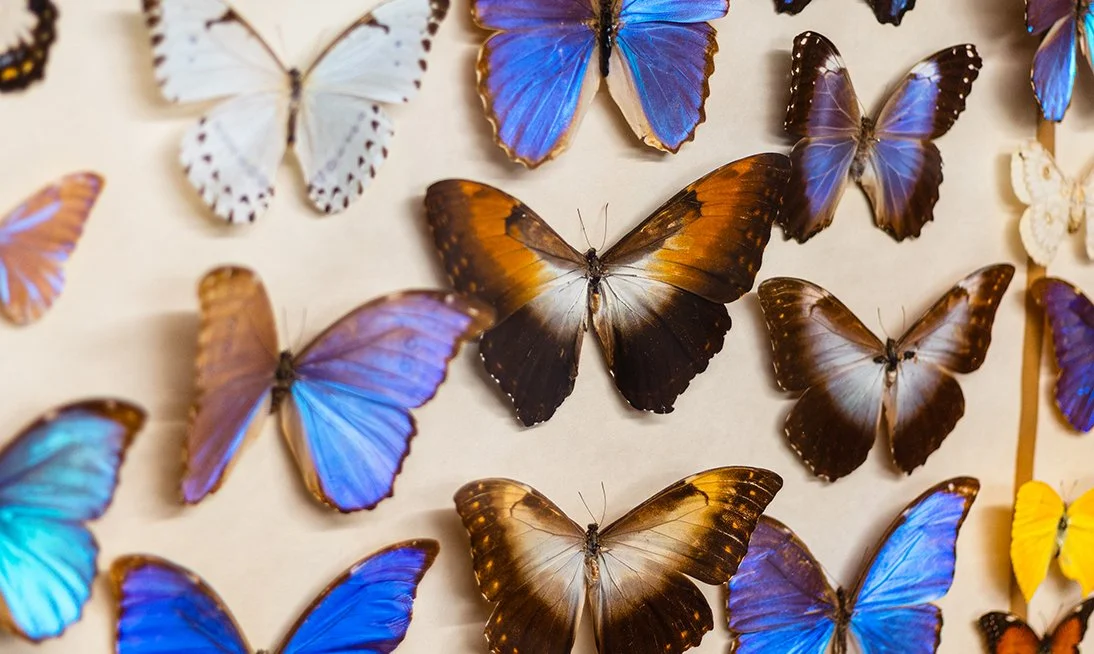
As well as housing a comprehensive collection of British insects of all groups, highlights include the collection of earwigs, containing almost a half of the species described worldwide, a significant worldwide collection of spiders, and the collection of butterflies and moths, including a selection of swallowtail butterflies accounting for almost 90% of the world fauna. The archive contains around 40 individual collections related to former keepers and those who donated/bequeathed their collections to the Museum.
The collections and archive are used for taxonomic and other scientific research, art /design projects, teaching and public programmes all within and beyond the University of Manchester.

PSALMOPOEUS CAMBRIDGII, TRINIDAD CHEVRON TARANTULA SAMPLE
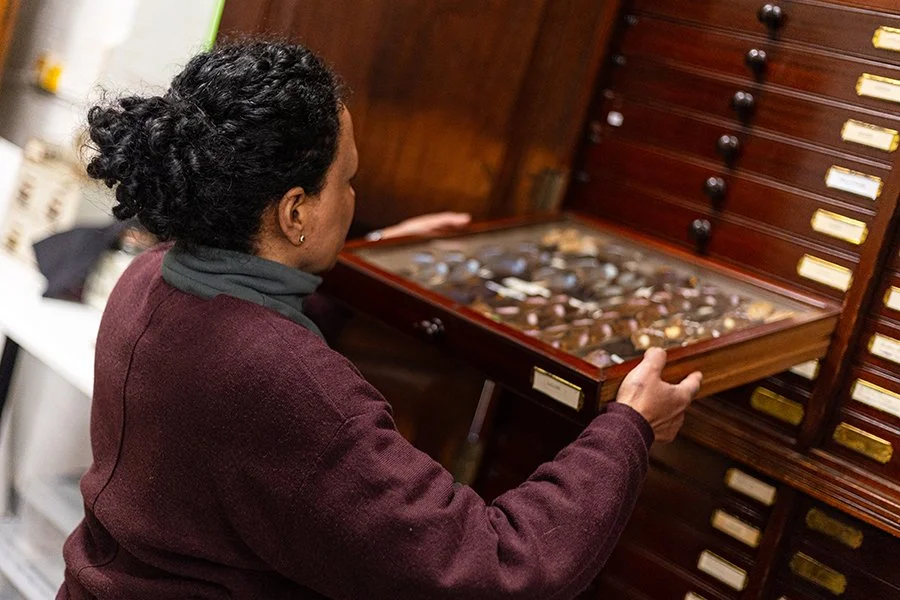
CURATOR DIANA ARZUZA BUELVAS, PULLING OUT SPECIMENS IN THE ENTOMOLOGY STORE.
Entomology Collection Highlights
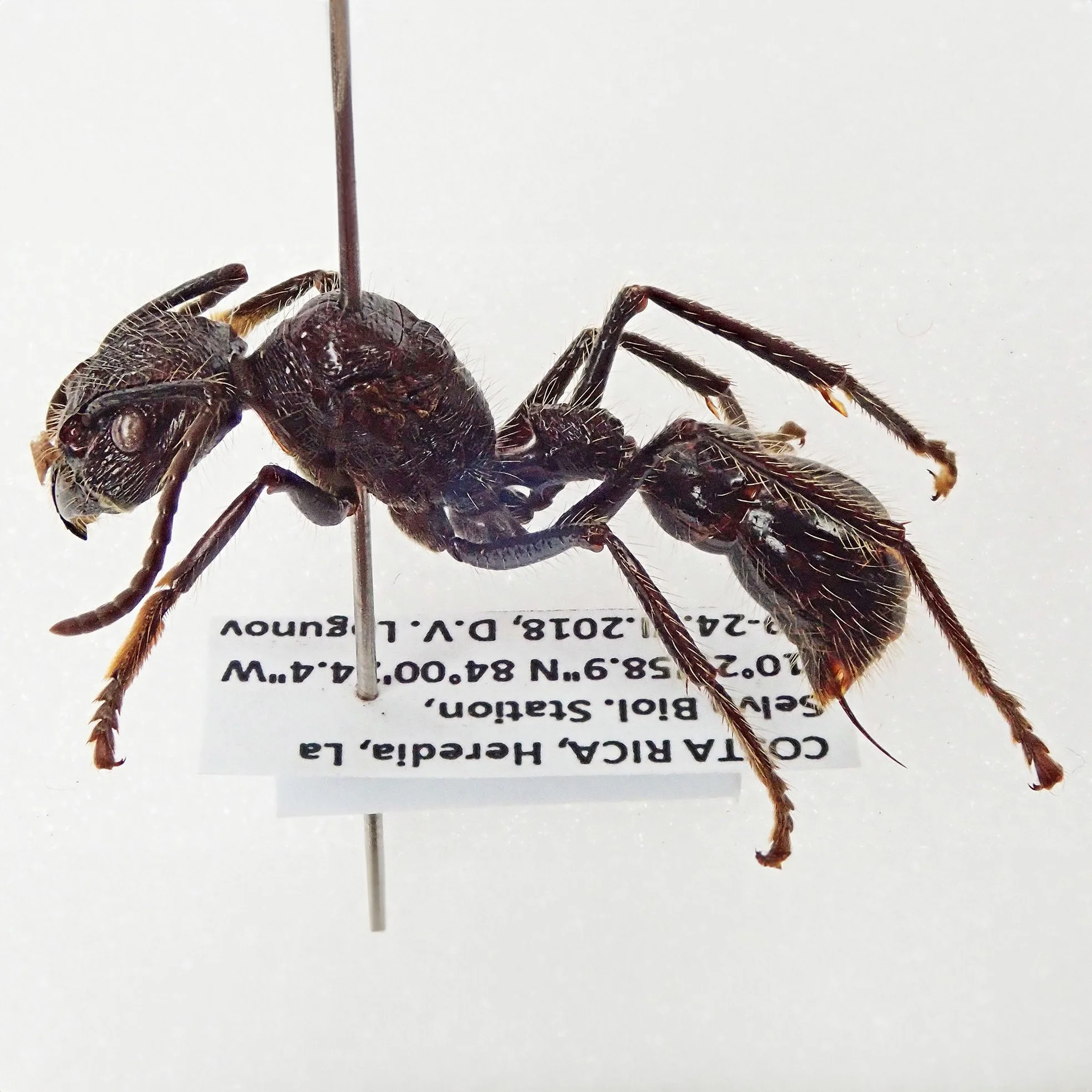
Bullet ant (Paraponera clavata)
One of Central and South America’s largest ants, the Bullet ant delivers an intensely painful sting. Worker ants live in large colonies, hunting from ground level to forest canopy.
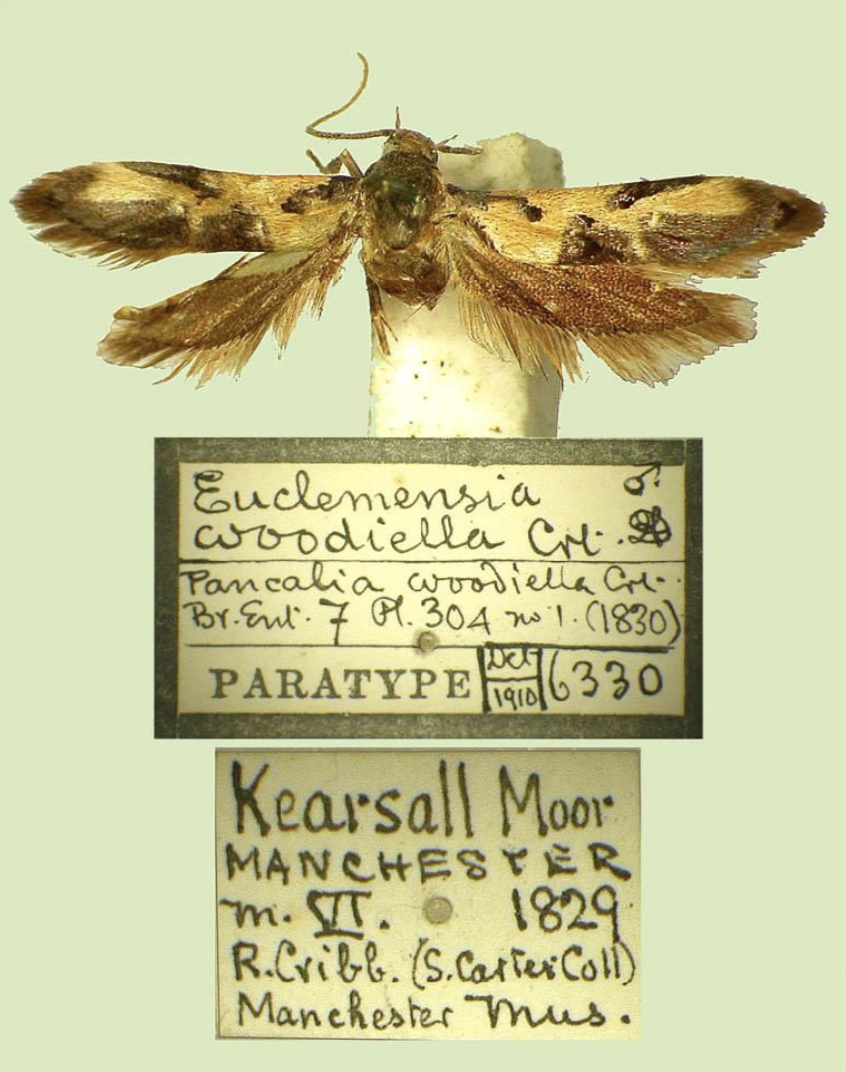
The Manchester Moth (Euclemensia woodiella)
One of only three surviving specimens of this extinct species, the ‘Manchester Moth’ provides a rare glimpse into local biodiversity and is an important record for entomologists and conservation history.
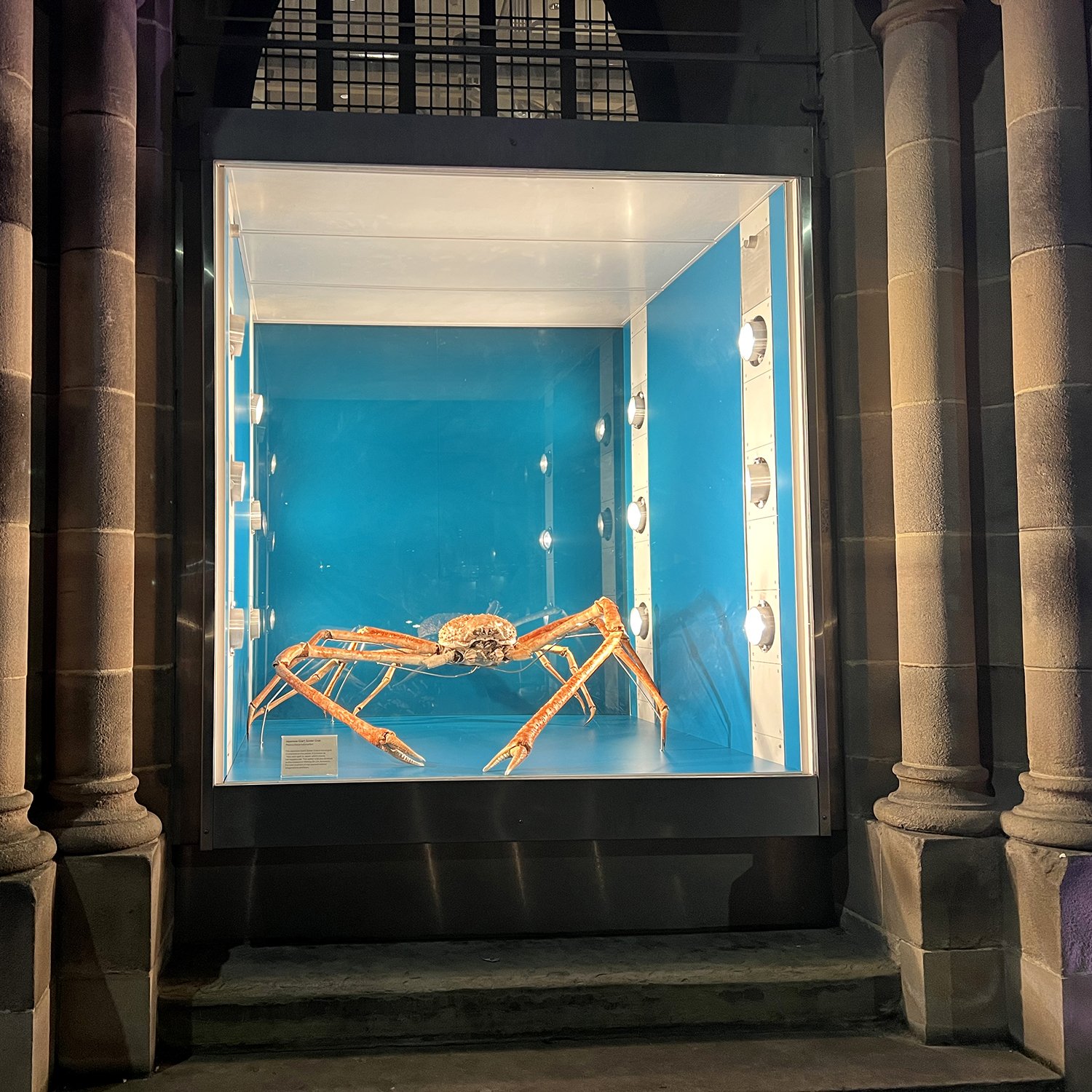
Japanese giant spider crab (Macrocheira kaempferi Temminck)
The world’s largest crustacean can span over eleven feet. Manchester Museum’s specimen, likely male, originates from Japan’s Pacific waters and is unusually displayed with outstretched claws rather than flattened against a wall.

Diana Arzuza Buelvas Curator of Entomology Collections
diana.arzuzabuelvas@manchester.ac.uk
As Curator of the Entomology Collection, Diana Arzuza Buelvas looks after around 2.5 million specimens in one of the largest museum collections in the UK. The Entomology Collection includes insects and other arthropods such as arachnids, millipedes, centipedes and crustaceans.
Diana graduated in Zoology, completing her studies in Colombia. Since then, I she has worked in the management and care of natural history collections, including vertebrates and invertebrates, in both South America and the UK.
On a day-to-day basis, Diana ensures the collections are well cared for; available and accessible to those interested, especially students, researchers, biological recorders, artists and insect enthusiasts. She promotes the collections for exhibitions and projects which construct a narrative around insects, environment and nature conservation. Outside curating responsibilities, she teaches collecting techniques and preservation methods, including dried (pinning and mounting) insects and specimens stored in 70% ethanol for our spirits collection.
Diana loves sharing her interest and passion, discovering amazing stories and insects around the entomology stores to engage with Museum’s visitors and beyond.