
About
Social justice
Our work

A commitment to social justice underpins our goal to become the most caring, imaginative and inclusive museum you’ll ever visit.
“At its core, social justice is about everyone's human rights being accessed, respected and protected. It’s about ensuring that people have equitable access to resources, participation, opportunities and representation in society.
Social justice requires action:
Action to recognise the root causes of injustices that affect people’s lives;
Action to disrupt and dismantle systems and cycles of injustice;
Action to build understanding, solidarity and new ways of doing and being that create just, equitable structures, systems, spaces, societies, relationships and world!”
- Chloe Cousins, Social Justice Manager
Centering social justice at Manchester Museum helps to inform all the work we do – from the communities we work with to the stories told across galleries, from the accessible facilities in the building to the practices that shape how we take care of the collections.
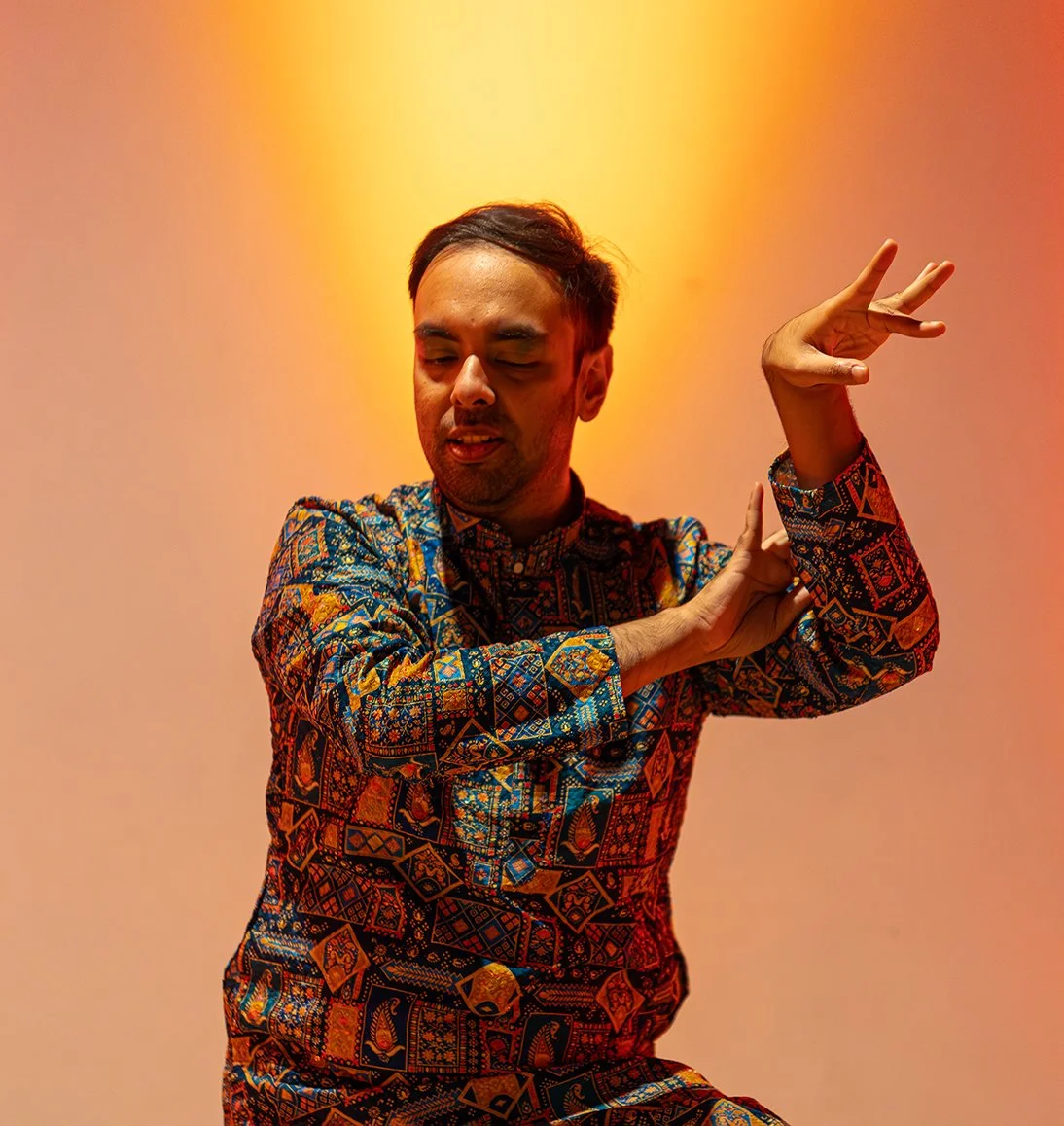
JAM - A CELEBRATION OF BROWN SOLIDARITY BY HOUSE OF SPICE.
Our civic responsibility
Manchester Museum was borne of civic pride, with ambitions to support local Mancunians to engage with and learn from the collections. Whilst principles underlying Museum practice has shifted quite a lot since the museum opened in 1888, the ambition to be a hub for civic activity and engagement still forms the foundations of the Museum today.
Manchester Museum is a resource for everyone in the city and beyond. Through the Top Floor Hub we support people, groups and organisations taking action for social and environmental justice to utilise museum spaces, resources and collections that support their work. Our Arts and Health programme supports the well-being of young people and adults with additional needs, bringing people together through activities based around the collections. Our volunteering programme works in partnership with Manchester Adult Education service to offer volunteers training and development opportunities alongside their volunteering roles.
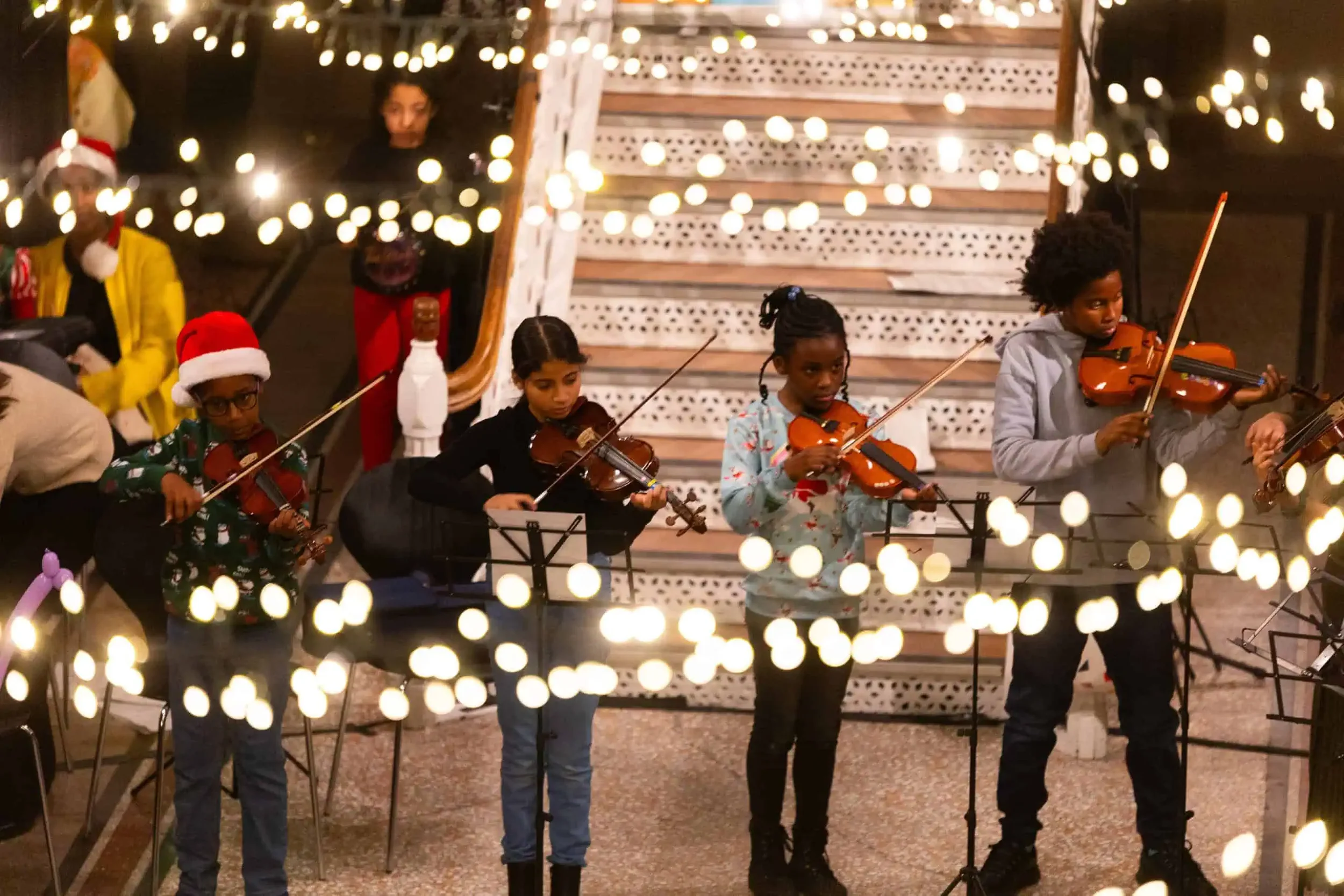
OLYMPIAS MUSIC FOUNDATION’S CHRISTMAS CONCERT, PERFORMED BY YOUNG PEOPLE EXPERIENCING LOW INCOME.
SOCIAL ACTION AS SPOKEN WORD, AN EVENT ORGANISED BY OUR SHARED CULTURAL HERITAGE.
How we care for people and collections
While Manchester Museum was borne of civic pride, it was also borne of Empire, colonial violence, domination and extraction. Action to become a socially just museum therefore must also include reckoning with this colonial history, sitting with the discomfort it brings and working to build trust and support healing with communities harmed by past and current museum practice.
It also means taking an honest approach to the collections we care for, working with communities to decide collectively how they can best inspire future generations, whether that means restitution to communities of origin or co-curation with diaspora communities to rethink how we display connections in order to better connect with people here in Manchester.
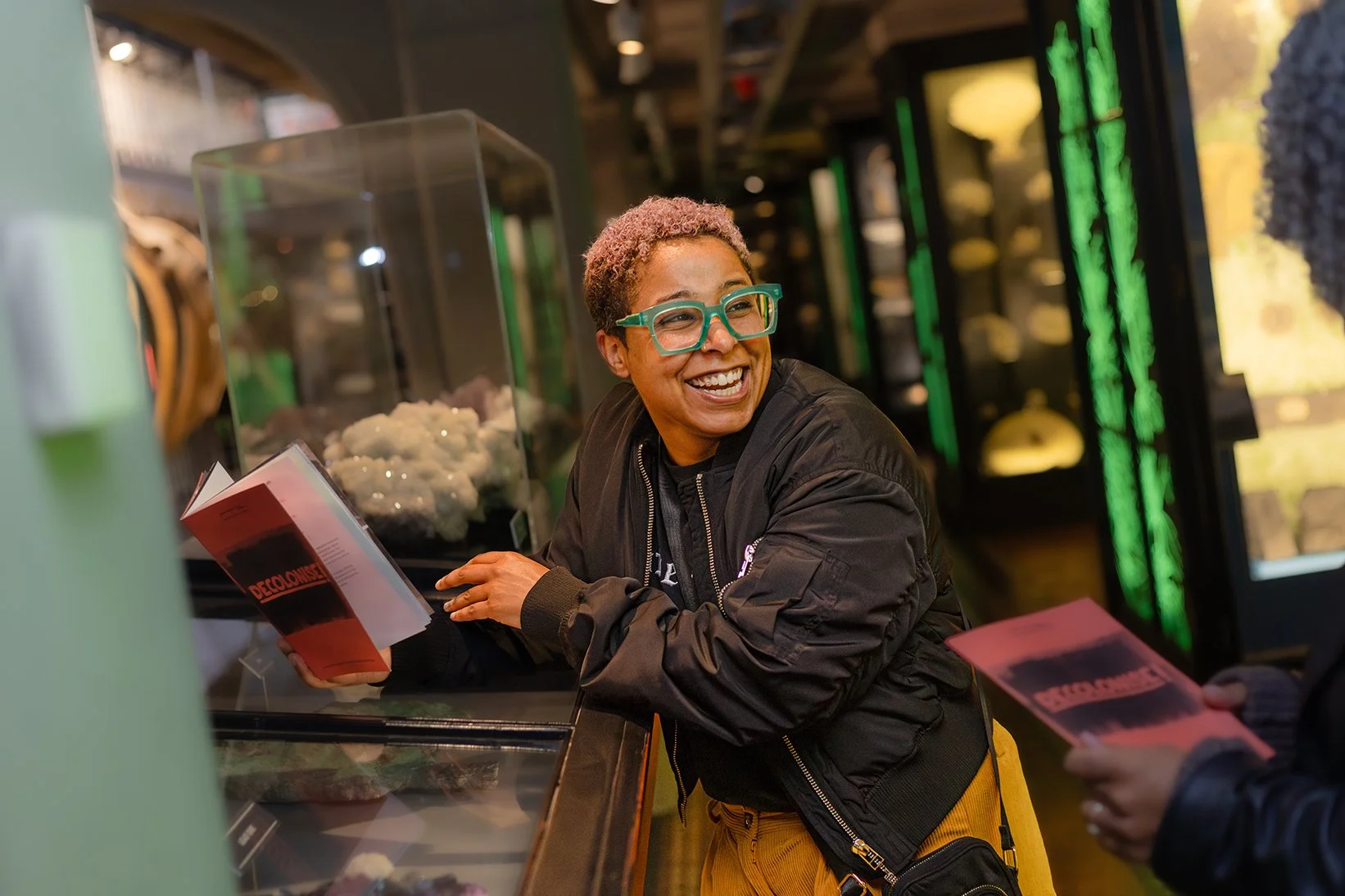
DECOLONISE!, LAUNCH EVENT.
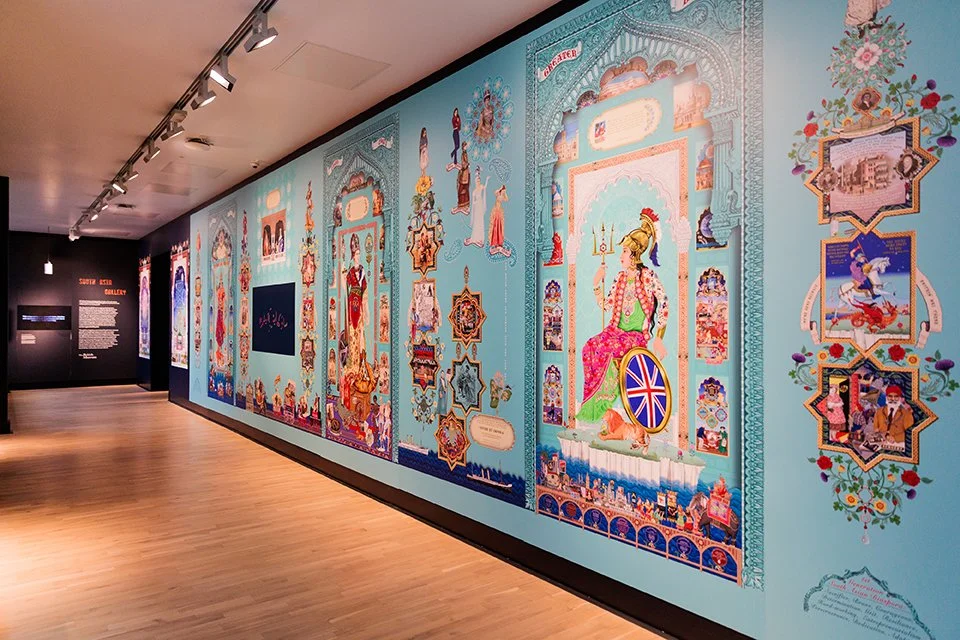
RICHES TO RAGS, RAGS TO RICHES, A MURAL BY THE SINGH TWINS.
Decolonial practice
Decolonising is resistance to colonialism and to the colonial legacies that continue to privilege and pedestal white, European people, ways of knowing and being. Decolonising is a long-term process that aims to build new ways of being and working based on principles of justice and which seek to dismantle racial and cultural hierarchies that colonialism embedded across the world – including in museums.
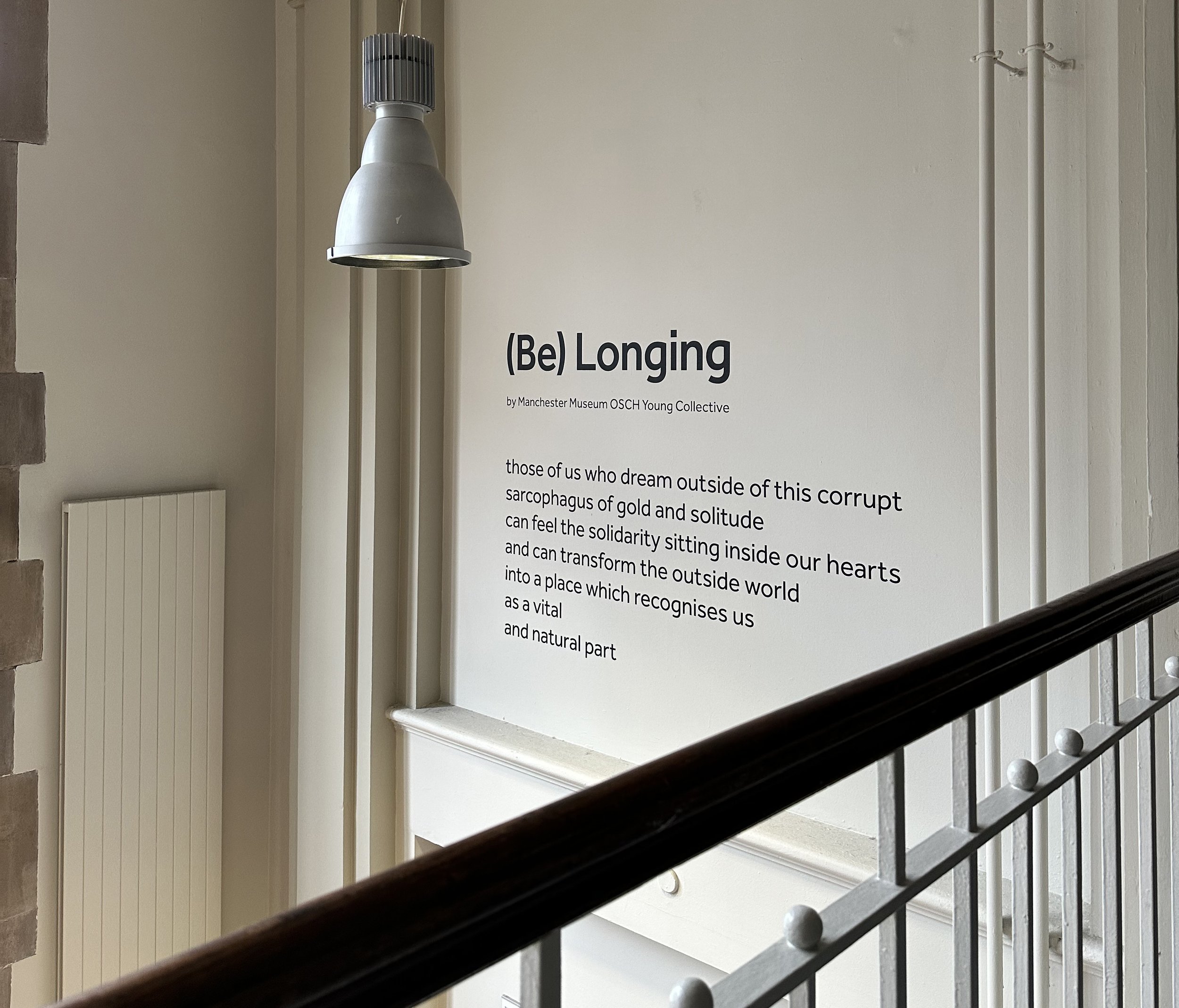
Decolonial practice at Manchester Museum has informed approaches to creating new displays and galleries, most notable in the Africa Hub, South Asia gallery and Belonging gallery, where co-production and foregrounding the voices and knowledge of Indigenous and diaspora communities have been central.
Decolonial gallery interventions include the Decolonise! trail, which invites visitors to critically reflect on how the collections got here, whose stories are told across the galleries and how museums shape our understanding of the world.
Staff at the Museum are committed to long-term decolonial practice and are engaged in continual critical reflection and learning, to strive towards being the most informed, caring, just and inclusive Museum we can be.
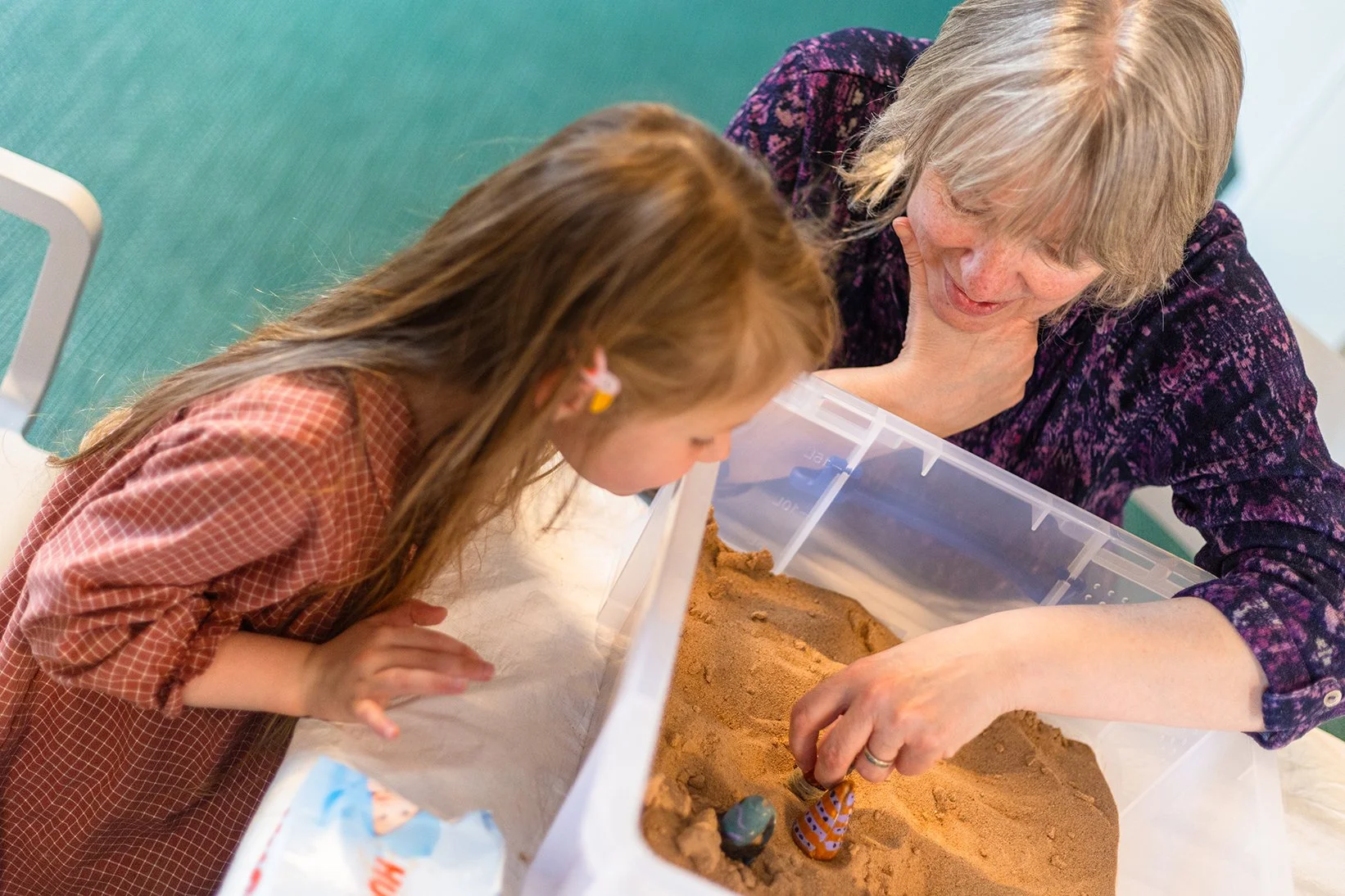
VISITORS PLAY WITH DADIKWAKWA-KWA (SHELL DOLLS), GIFTED TO THE MUSEUM BY THE ANINDILYAKWA COMMUNITY OF GROOTE EYLANDT
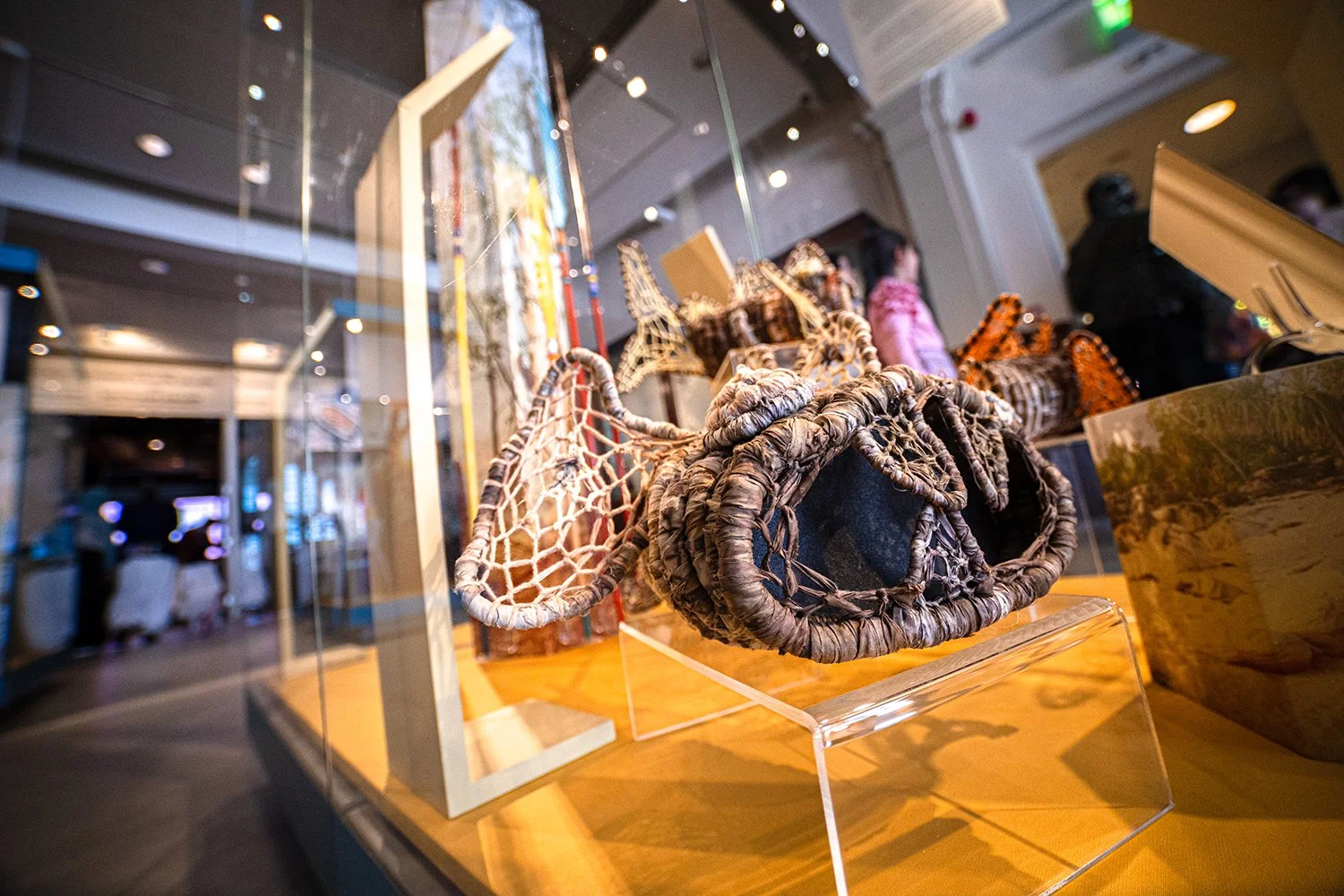
ANINDILYAKWA ARTS; STORIES FROM OUR COUNTRY, AN EXHIBITION CO-CURATED WITH THE ANINDILYAKWA COMMUNITY.
Indigenising
Indigenising is change led by Indigenous people. Our commitment to social justice underpins the Indigenising Manchester Museum programme, which seeks to ensure that Indigenous knowledge and perspectives are central across the breadth of the collections, as well as to build trust and relationships with Indigenous people and communities whose cultural heritage is housed in the museum. Indigenising at the Museum aims to support healing led by and with Indigenous partners and to ensure that decisions made about the collections, including their care, display and return are informed and led by Indigenous people.
The Top Floor
An environmental and social justice hub
The Top Floor Hub is a dynamic, community-centred space for action, sharing, learning and dreaming, used by a range of changemaking individuals/groups working across the city. The hub drives forward Manchester Museum’s mission to build….