
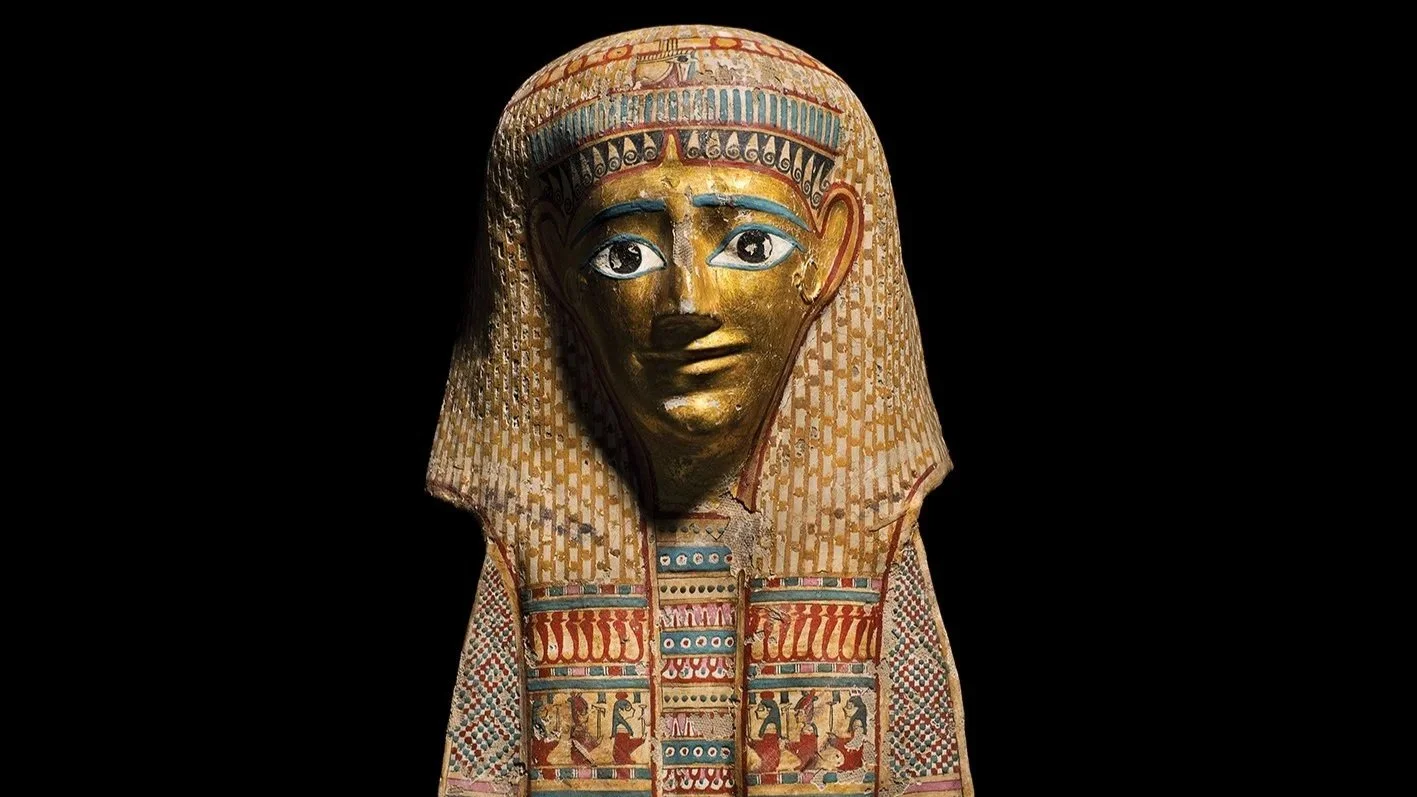
Egypt and Sudan
COLLECTION
CURATOR: DR CAMPBELL PRICE
Our outstanding collection of Egyptian and Sudanese objects – one of the largest in the UK – illustrates both everyday life and preparations for the afterlife.
The Egypt and Sudan Gallery tells stories of the people we now call ‘ancient Egyptians’, a diverse population who lived in Northeastern Africa from around 3000 to 30 BCE.
The homes of the ancient Egyptians do not generally survive, but our collection includes exceptionally well-preserved everyday objects from a pyramid-builders’ town known as Kahun. These extraordinary artefacts are nearly 4,000 years old and give a glimpse into how ordinary people lived. The gallery also tells us about the lives of the wealthiest people in ancient Egypt. Intricate hieroglyphic texts enable us to identify some names and titles of these elite individuals. Early archaeologists chose to excavate temples, because they were covered in detailed inscriptions, and tombs, which held the promise of valuable items that very few ancient Egyptians could have afforded. This bias is reflected in the collection.
AN INTRODUCTION TO THE EGYPT AND SUDAN COLLECTIONS, FROM CURATOR OF EGYPT AND SUDAN, DR CAMPBELL PRICE.
One of the highlights of the collection is the range of materials preserved from ancient Egypt. Many items have survived from tombs and preserve images of the wealthy deceased: these elaborately decorated covers for mummified bodies were designed to transform the dead into gods. Although stylised and not portraits in the modern sense, they are captivating – they help us feel close to the ancient Egyptians and relate to the past.
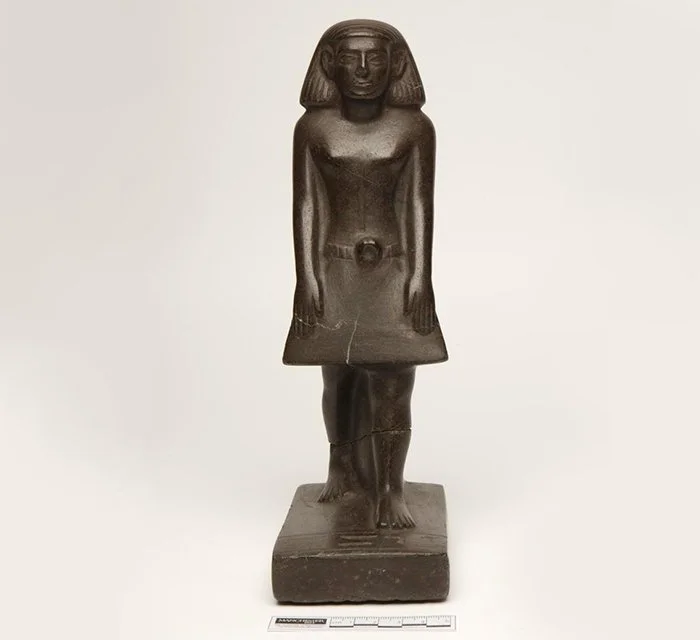
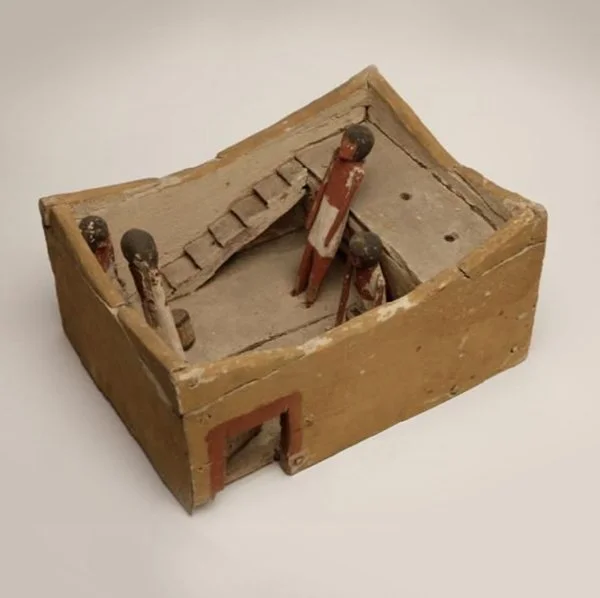
As well as the people and places of ancient Egypt, the gallery tells equally important stories about the ways in which objects were found, moved and interpreted. Following the British invasion of Egypt in 1882, the European-controlled Egyptian government allowed foreign archaeologists to export some of the items they excavated on Egyptian and Sudanese land. This led competitive and wealthy European businessmen to sponsor archaeologists to search for objects which would be displayed in the West.
Manchester was the beneficiary of this colonial system; it holds around 18,000 objects from Egypt and Sudan following local cotton merchant Jesse Haworth’s financial support of excavations led by Flinders Petrie between 1887 and 1892. As well as civic pride, Haworth and Petrie’s excavations were driven by a desire to compare the ancient Egyptians with modern people, often projecting their own ideas into the past. So, while the collection gives us a glimpse into an ancient society, it also reflects the obsessions, values and politics of the late 1800s and the early history of the Museum.
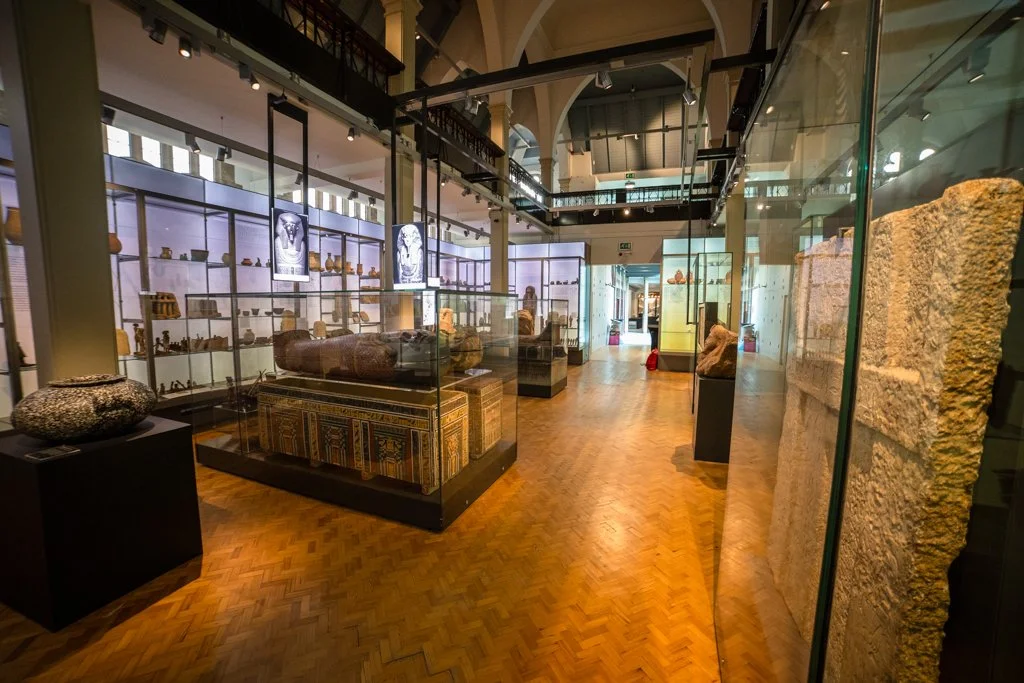
EGYPT AND SUDAN GALLERY, FLOOR 1.
Egypt and Sudan Collection highlights
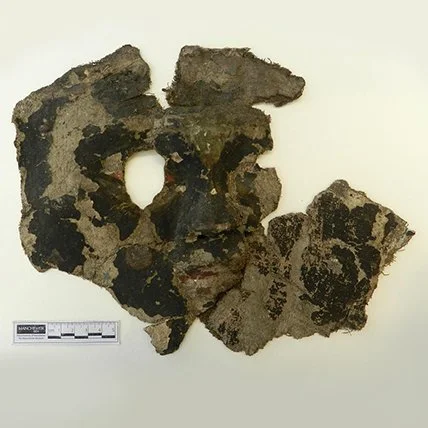
Ritual mask
Most surviving Egyptian masks covered mummies, but this rare example was worn by a living ritualist to embody a deity. Made of fragile fabric and plaster, it survives from 4000-year-old Kahun.

Sketch of a funeral
This limestone ostracon features an ink sketch of a tomb shaft, burial chamber, and coffin, with the deceased’s ba (soul) depicted as a bird. The drawing might have been made as part of a religious ceremony.
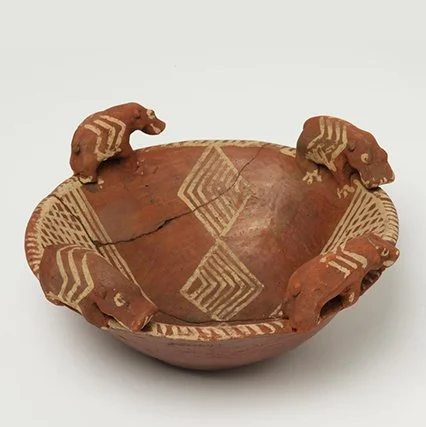
The ‘Hippo Bowl’
This Predynastic pottery bowl features four separately modelled hippopotamus figurines attached to the rim. Made from hand-formed red-coated clay, it is burnished and decorated with intricate, white-painted geometric and animal patterns.
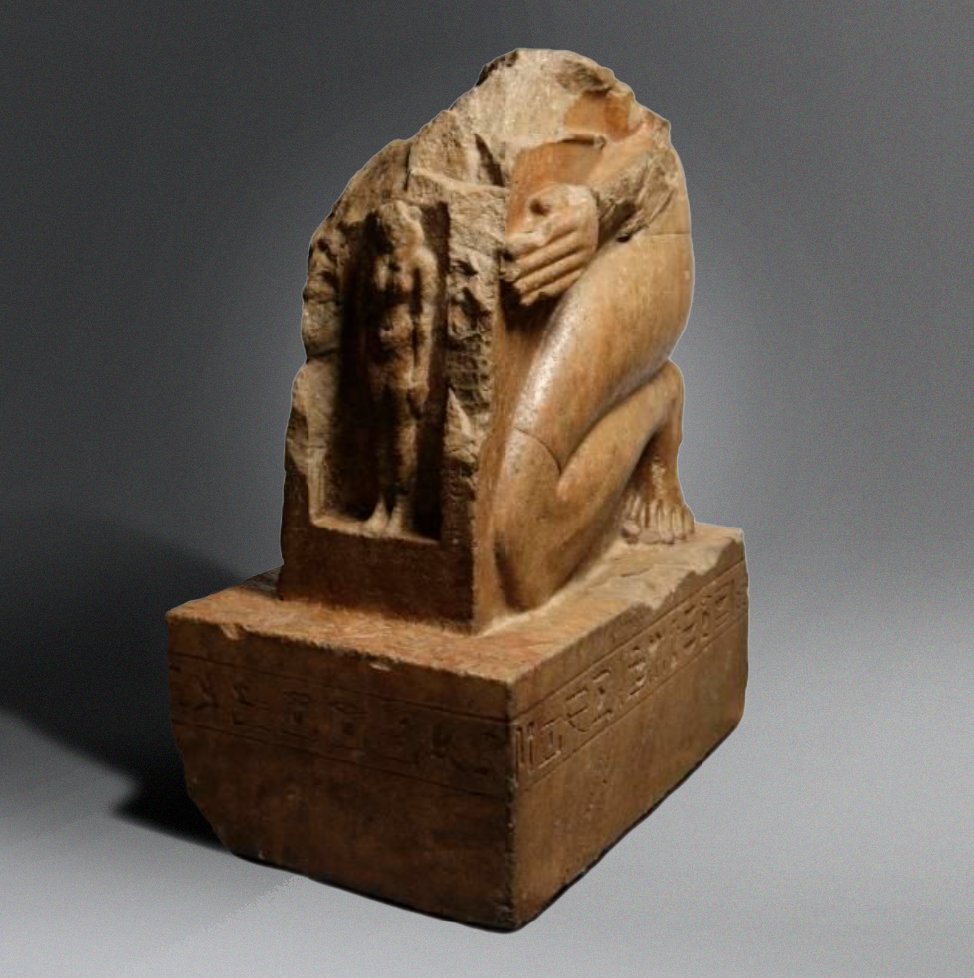
Statue of an Admiral
This sandstone statue depicts Hor, also called Psamtik, kneeling and holding a shrine of the cat-headed goddess Bastet. Inscriptions identify him as a commander of the royal naval fleet.
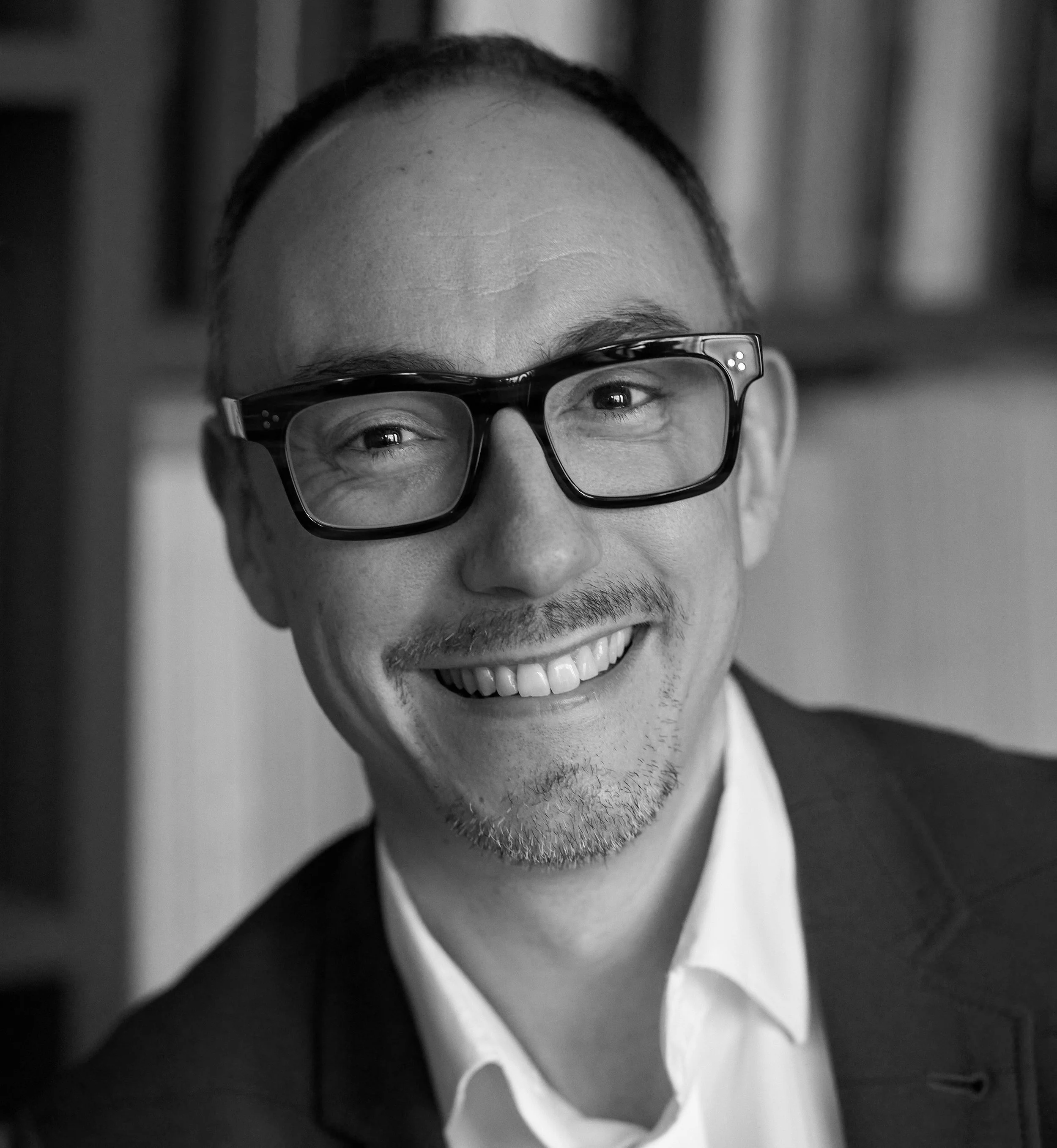
Dr Campbell Price Curator of Egypt and Sudan Collections
campbell.price@manchester.ac.uk
Dr Campbell Price has been Curator of Egypt and Sudan at Manchester Museum since 2011. He completed his BA, MA, and PhD in Egyptology at the University of Liverpool, where he is now an Honorary Research Fellow.
Campbell has undertaken fieldwork at Zawiyet Umm el-Rakham, Saqqara and the Egyptian Museum, Cairo. His main research interests centre on the interpretation of Pharaonic elite culture, the construction of ‘ancient Egypt’ in museums, and the histories of Egyptology.
Campbell has published widely on aspects of his research. Recent books include Golden Mummies of Egypt. Interpreting Identities from the Graeco-Roman Period (Manchester University Press, 2023), to accompany Manchester Museum's first international touring exhibition, and Brief Histories: Ancient Egypt (Seven Dials, 2024),
Between 2021 and 2025, he was Chair of Trustees at the Egypt Exploration Society, the UK’s foremost charity promoting Egypt’s cultural heritage.