
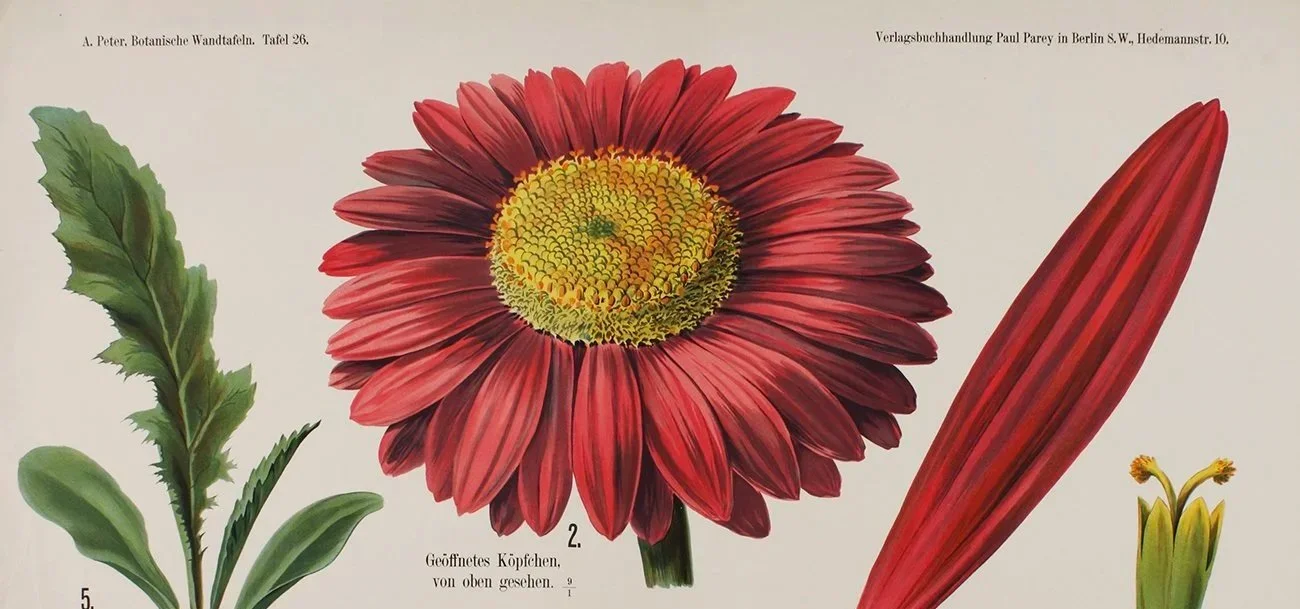
Botany
COLLECTION
CURATOR: DR RACHEL WEBSTER
Manchester Museum’s extensive botanical collection brings together plants from all over the world.
Housed in the Museum’s botanical storeroom, the Herbarium, most of the plant specimens are dried, pressed and mounted onto sheets of paper or stored in paper envelopes. These are all labelled with the plant name, who picked it, where from and when. As well as the pressed plants the collection also contains dried fruits and seeds, timbers, microscope slides, illustrations, models, fungi and jars of medicinal plants.
AN INTRODUCTION TO THE BOTANY COLLECTION, WITH RACHEL WEBSTER, CURATOR OF BOTANY.
Containing around three-quarters of a million specimens, the botanical collection forms a physical record of where plants and fungi have been found. The Museum collection has grown from the mid-19th century onwards as people with a passion for the natural world have donated their personal collections. The backbone of the collection was created by merging three large private collections from James Cosmo Melvill (worldwide plants donated in 1904), Leopold Hartley Grindon (cultivated plants donated in 1910) and Charles Bailey (European plants donated in 1917). The most recent significant addition has been the collection of British brambles donated by Alan Newton in 2012.
Today, the collection is used for art, science and education to explore and interpret the world around us.
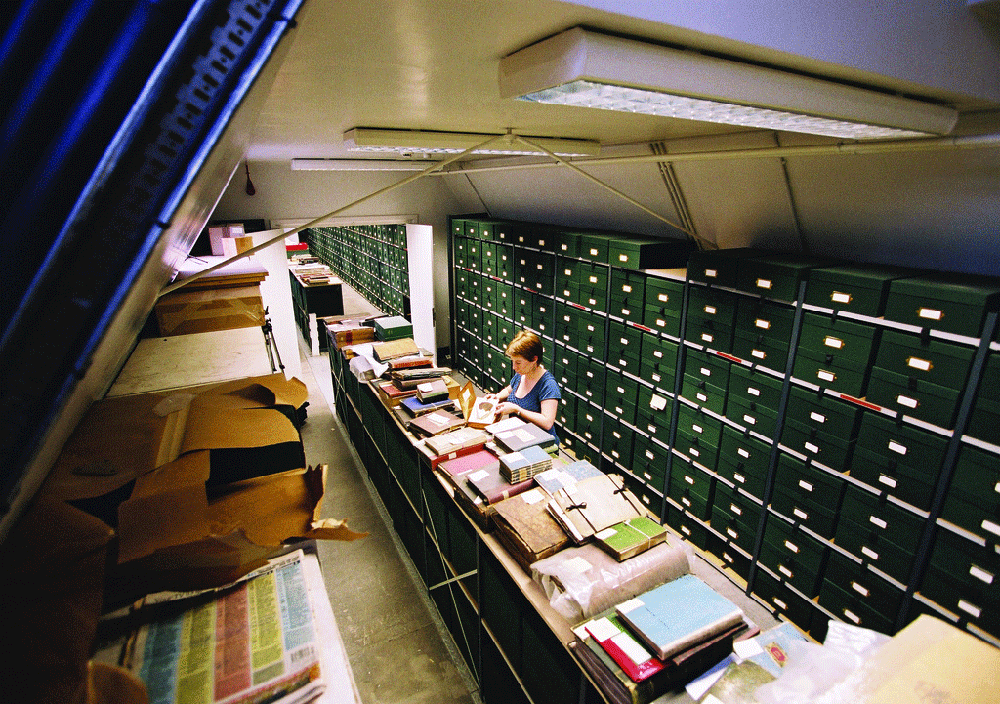
BEHIND THE SCENES, IN THE MUSEUM’S BOTANICAL STOREROOM.
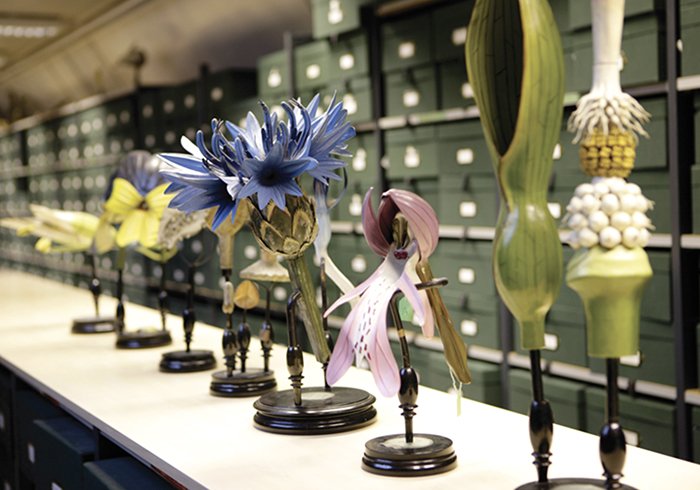
VICTORIAN FLOWER MODELS. THESE MODELS COME APART TO SHOW THE STRUCTURE OF FLOWERS AND ARE STILL USED IN TEACHING TODAY.
Botany Collection highlights
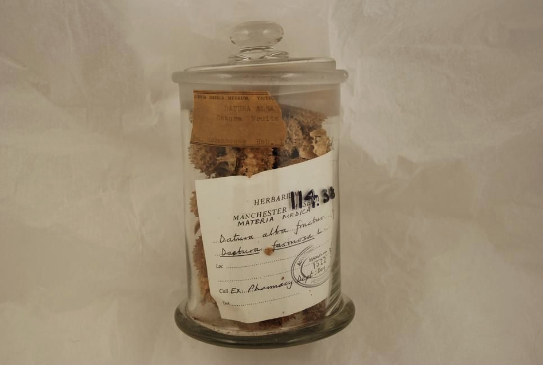
Materia Medica
During the 19th and early 20th centuries, collections of materia medica, including plants, animals and minerals used in medicine, were teaching tools at the University of Manchester. The Museum holds over 800 of these specimens today.
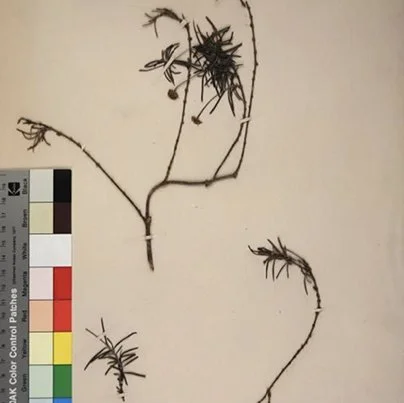
Plants collected by Charles Darwin
Plants collected by Charles Darwin during the Voyage of the Beagle provide rare insight into 19th-century scientific exploration and the global development of evolutionary theory.
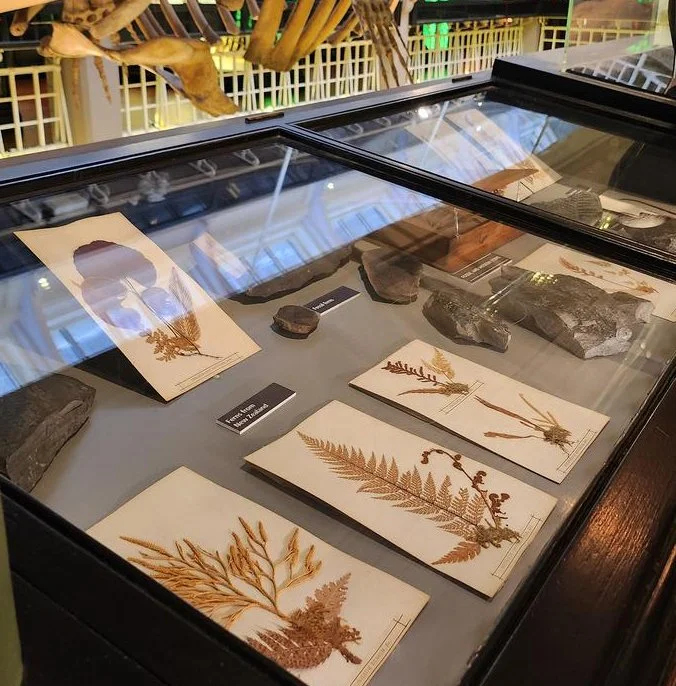
Exsiccatae
These bound volumes, or plant scrapbooks, preserve specimens on individual sheets. Many have beautifully decorated covers, combining scientific value with historical and artistic interest.

Lydia Becker 1864 Botanical Competition
Herbarium specimens collected by Lydia Becker, including examples from the 1864 Botanical Competition, document 19th-century botany and highlight her contributions as a pioneering Manchester botanist.
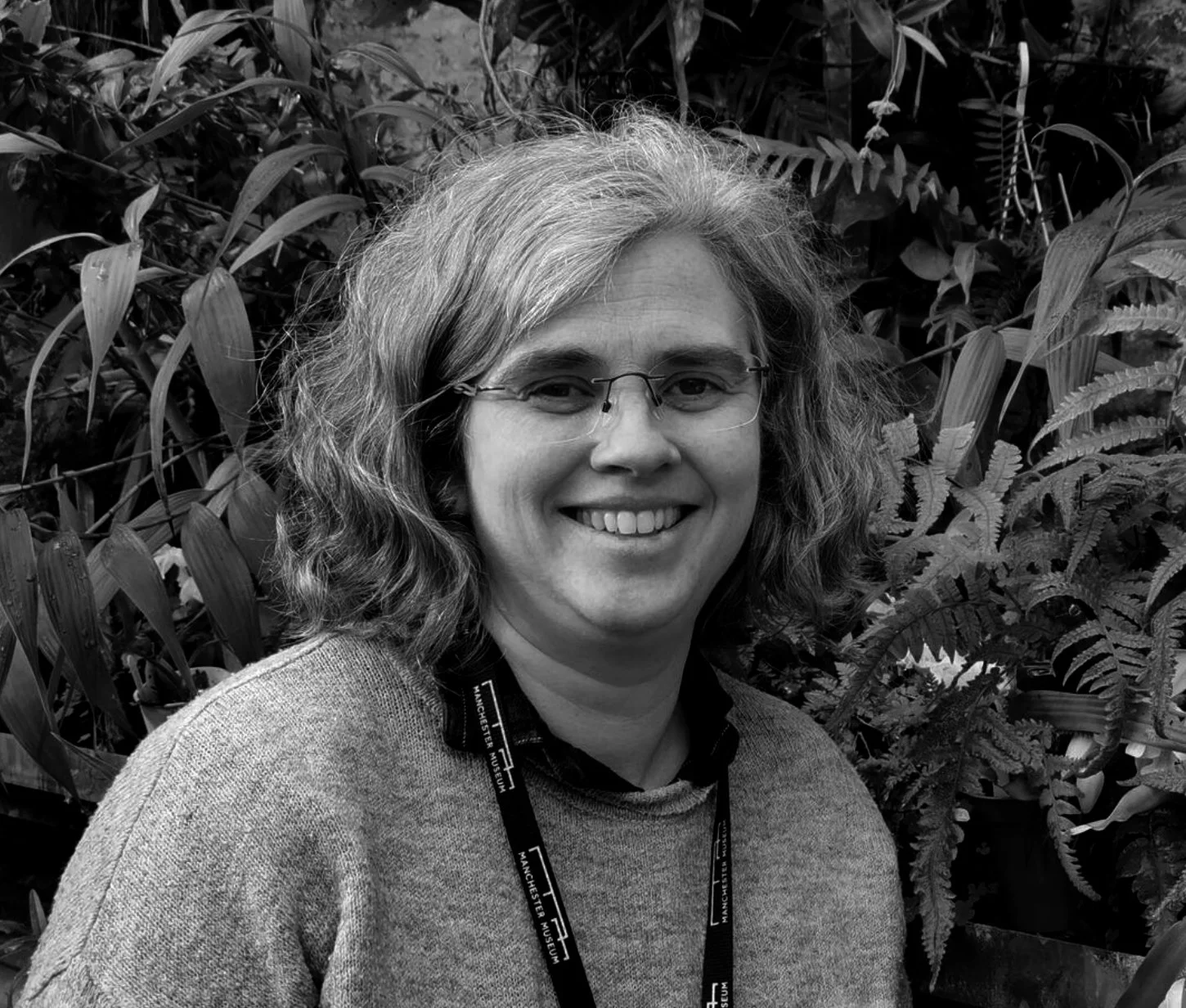
Dr Rachel Webster Curator of Botany
Rachel.E.Webster@manchester.ac.uk
Dr. Rachel Webster is the Senior Curator for Natural History and the Curator of Botany. Part of her role is to support all the other natural history curators with their work and projects, and to help plan improvements to our collection data with our Collections Manager. As Curator of Botany, Rachel is responsible for the herbarium - the Museum's collection of dried and preserved plants. This includes management and care of the collections, encouraging their use for exhibitions and activities, as well as providing access to people who want to use the collection for research and inspiration. There are more details about the exhibitions and projects Rachel has worked on here.
Rachel enjoys projects which allow people to connect with nature, especially in urban places and so often gets involved with nature activities in the city. She is currently co-secretary for the Manchester Nature Consortium which delivers the Manchester Festival of Nature in Heaton Park every June, organise the City Nature Challenge at the local level for Greater Manchester and is chair of the University of Manchester's Nature Action Group planting sub-committee.