
FREE | Drop in
LIVING WORLDS, FLOOR 1
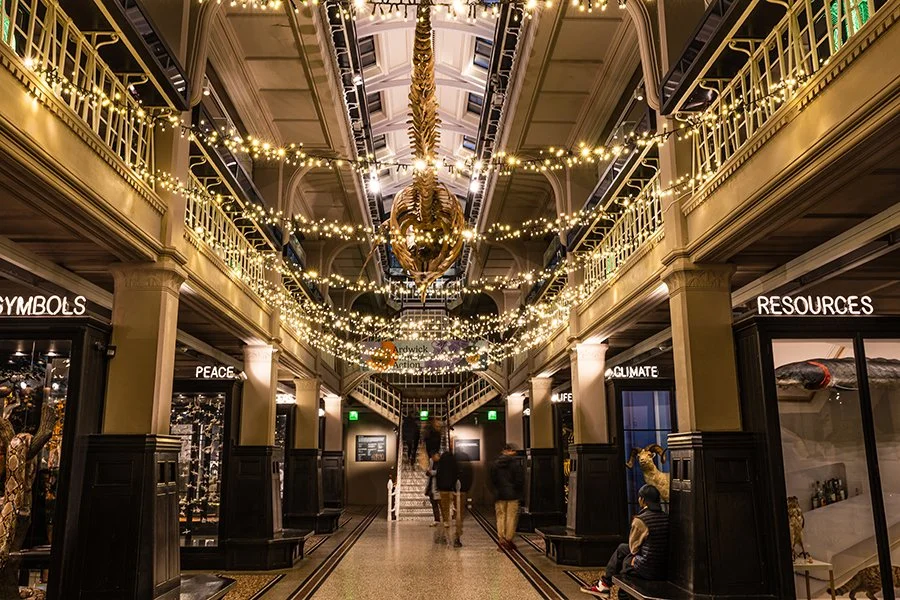
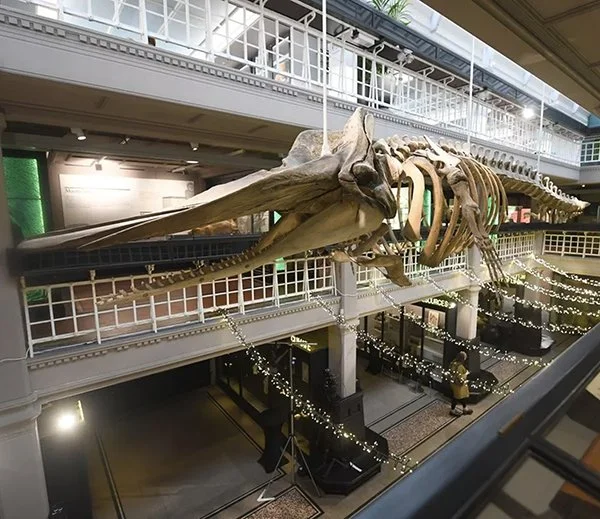
Suspended in your Museum’s Living Worlds gallery is the skeleton of a young Sperm whale, one of the most remarkable animals on Earth.
It’s been there for almost 130 years and, in all that time, can you believe it’s never been given a name?
So, to mark World Whale Day, we’re inviting you to create a piece of Manchester Museum history by helping us to finally name our whale.
Taking part is simple. Drop in to Living Worlds between Sunday 15 February (this year’s World Whale Day) and Sunday 15 March, pick up an activity sheet, make your suggestion and tell us why. We’ll then pick our favourite on Monday 16 March.
You’ll also have a chance to submit your whale-inspired artwork and we’ll be creating an online gallery featuring some of our favourites.

Meet the whale
This juvenile sperm whale once swam deep in the Atlantic Ocean before becoming stranded on the icy coast of Massachusetts in 1896. Its skeleton was later purchased by Professor William Hoyle, Keeper of Manchester Museum, while he was visiting New York.
Packed into three wooden crates, the bones crossed their former Atlantic Ocean home and arrived at Manchester Museum via Manchester docks in 1898. Here it took three weeks for local taxidermist, Harry Brazenor to re-assemble the skeleton, which has been part of the Museum’s story for more than a century.
Today it continues to inspire curiosity and wonder for all who see it in the gallery.
Why whales matter
Whales are mammals, just like us. They breathe air, feed their young on milk and are highly social.
Sperm whales are the largest toothed predators on the planet. They can grow up to 19 metres long, dive more than a mile beneath the surface and have the largest brain of any animal. Using echolocation, they navigate the dark ocean depths and hunt giant squid, often bearing the scars of these encounters.
Beyond their size and strength, whales play a vital role in ocean health. Their movements help circulate nutrients, supporting marine ecosystems that life on Earth depends on.
Whales and people
For centuries, whales have shaped human stories and imagination, from sailors carving whale teeth to Moby-Dick’s famous white whale. They have been feared, hunted, studied and celebrated.
Today, although commercial whaling has largely ended, sperm whales still face serious threats including pollution, noise from ships and climate change. There are an estimated 200,000 sperm whales worldwide, but their future is closely tied to the choices we make about our oceans.