
The birds and the bees is an old saying. It’s the simplified idea that there are two clearly defined biological sexes, each with its own role and purpose. But as Manchester Pride approaches, we at the Vivarium at Manchester Museum wondered what about the birds, the bees and the frogs? As with humans, who you are isn’t as always simple as having either XX or XY chromosomes. So, what can we learn from amphibians about the nature of biological sex.
To begin with, not all animals actually have XX or XY chromosomes. If you found a Japanese wrinkled frog (Glandirana rugosa) from a population in central Japan, they might be XX (female) or XY(male). But if you found one in northwestern Japan, they might be ZW (female) or ZZ (male) instead. Egg and sperm cells can only hold one chromosome, so when egg cells can only be X, and sperm cells can be either X or Y, it’s the sperm that determines the sex of the frog. But when a sperm cell can only be Z and an egg can be either Z or W, it’s the egg which decides. This little frog shows us that not only is sex more complex than XX and XY, but that some species can have more than two arrangements of sex chromosomes.
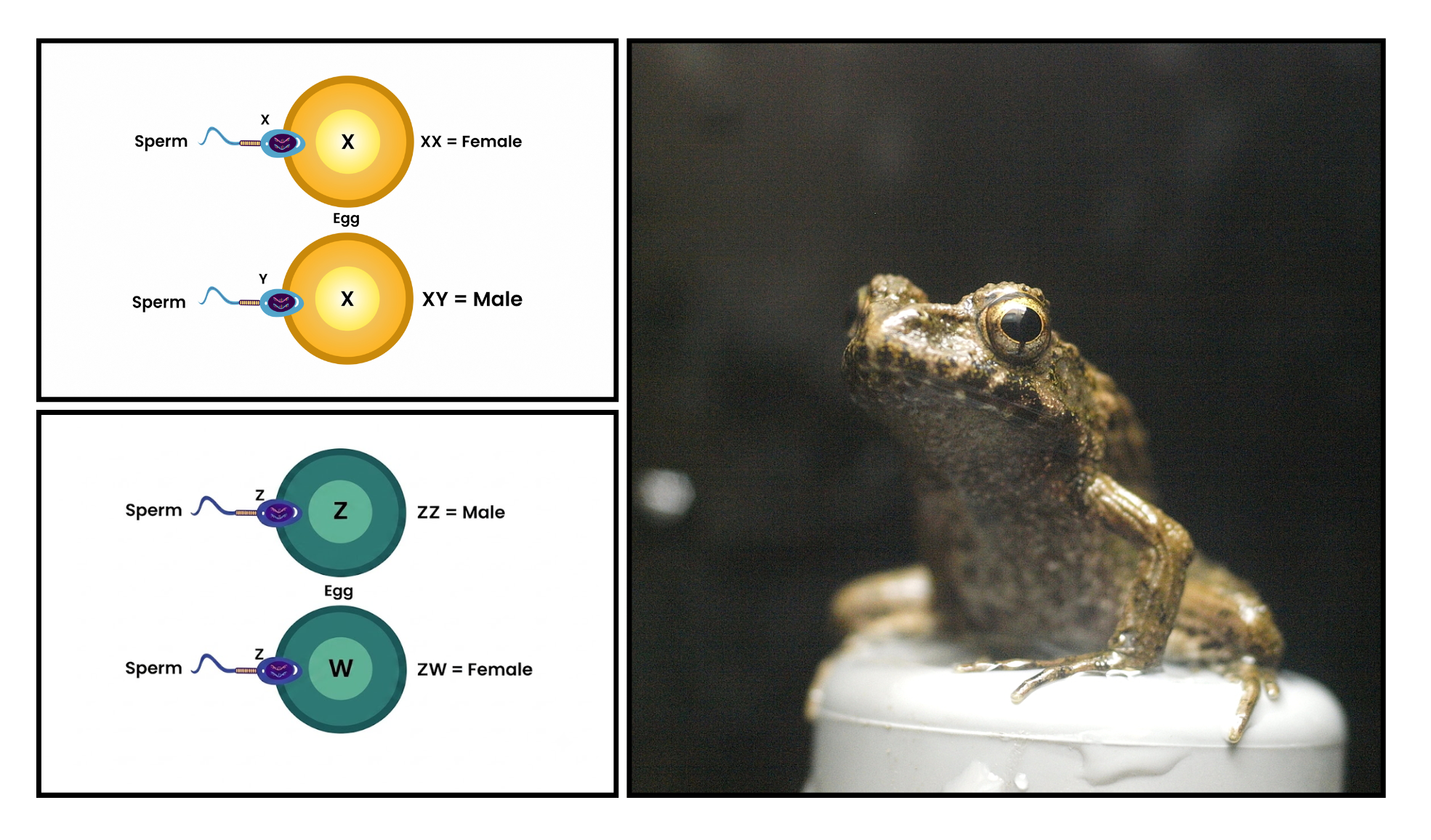
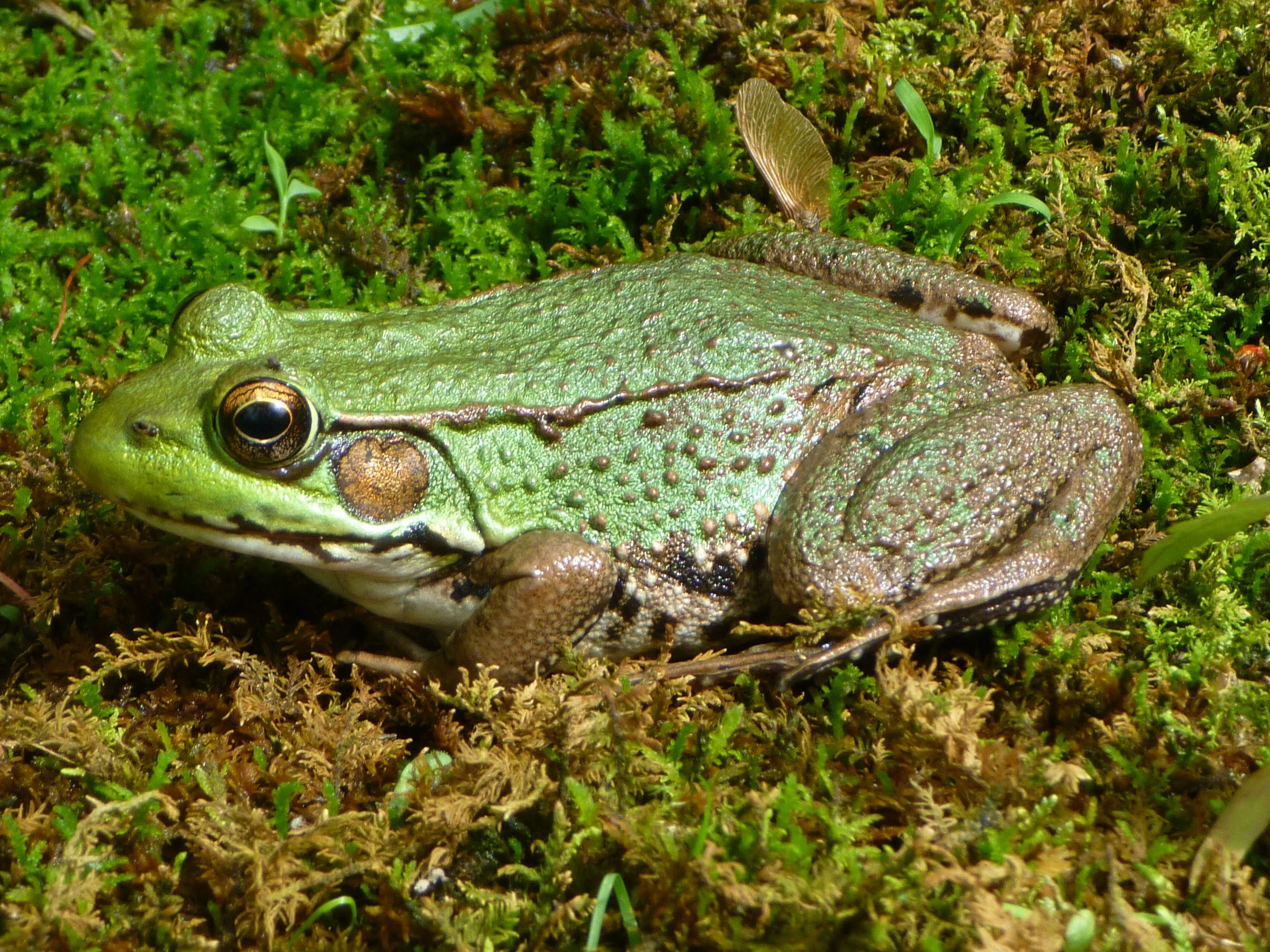
American green frogs (Rana clamitans) are even more interesting. Tadpoles that are born as female (XX) or male (XY) might not stay that way. During the change from tadpole to adult, hormones play a huge role in how frogs grow. In American green frogs, the combination of hormones along with environmental factors like water temperature can lead to tadpoles of one sex emerging as frogs of a different sex. It’s not fully known why this occurs, but one idea could be that a species that has this power might be better at adapting to changes in its environment.
While there are species with more than two biological sexes and species where chromosomes don’t define the adult’s sex, what about a species with only one biological sex? Mole salamanders (Complex Ambystoma Unisexual) from North America are all female. To reproduce, they mate with males from other species. Sometimes they use a little of the male’s genetic material, but other times they don’t use any which makes a clone of the mother. As with all creatures, these animals exist because they evolved an adaptation that allowed them to survive as a species.

So, what can amphibians teach us about ourselves? They show us that biology is never as simple or straightforward as we are taught to begin with. They demonstrate that there are many ways to succeed as an individual and a group. They remind us that diversity in who and what we are is part of being alive and what makes us beautiful and interesting.

Written by Christopher
I’m Christopher and I’ve been a part of the Manchester Museum Vivarium since 2019. I have a master’s degree in conservation and outside the Museum I work in data analysis.
My favourite amphibian is Melanobatrachus indicus, the galaxy frog.