
Of toads and witches
Like cats, toads have long been associated with witches as familiars; agents of the supernatural world who aid the witch in their use of magic. Unlike cats, which could be passed off as a working animal catching mice, toads are more difficult to explain to suspicious neighbours. What was the benefit, therefore, of keeping a potentially magical creature, which had already been linked with death, poisons, and the devil?
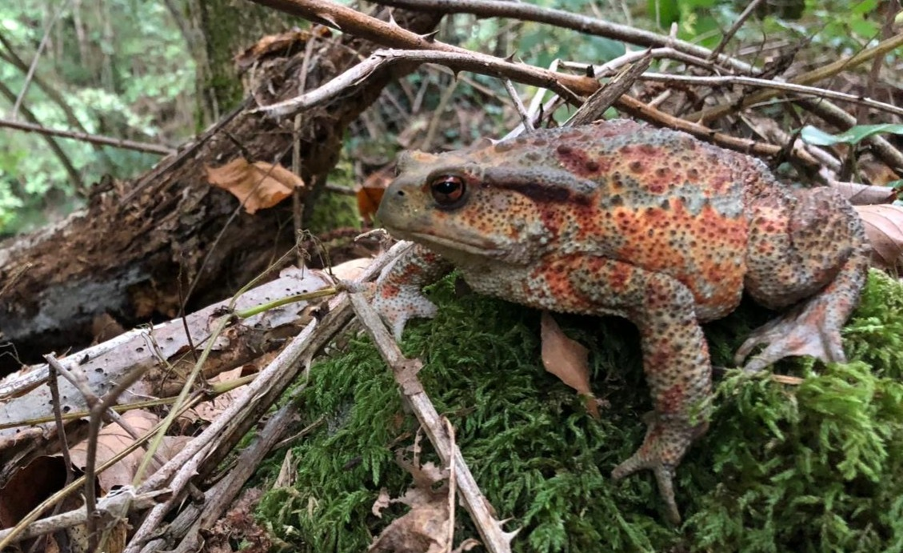
A perfectly normal, and probably not magical, toad (Bufo bufo).
Ursula Kempe was a cunning woman; someone who practised folk medicine and kept a number of familiars. During the 16th century she made her living as a healer in Essex. That was until she had the misfortune of mumbling near a young girl who later died. Alongside many other accusations of sinister magic (made by people Ursula had argued with), this led to her being tried as a witch. During her trial, one of her familiars, a toad named Pygine, was accused of having the power to make people ill. In all likelihood, he was probably just that, a toad. But who would cross a woman knowing they might face the wrath of the almighty Pygine?
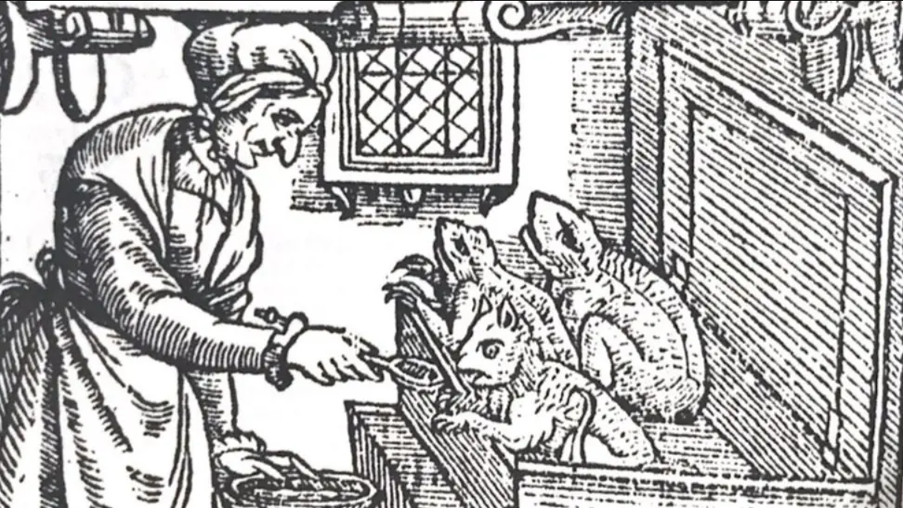
A depiction of a witch and her familiars.
The association with dark magics meant that, unlike today, even keeping a potential familiar could land you in hot water. In his 17th century book, A Perfect Discovery of Witches, Thomas Ady described meeting a woman previously thought of as perfectly respectable. Unfortunately, she also kept a frog in a box. This, coupled with the then social faux-pas of being both unmarried and old, was deemed far too suspicious. While she only kept it ‘for sport’, it raised enough suspicion in a society already made terrified by anything remotely linked to witchcraft. Subsequently, she was executed.
But not all stories end with the untimely demise of the witch. In 1632 William Harvey, physician to King Charlies I, was said to have been sent to investigate a questionable woman. Yet again, she was single, older and owned a toad. As a scientist, Harvey was keen to verify whether this woman was indeed both a witch and in possession of an almighty amphibian. Posing as a wizard, he convinced the so-called Newmarket Witch to present her familiar, which she summoned with a saucer of milk and a round of croaks. Harvey subsequently stole the toad and dissected it. However, having found no magical properties whatsoever, he deduced this toad was not of the magical sort at all. He returned what was left of her familiar, leaving the witch annoyed, but still very much alive.
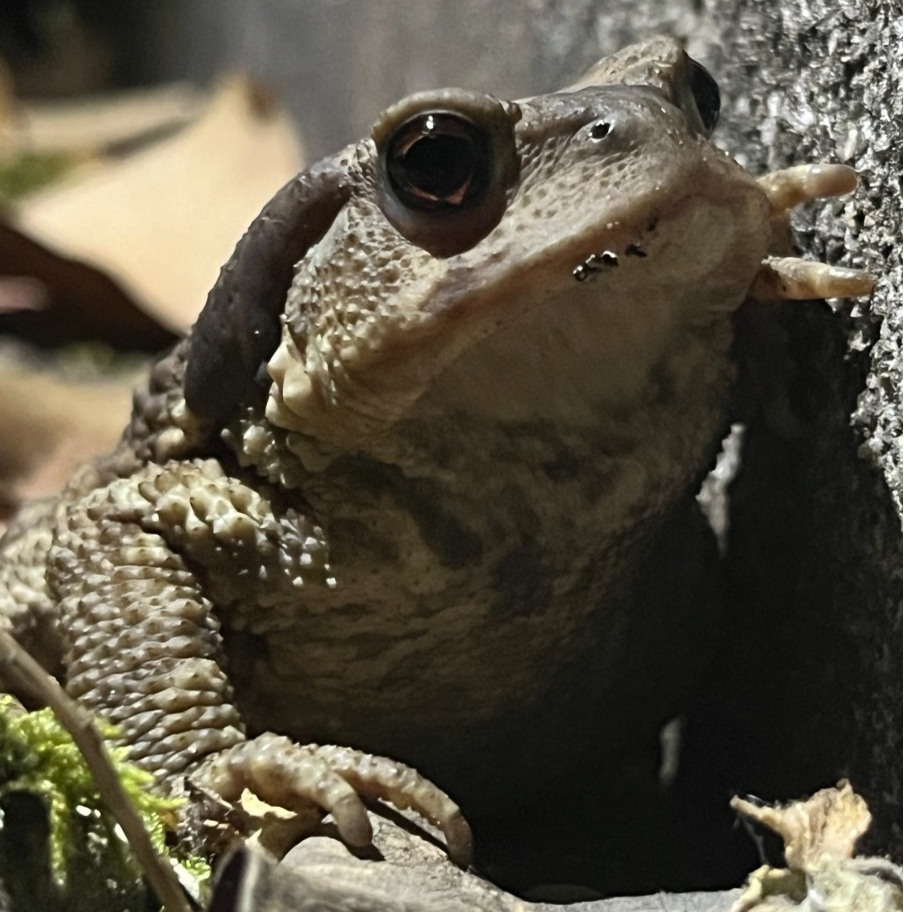
So why would a person keep a toad? Maybe because of some perceived miraculous properties, or perhaps some understandably thought they were neat. What we can be certain of is that they are truly magical creatures, be it how they transform from tadpole to toad, or for the amazing chemical properties of their toxins. Toads form a vital component of complex ecosystems, and the world would be much poorer without them.

Written by Christopher
I’m Christopher and I’ve been a part of the Manchester Museum Vivarium since 2019. I have a master’s degree in conservation and outside the Museum I work in data analysis.
My favourite amphibian is Melanobatrachus indicus, the galaxy frog.