
Meet one of the world’s most endangered animals at Manchester Museum
By Polly Checkland-Harding
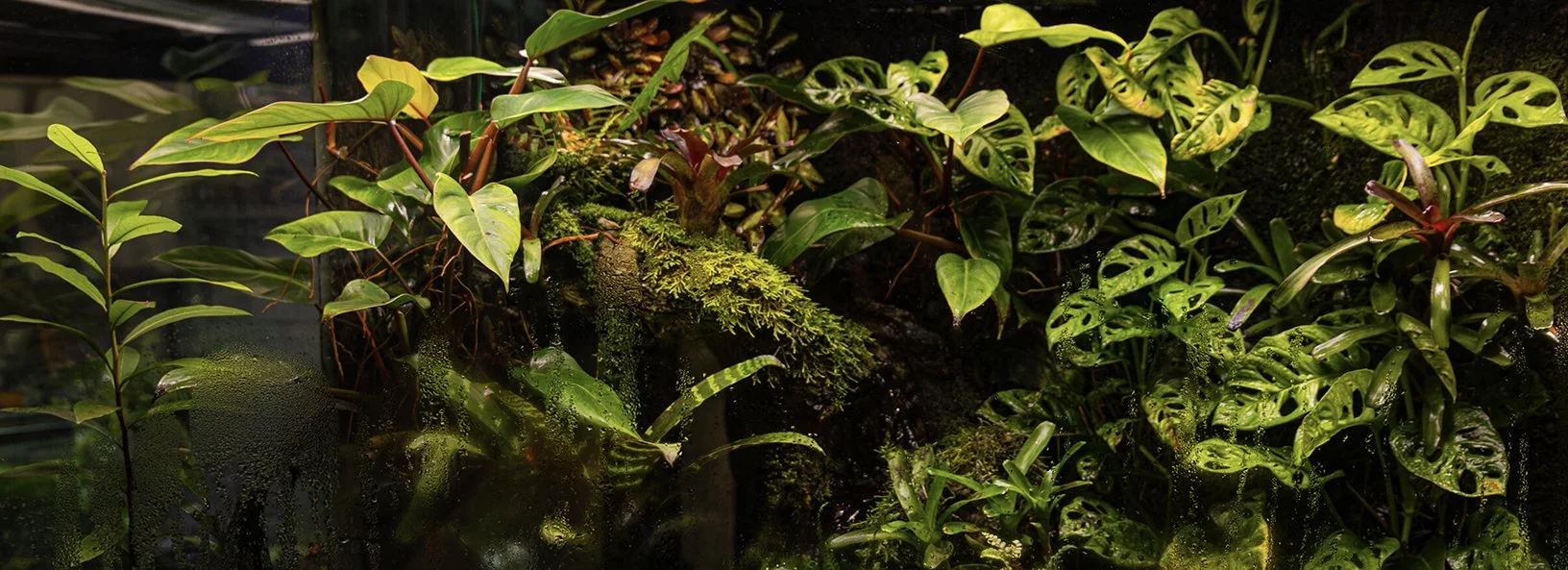
Normally, when you look through the glass of one of the largest enclosures in Manchester Museum’s Vivarium, you’ll be able to spot several black and yellow amphibians among the ferns, philodendrons, monsteras and mosses. Each bears a unique pattern, like a thumbprint, and measures less than six centimetres in length. This is the Atelopus varius, or variable harlequin toad, and if you follow their movements across the rocks or see one lock in on a fruit fly, you’ll be watching the behaviour of one of the rarest animals on the planet.
If the population in the wild were to collapse, the animals at Manchester Museum are there to help ensure that this fragile species doesn’t go fully extinct.
Ask people what Manchester Museum is famous for and many will mention the 4.5 million objects in its collection, its outstanding selection of Egyptian artefacts, or Stan the T. rex. What’s less well known is that the Museum is home to the only captive back up population outside of the Americas for the critically endangered Atelopus varius – only a couple of thousand of which are thought to remain in their natural habitat in Costa Rica and Panama. Which means: if the population in the wild were to collapse, the animals at Manchester Museum are there to help ensure that this fragile species doesn’t go fully extinct.
So, although the Vivarium is currently closed until May 2027 for major redevelopment work, absolutely vital work continues behind the scenes.
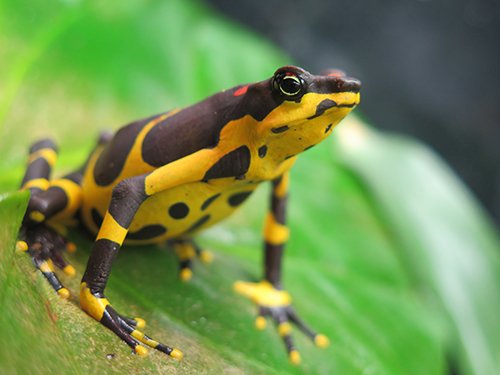
ATELOPUS VARIUS, THE VARIABLE HARLEQUIN TOAD
This is the story of how the Atelopus varius was successfully bred in captivity for the first time at the Museum – a world-first scientific achievement. It is also evidence of how it is possible to achieve real change through the living collections within a museum.
It begins with the drastic population decline in the variable harlequin toad, once abundant across Central and South America. There are various threats that have come for this animal over the past 30 to 40 years – habitat destruction, the international pet trade, the depletion of food sources – but by far the most devastating has been a microscopic fungi.
Responsible for the most lethal wildlife pandemic recorded in scientific history, the chytrid fungus is driving massive population decline in amphibians, contributing to the extinction of over 90 species so far. The fungus feeds on the keratin in the toads’ skin, which the Atelopus varius needs to breathe, drink and exchange minerals. Causing thickening and excessive shedding, it leaves the animal unable to perform basic processes, resulting in dehydration, a lack of minerals and eventual death.
Now we jump to 2016, when work by researchers from Manchester Museum caught the attention of the ambassador of Panama, who wanted to attach the University of Manchester’s expertise and reputation to a project in his home country. The result was an ongoing collaboration between Manchester Museum, Panama Wildlife Conservation Charity (PWCC) and the University’s Faculty of Medicine, Biology and Health.
Chosen for being one of the most iconic and beautiful species through which to highlight the challenges amphibians are facing globally, the Atelopus varius is also crucial to the ecosystems in which it exists. Tadpoles improve water health by grazing on algae, recycling the nutrients and reducing the bio load in streams and are, in turn, fed on by fish and other animals, while adult toads help to suppress disease carrying insects. However, early in the project, the team became aware of an imminent threat to one of the species’ remaining habitats.
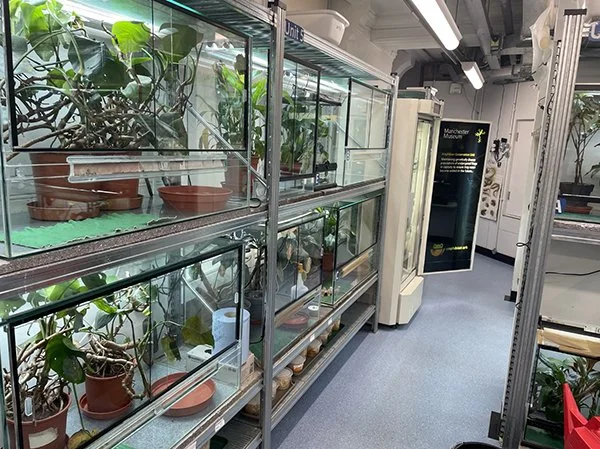
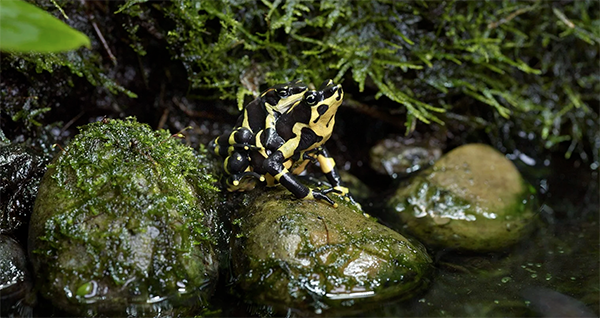
BEHIND THE SCENES IN THE VIVARIUM AT MANCHESTER MUSEUM; TWO VARIABLE HARLEQUIN TOADS IN AMPLEXUS.
Swathes of forest were cleared, as well as a considerable part of the stream system, and the indigenous toads were gone.
Developers were planning to build a road through pristine territory, making an extremely remote area much easier to access and increasing the risk of poaching. This was the location that the Museum collected the animals from to begin a breeding programme with, just six toads, at an early stage of development. A couple of years later, the site was heavily damaged by illegal logging activity. Swathes of forest were cleared, as well as a considerable part of the stream system, and the indigenous toads were gone.
The stakes for the ongoing success of the breeding programme could not have been higher. “When you’re taking an animal from the wild, you’re taking it from this pristine habitat and one of the last populations that’s surviving,” says Matthew O’Donnell, Curator of Herpetology (the study of reptiles and amphibians) at Manchester Museum. “Bringing it to Manchester Museum is a lot of responsibility, if something goes wrong with those animals, we could potentially have damaged the wild population for no reason.”
Transporting the animals 5,500 miles from Panama was a massive logistical challenge. The team needed separate permits for collection, export and import, as well as completing extensive health checks to ensure they weren’t bringing diseases into the country. The toads couldn’t travel in the cargo hold, meaning a special arrangement had to be reached with the airline, and custom-built enclosures created to safely carry the animals for the 14-hour flight.
Back at the Museum, three years of preparation had gone into recreating the correct temperatures, water levels and water pressure of Panama’s turbulent tropical streams. O’Donnell and his team even painted algae gel onto rocks in the tanks to replicate the diverse diet enjoyed by Atelopus varius tadpoles in the wild. Once safely installed, all the team could do was wait.
The first time they saw tadpoles in the tank, over 18 months later, it was a world-first achievement, and one that made national news. “It was amazing, a really special feeling,” says O’Donnell.
Now, the Museum is home to 41 animals, including three of the original six collected from Panama, feeding them on greenflies, tiny crickets and fruit flies that are genetically engineered to not be able to fly. Each toad is given a photo ID, with the researchers working from a stud book when breeding to maintain genetic diversity. Highly poisonous, the animals are handled wearing gloves to stop neurotoxins from being absorbed into the bloodstream from unseen cuts on the hands.
The story doesn’t end here. In April, it was announced that the Vivarium would undergo a major redevelopment, thanks to a grant of £200,000 from the DCMS/Wolfson Museums and Galleries Improvement Fund. The ambition is to be able to use the new displays to take visitors on the journey of the globally-significant conservation work the Museum has undertaken, much as this piece has done. Through new, state-of-the art facilities and bespoke environments, this living collection will help to connect people with the steps they can take to help make a difference. In the meantime, go and visit the Atelopus varius, fall in love with this remarkable creature – and marvel at the transformative work that is happening right here, right now, in Manchester.
______
If you’d like to make a donation to support the Vivarium redevelopment, we would really appreciate your support.