
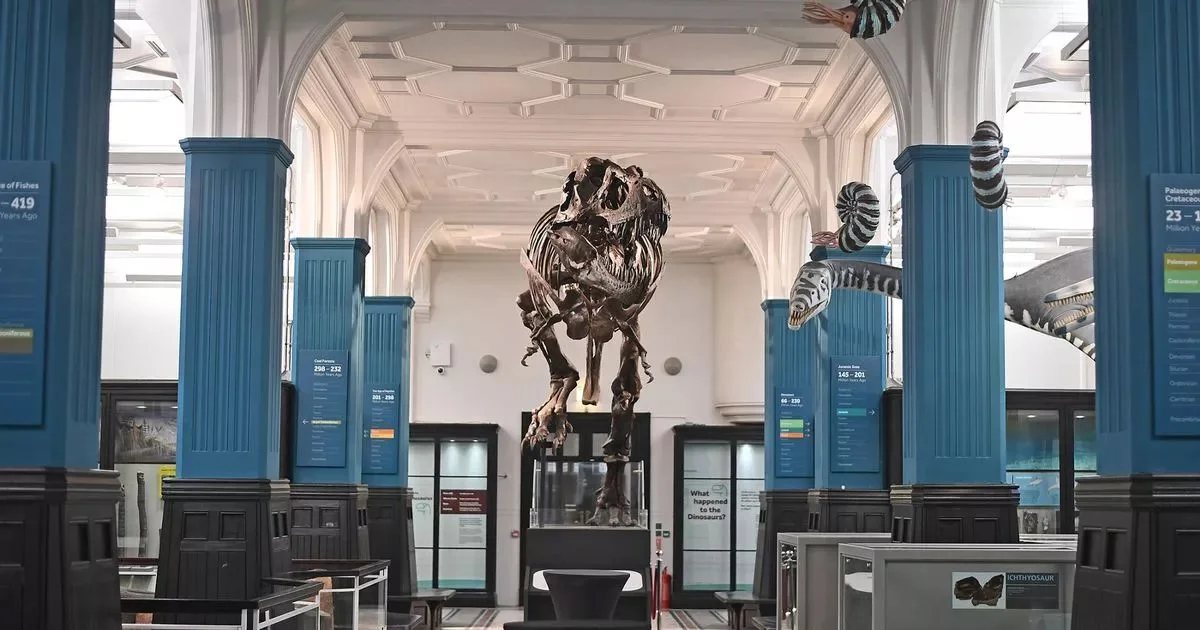
GALLERY | GROUND FLOOR
Fossils and Dinosaur Gallery
Come face-to-face with prehistoric giants Stan the Tyrannosaurus rex and April the Tenontosaurus and learn what it means to think like a palaeontologist.
The story of our changing world is woven throughout the displays. From a 300-million-year-old fossil tree, a fragmented rock showing the moment the asteroid hit Earth through to Ice Age animals found at Creswell Crags, the objects hold important information, helping us understanding evolution, climate change and even outer space.
Take a quick look at the Fossils and Dinosaur Gallery
Gallery highlights
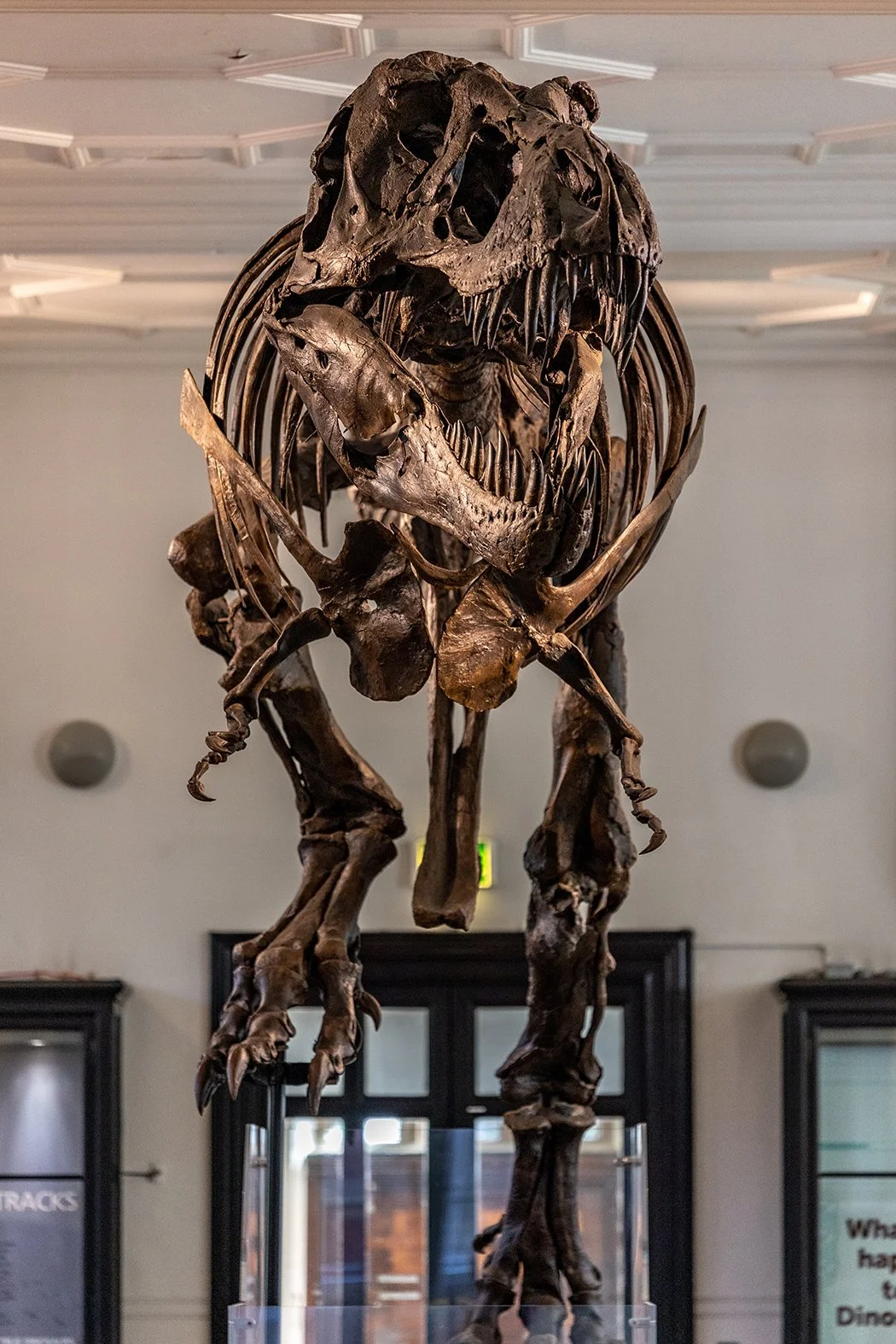
Stan the Tyrannosaurus rex
Stan is a bit of a big deal. Since taking his place in the gallery back in 2004, you could say he’s grown to become a true Manchester celebrity. He’s the star of countless selfies, has been present at many weddings and even wears a Santa hat every Christmas. Excavated in 1992 in South Dakota, USA, by palaeontologist Stan Sacrison, it is the second most complete T. rex ever found and casts of his famous bones are on display in a number of locations across the world.
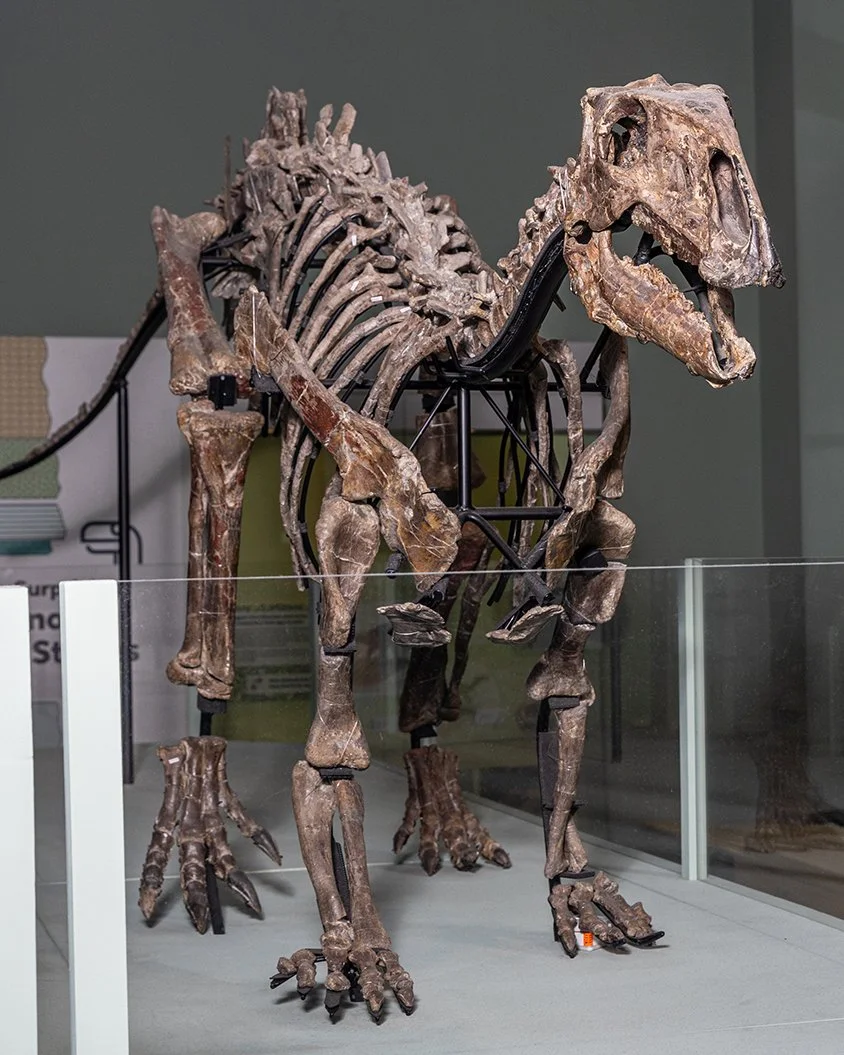
April the Tenontosaurus
April, a 110-million-year-old Tenontosaurus, is one of the most complete and best-preserved skeletons in the world, studied for decades and notable for containing rare fossilised stomach stones. This incredible dinosaur was restored, reassembled and remounted with the help Earth Sciences students from the University of Manchester, putting it back centre stage after years off display.
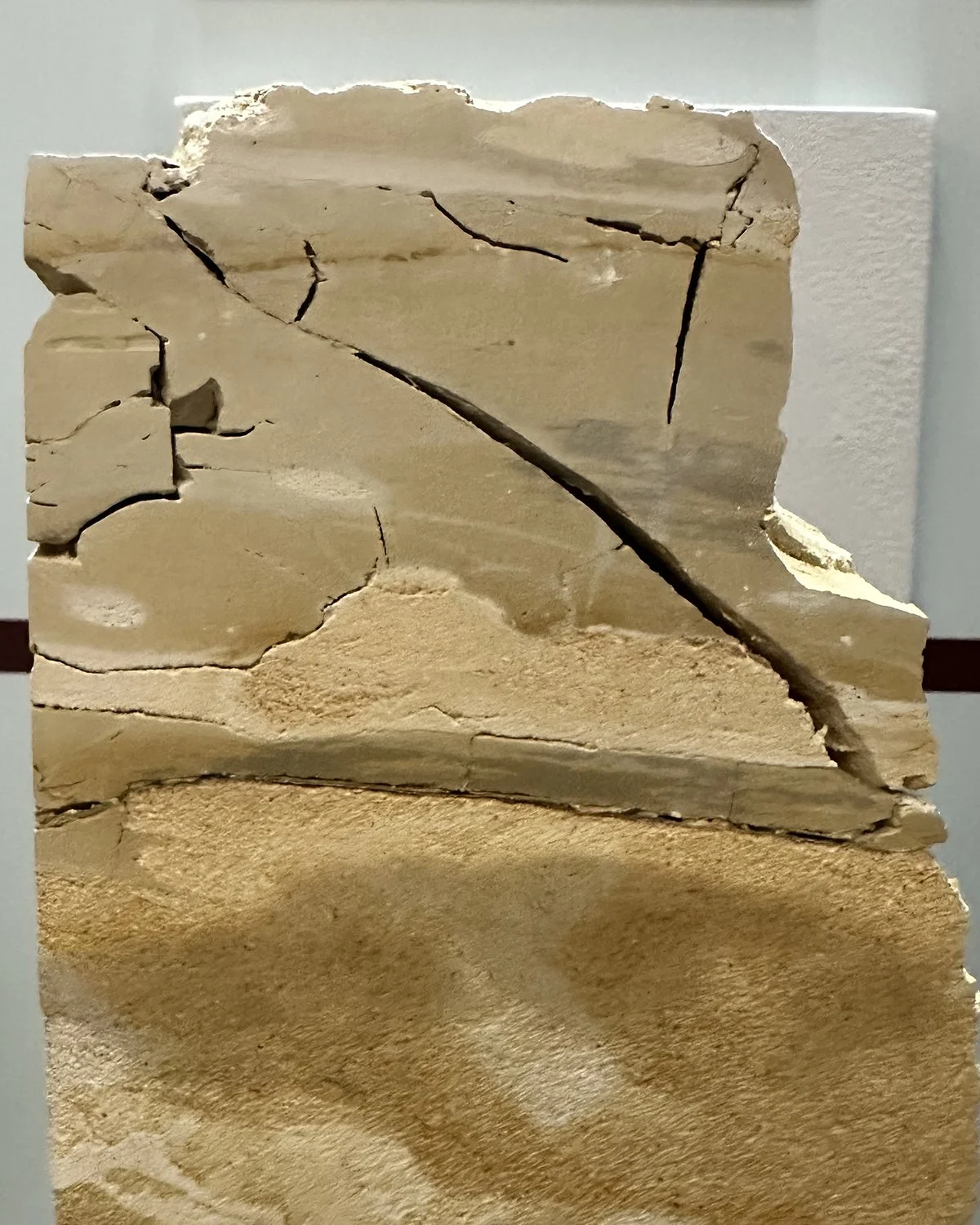
Cretaceous-Paleogene boundary
It’s hard to get your head around but this sediment sample actually shows the moment at which an asteroid hit the earth, triggering the mass extinction event that wiped out all non-avian dinosaurs. This sediment, from Maastricht in the Netherlands, displays the Cretaceous-Paleogene (or K-T) boundary, marking the end of the Cretaceous period and the beginning of the Tertiary period, about 66 million years ago.