
The Cat That Slept for a Thousand Years
19 July – 14 September 2025
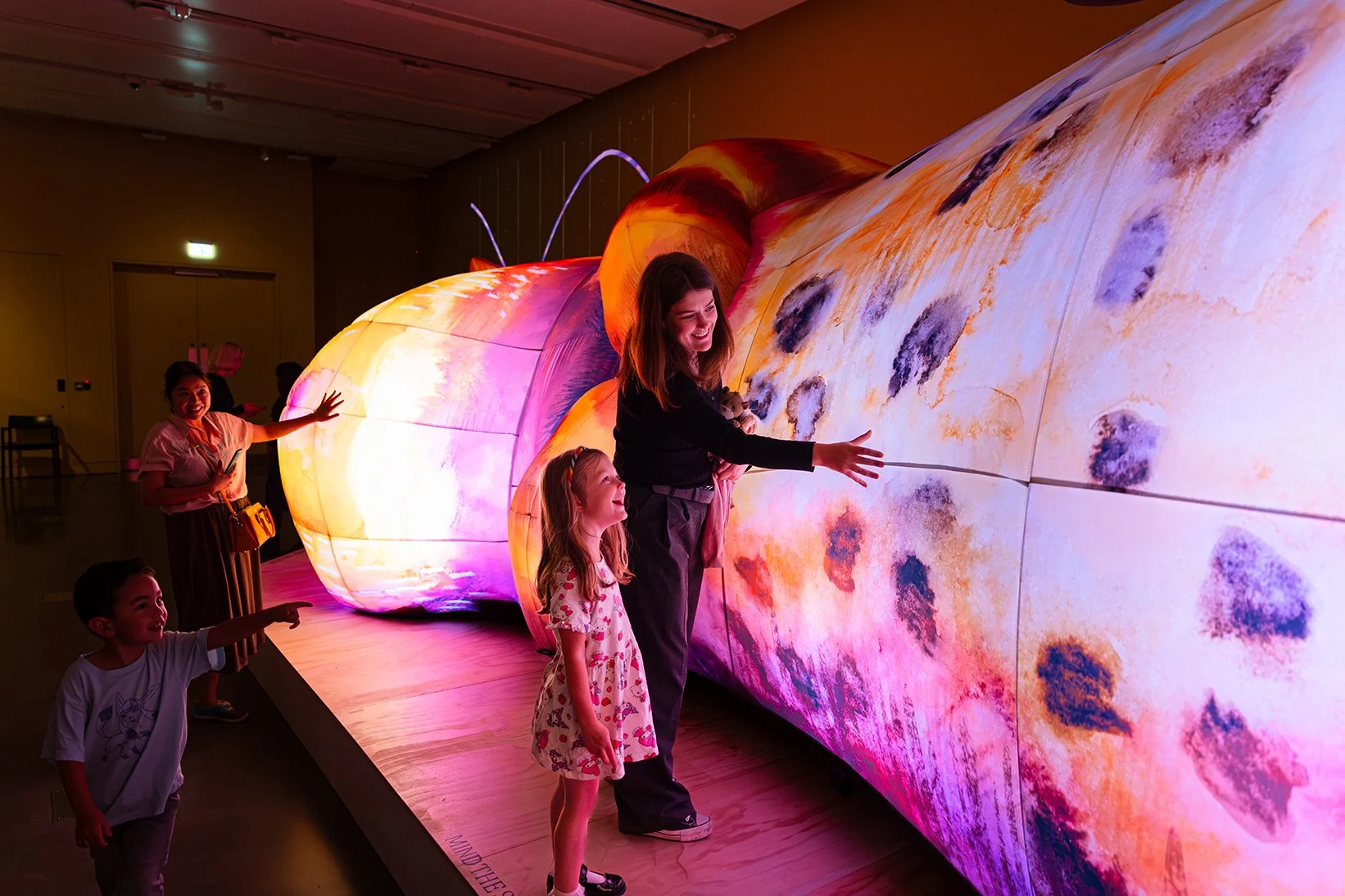
Mesmerising, mysterious and full of warmth, The Cat That Slept for a Thousand Years invited visitors into a dreamlike space where they were invited to care for a gently snoozing, cosmic cat.
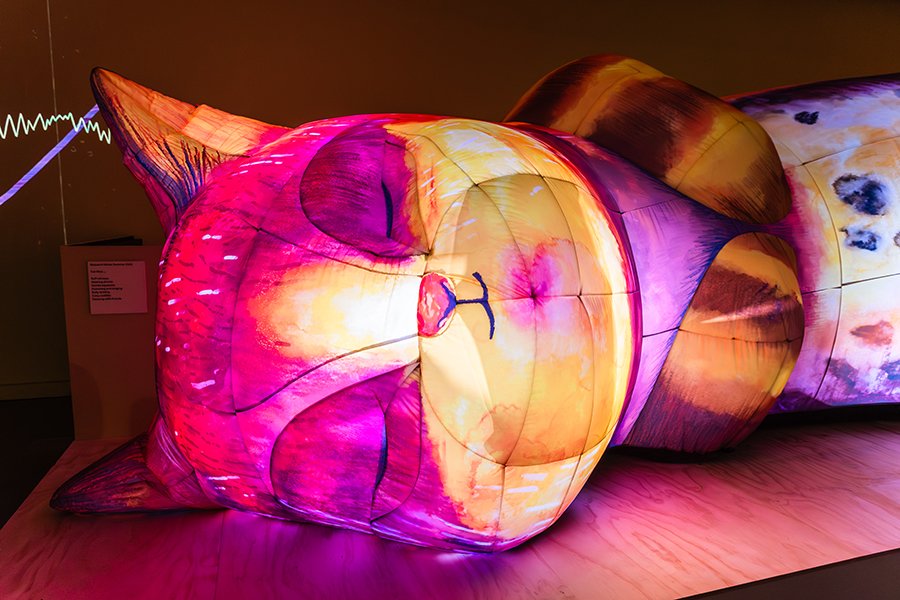
This wasn’t the kind of cat that curls up in a windowsill or knocks your mug off the table. No, this feline was 10 metres long, inflatable and robotic, able to respond to human presence and help your imagination take flight.
Created in partnership with creative robotics studio Air Giants, the world-premiere exhibition was a beautiful mix of art, theatre and robotics, building on Manchester Museum’s values to encourage care for the world around us. It challenged us to consider how care might extend beyond our own lifetime and how it applies to beings that can’t directly tell us what they need.
The calm, light-soaked installation encouraged visitors of all ages to slow down and enjoy a moment of connection, invited to stroke and cuddle the cat or simply spend time in its company. While softly snoozing, the cat purred, twitched its ear and moved its tail in response to the people around it. It beckoned little ones to play, and grown-ups to briefly forget about emails, laundry, and whether or not they remembered the packed lunch.
Museum collections were used to tell stories about our relationship with cats and to help us think about different forms of care, for animals, our planet and each other.
The calm, light-soaked installation encouraged visitors of all ages to slow down and enjoy a moment of connection
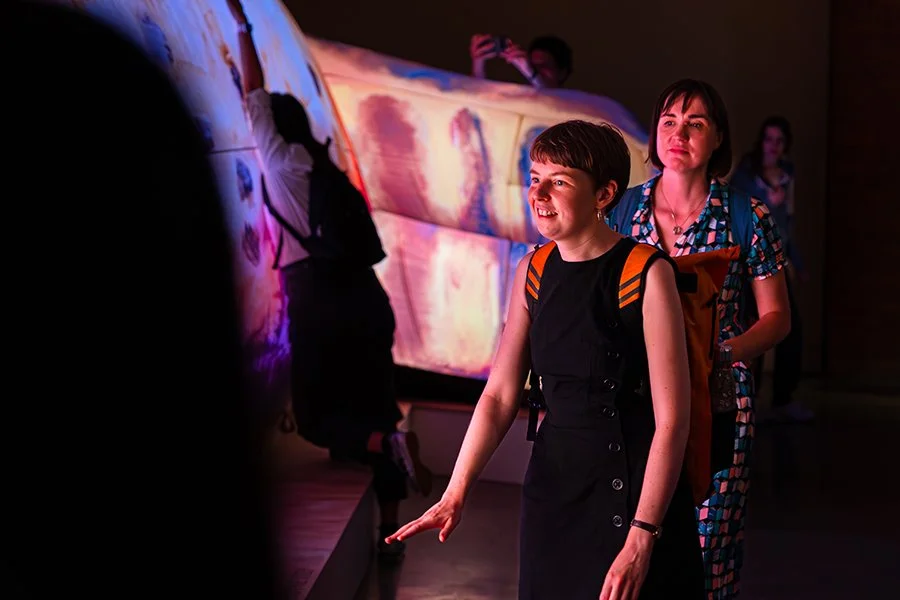
Rarely has a sleeping cat made this much noise.
From the moment Manchester Museum announced The Cat That Slept for a Thousand Years, people were gripped by the story of the giant feline. And that sense of excitement only continued throughout its two-month run, with more than 75,000 visitors paying our fantastic feline a visit.
The way the cat operated was ingenious too. Heartbeat sensors inside it detected when people entered the exhibition space and software used this data to modulate the cat’s mood, controlling purrs and snores, along with the motions of its tail and ear, as the audience moved around it. Movement was made possible through fans and air valves, controlling airflow within the inflatable.
But more than anything, it was a sprinkle of magic that allowed us all to imagine exciting new possibilities for exhibitions at Manchester Museum.
