
Oh Caecilian, you’re breaking my heart…
Guest piece from Vivarium volunteer Joe Knox
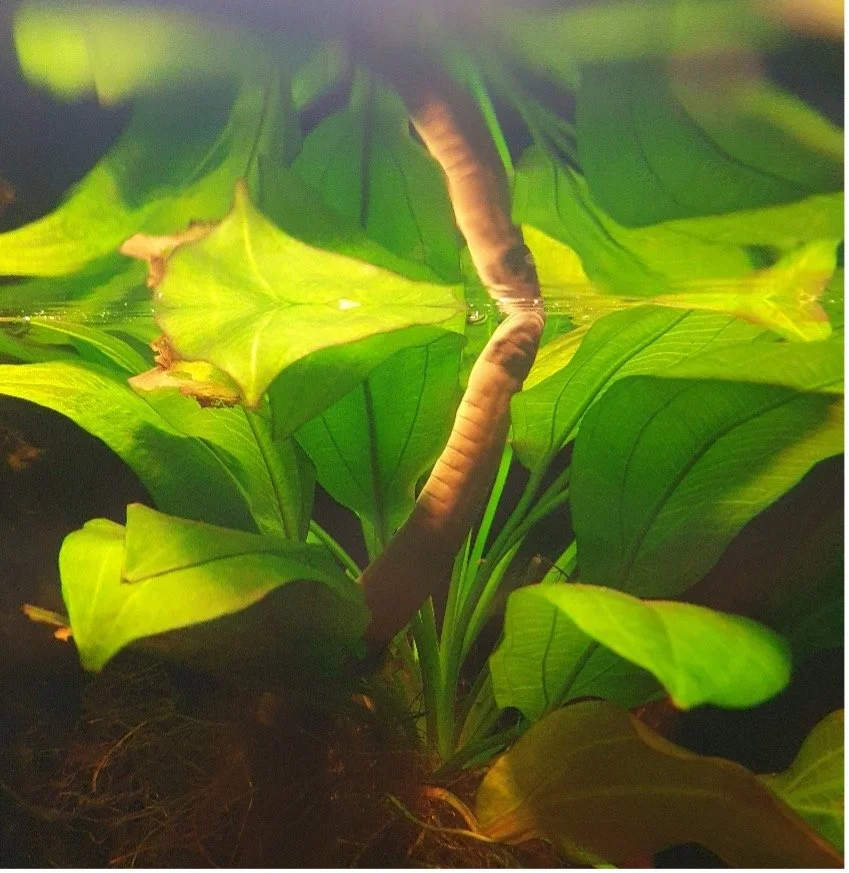
There are three orders of amphibian: Anura (frogs and toads), Caudata (Salamanders) and Gymnophiona (Caecilians). The latter is by the far the least studied and comprises of 183 known species split into three families - Caecilidae, Ichtyophiidae and Rhinatrematidae.
Caecilians are limbless amphibians that live in the tropics and subtropics, mostly in soil or semi-aquatic environments. However, some species in the Typhlonectinae subfamily are fully aquatic.
At Manchester Museum, our caecilians, Typhlonectes natans, are one of only two species (along with T. compressicauda) in the Typhlonectes genus and are restricted to the Cauca and Magdalena River basins in Colombia and the Maracaibo basin in Venezuela.
Typhlonectes natans
At first glance caecilians may not seem exactly cute and cuddly but remarkably, recent research has found them to exhibit at least three forms of parental care. The extent of care usually aligns with their mode of reproduction- viviparity (live-bearing) or oviparity (egg-laying). Young of viviparous caecilians like T.natans feed on a nutritious fluid and on pieces of their mother’s oviduct epithelium during the gestation period via a special tooth. Upon hatching inside the uterus, offspring may even eat their siblings by cannibalising unfertilised eggs and embryos.
Oviparous caecilians often show egg attendance and ‘skin feeding’ (dermatophagy) whereby hatchlings feed off the mother’s skin (which is enriched with lipids) for up to 2 months. Showing her true maternal nature, the mother may not feed at all during this period and her skin turns white, reflecting lipid accumulation. In one oviparous species, the mother produces a ‘milk’ from her cloaca, possibly in response to auditory and tactile signals, which provides her offspring with important lipids and mucopolysaccharides needed for growth- try adding that to your morning coffee!
Milk provisioning in Siphonops annulatus
All this costly parenting may seem counter-intuitive, but data from Siphonops annulatus suggests that whilst the mother may lose 30% of her body mass by the end of the care period, after the first week of hatching, milk provisioning may increase offspring growth by 130%. Furthermore, parental care is more common amongst amphibians than you might think. For example, strawberry poison dart frogs, Oophaga pumilio, transport their offspring to pools of rainwater in bromeliad leaves so that they can complete their metamorphosis away from predators. During this time, the female feeds her tadpoles unfertilised eggs which sustains their growth and provides them with a defensive poison.
Therefore, from an evolutionary perspective, parental care may have a huge fitness benefit in amphibians.
So, all in all there is much more to caecilians than meets the eye. However, I doubt we’ll see their milk on supermarket shelves any time soon, and if we do I, for one, am sticking with the vegan option…