Making Monuments on Rapa Nui: The Stone Sculptures of Easter Island
1 April – 6 September 2015
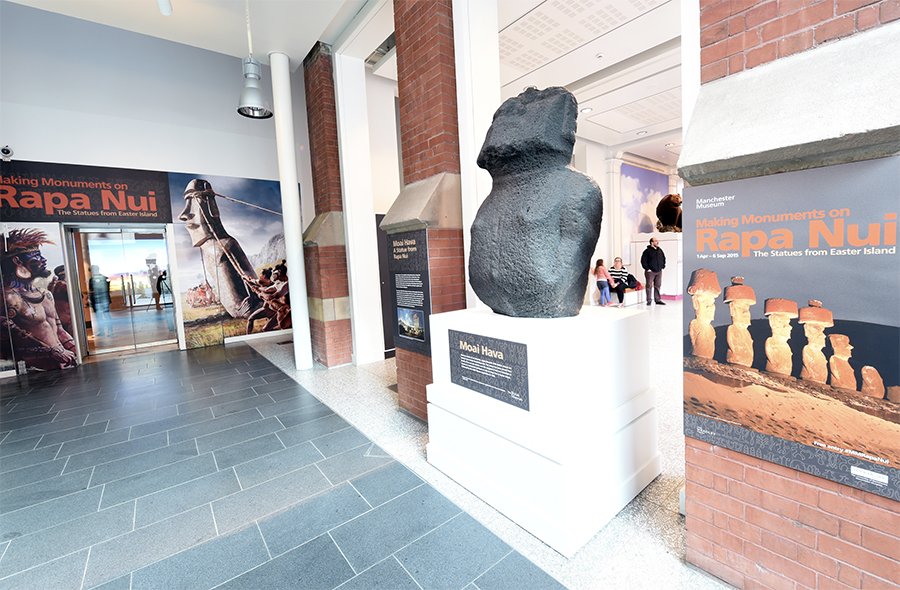
The Museum’s Making Monuments on Rapa Nui: The Stone Sculptures of Easter Island exhibition, allowed visitors to find out more about the monumental stone statues, or ‘moai’, of Rapa Nui (named Easter Island by European explorers). Discover the role they played in the lives of the islanders, how they were quarried and transported across the island, and what they mean. Create statues of your own inspired by objects in the exhibition, including Moai Hava, a statue collected from Rapa Nui in 1868, on loan from the British Museum.
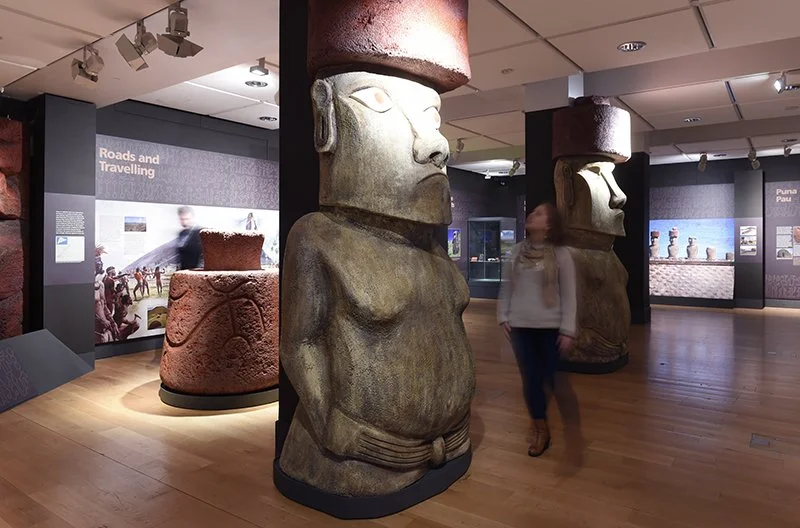
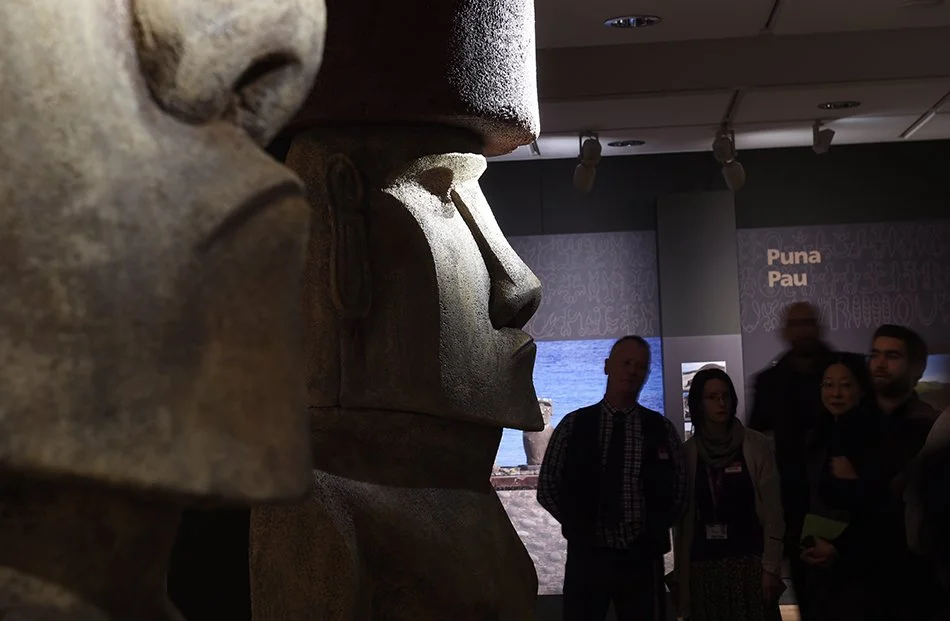
The centrepiece of the exhibition is the statue of Moai Hava. This 2m high 2.5 ton basalt statue has been kindly lent by the British Museum as part of its National Programmes. Until recently Moai Hava was displayed at World Museum Liverpool. These impressive statues enjoy an iconic status across the world. Drawing upon the recent fieldwork undertaken by experts from University College London, the University of Manchester, Bournemouth University and Orkney Research Centre for Archaeology (ORCA), University of Highlands and Islands as well as Rapa Nui and Chilean archaeologists, Manchester Museum’s temporary exhibition explores how the statues were made, the significance of the different kinds of stone, and the quarries where they were carved, and the meaning that they had for the people of the island who are known as Rapanui. In addition the main exhibition gallery features two large replica statues or moai, each 2.5m high and surmounted by a topknot or pukao. These impressive copies were made by Chris Dean (who did the sculpting) and Peter Spinks of Freeform Studios Ltd and Creative Models respectively.