
Plastics research
at the University of Manchester
Zhonghua Zheng
Atmospheric Micro/Nanoplastics
Every day, without realising it, we are breathing in air that contains tiny fragments of plastic. These micro- and nanoplastics are so small that they are invisible to the naked eye, yet they can travel across cities, oceans, and even continents.
A piece of plastic from a worn tyre, synthetic clothing, or degraded waste can break down into microscopic particles and be lifted into the atmosphere. Carried by winds, these particles can travel thousands of kilometres, reaching remote mountains, oceans, and even polar regions.
Our research focuses on understanding this hidden global cycle. In our recent work, we synthesise current knowledge of how airborne micro- and nanoplastics are emitted, transported, and ultimately removed from the atmosphere. A key finding is that large uncertainties still exist, particularly in estimating where these particles come from and how much is emitted into the air. These uncertainties arise from limited observations, inconsistent measurement methods, and simplified modelling approaches.
To address this, we are developing new approaches that combine atmospheric modelling with Artificial Intelligence (AI) to better constrain emissions and track the movement of these particles. This research helps inform strategies to monitor and reduce plastic pollution at a global scale.
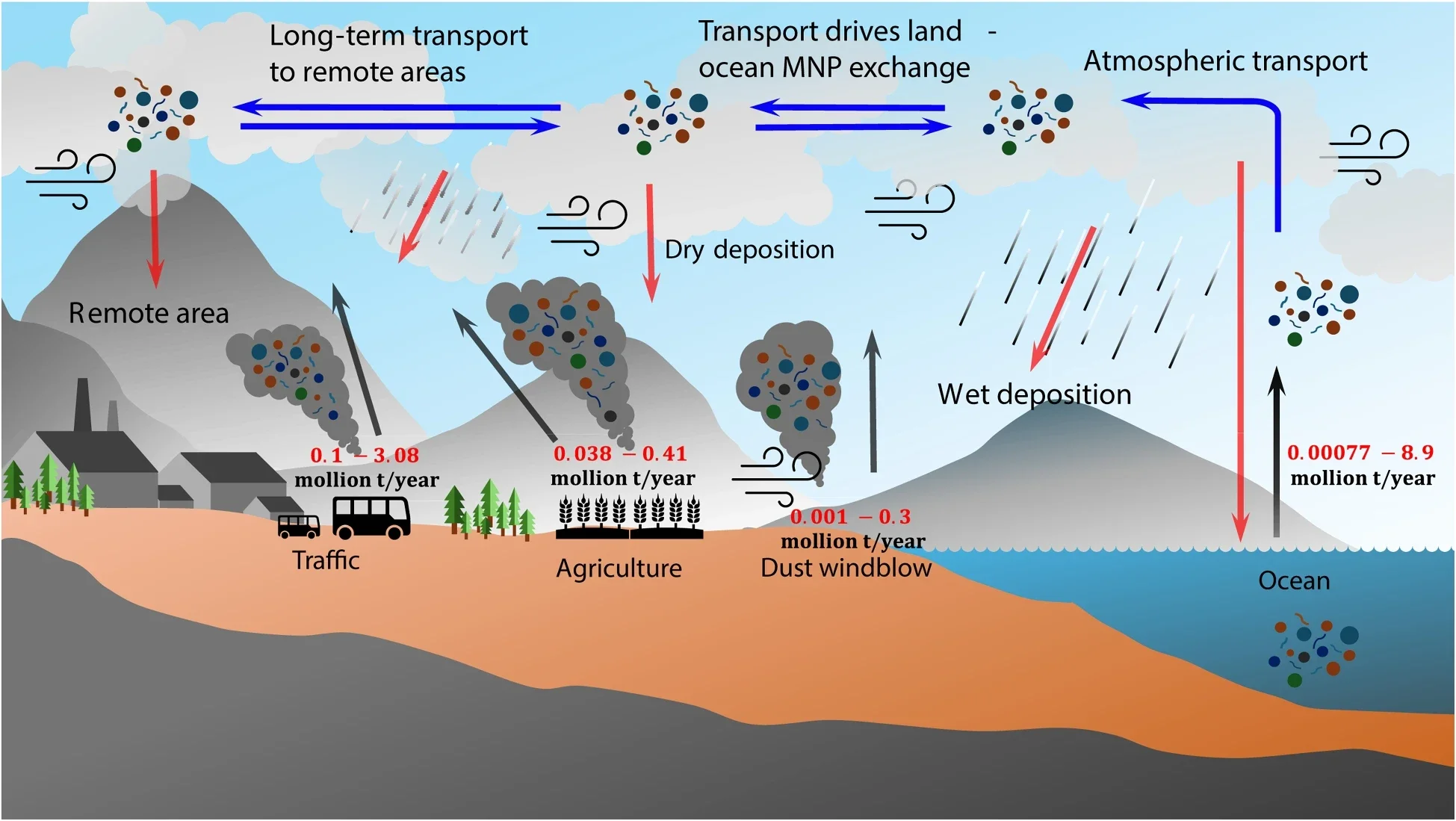
Fig. 1 from: A Review of Atmospheric Micro/Nanoplastics: Insights into Source and Fate for Modelling Studies
Schematic of AMNPs lifecycle. The black arrows indicate the emission of MNPs into the atmosphere, primarily from terrestrial sources and marine sources.The blue arrows illustrate the atmospheric transport process, where AMNPs are rapidly carried over long distances by airflows, unaffected by terrain, facilitating the exchange of MNPs between land and ocean and dispersing them to remote areas far from the emission sources. The red arrows represent the deposition process, which deposits AMNPs onto the ground, leading to their long-term accumulation in various ecosystems.
Lu Shin Wong
biotechnology
to improve plastic recycling
Thermoset resins are a group of plastics that are used as structural materials in the construction, automotive and aerospace sectors; due to their very high durability, strength, lightness. For example, they are used to make vehicle panels, wind turbine blades, household fittings. However, their robustness means that they are very difficult to break-down and recycle. As a result, they are mostly entirely disposed by landfilling.
Our team are researching the use of enzymes – nature’s biological catalysts – to cleave the chemical bonds within these polymers, thus enabling their break-down to small innocuous molecules that can more easily be recycled. We aim to use enzymes that are sourced from natural organisms that decompose wood, and adapt them for thermoset resin recycling.
We work as part of a UK-wide network of universities and companies that aims to tackle plastic pollution with ‘engineering biology’, where we apply engineering principles to harness Nature’s processes for more sustainable plastic recycling.