
THE STORY OF THE RSPB
A feathered fashion revolutionOn a quiet path in Fletcher Moss Park in Didsbury stands a house that helped change the course of conservation history.
Today the park is a place where people walk, watch birds and enjoy a stretch of green space in south Manchester. But in the late nineteenth century it became the unlikely starting point for a society that challenged a global fashion trend and offered women a voice in conservation at a time when they were excluded.
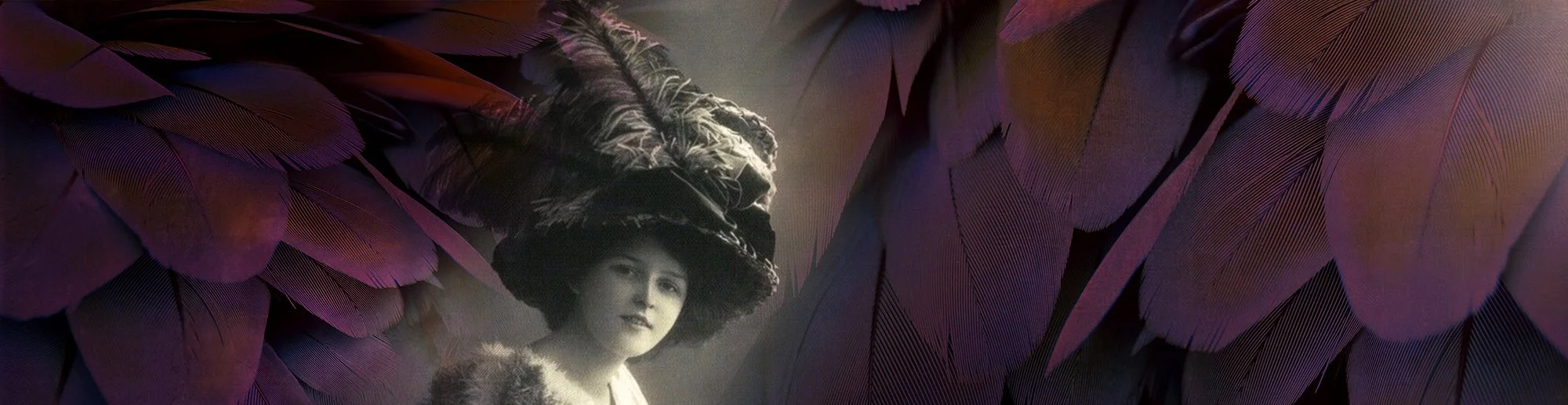
Victorian fashion had developed a fascination with feathers. Women’s hats grew increasingly elaborate, decorated with sweeping plumes, wings and, in some cases, whole birds. As styles became more extravagant, the demand for feathers intensified and birds were hunted across the world to supply the trade.
THE STORY OF THE RSPB.
“The feathers and plumes got more and more elaborate until there were birds' wings on hats and then eventually whole birds attached hats,” explains Alasdair McKee, Local Groups Development Officer at the Royal Society for the Protection of Birds (RSPB).
Behind the trend was a vast international industry. Feathers were imported from across Europe, Asia and the Americas, including birds of paradise brought from Southeast Asia. At its height the plumage trade was enormously profitable.
“It was an incredibly huge industry at the time, worth about 20 million pounds,” says McKee. “And that's in the money of those days, not in our money. If we adjust that for inflation we're talking about something that's worth about 2 billion pounds a year.”
“The feathers and plumes got more and more elaborate until there were birds' wings on hats and then eventually whole birds attached hats.”
Alasdair McKee, Local Groups Development Officer at the Royal Society for the Protection of Birds (RSPB).
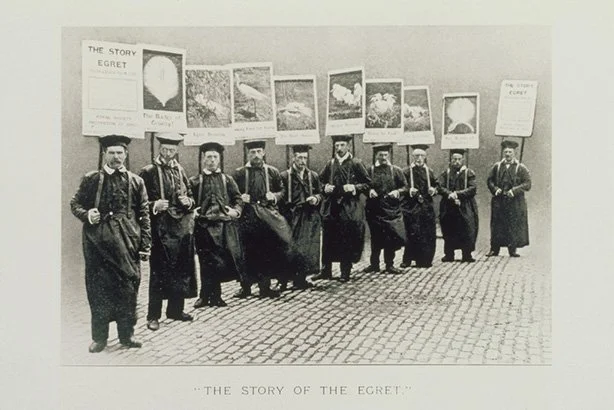
AN RSPB PROTEST ABOUT THE EGRET, A BIRD COVETED FOR ITS PLUMAGE, IN 1911.
The impact on wildlife was devastating. Bird populations were hunted on an industrial scale and some species came dangerously close to extinction. Among them was the Great Crested Grebe, an elegant water bird known for its courtship dance on lakes and waterways across Britain.
“That bird was the favourite bird of a Manchester woman who lived in what is now Fletcher Moss Park,” says McKee.
That woman was Emily Williamson.
A new movement takes shape
Disturbed by the destruction being caused by the plumage trade, she attempted to rally support by writing to the British Ornithologists’ Union. Her letters went unanswered.
“She'd approached the British Ornithologists' Union and asked for their help with a campaign to try and stop the plumage trade, and they ignored her,” McKee explains. “They didn't even respond to her letters.”
“She'd approached the British Ornithologists' Union and asked for their help with a campaign to try and stop the plumage trade, and they ignored her. They didn't even respond to her letters.”
Alasdair McKee, Local Groups Development Officer at the Royal Society for the Protection of Birds (RSPB).
Instead Williamson organised her own campaign. In her front room she gathered supporters to form what was first known as the Plumage League, a society led entirely by women during its early years. The group soon joined forces with others across Britain to create the Society for the Protection of Birds and by 1903 was recognised enough to get a Royal Charter and become the Royal Society for the Protection of Birds.
Their campaigning eventually helped bring about new legislation. In 1921 the government banned the import of feathers from abroad, a landmark step that helped protect birds of paradise and species from all over the planet.
“That was one of the first big pieces of conservation legislation ever passed in this country and a real victory for Emily, helping to save her beloved Great Crested Grebes and so many other birds from becoming completely extinct,” says McKee.
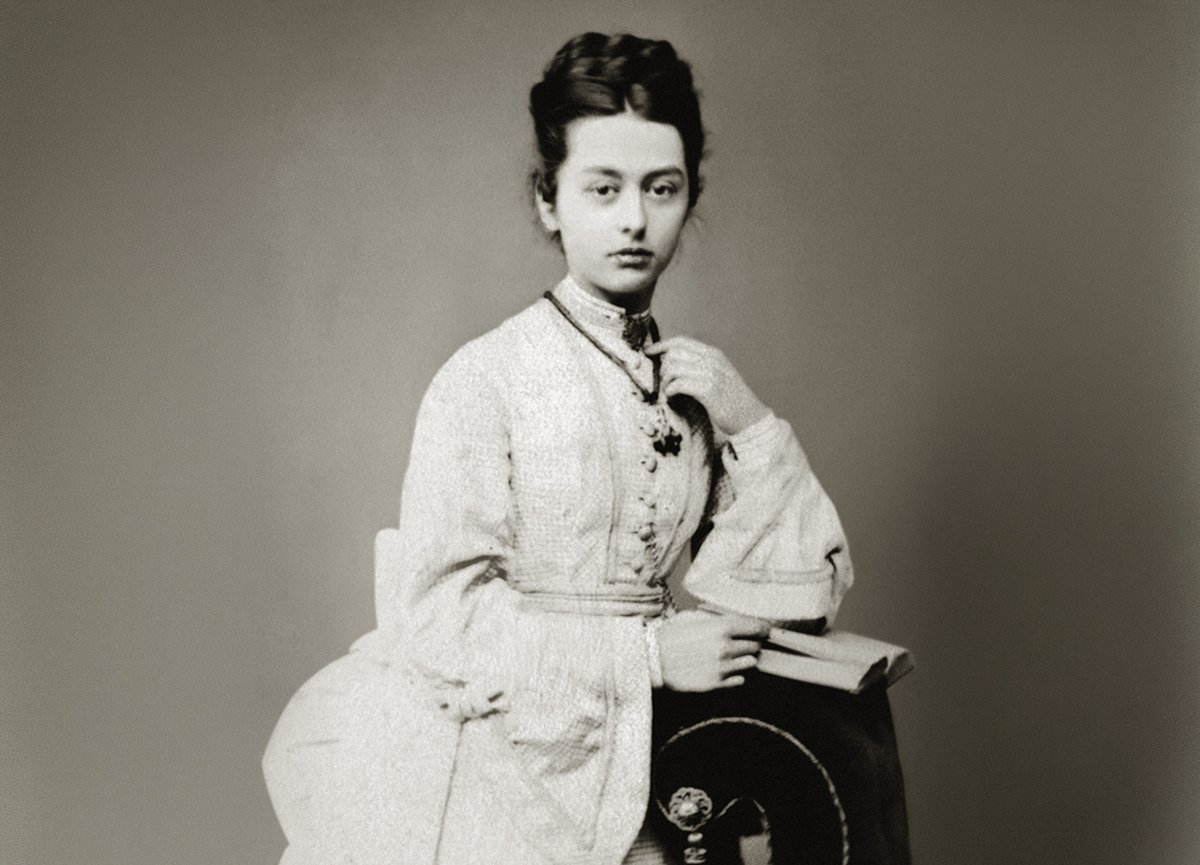
EMILY WILLIAMSON.
More than a century later the organisation that began in Williamson’s living room is now the largest conservation organisation in the UK. The RSPB now manages more than 200 nature reserves from the Scilly Isles to Shetland, while campaigning to protect birds facing new environmental pressures.
One of those species is the Swift, a bird that has long shared our towns and cities. Each summer Swifts travel from Africa to breed in the UK, nesting in small gaps beneath the eaves of buildings but, as buildings have been renovated and insulated, many of those spaces have disappeared.
“People put in plastic soffits and fascias, they put in insulation. The Swifts are struggling to find anywhere to nest,” says McKee.
Swift numbers in the UK have fallen by more than 60 percent since 2000. In Manchester, the RSPB has been working with communities to help reverse that trend, installing nest boxes and encouraging the use of specially designed ‘Swift Bricks’ that create permanent nesting spaces within buildings; including in the very building that the RSPB was founded in, The Croft.
The story of conservation that began with feathers on Victorian hats still carries a message today. As McKee points out, fashion continues to shape the natural world.
“Now in the twenty-first century nature still faces challenges from fashion. When you think about our fast fashion culture, our tendency to just throw away things, that is having an impact on our environment and all the birds, beasts and plants in it.”
These connections between people, culture and nature are explored in Human Natures, a forthcoming exhibition at Manchester Museum. More than 130 years after Emily Williamson began her campaign in Didsbury, the questions she raised about fashion, nature and responsibility remain just as relevant.
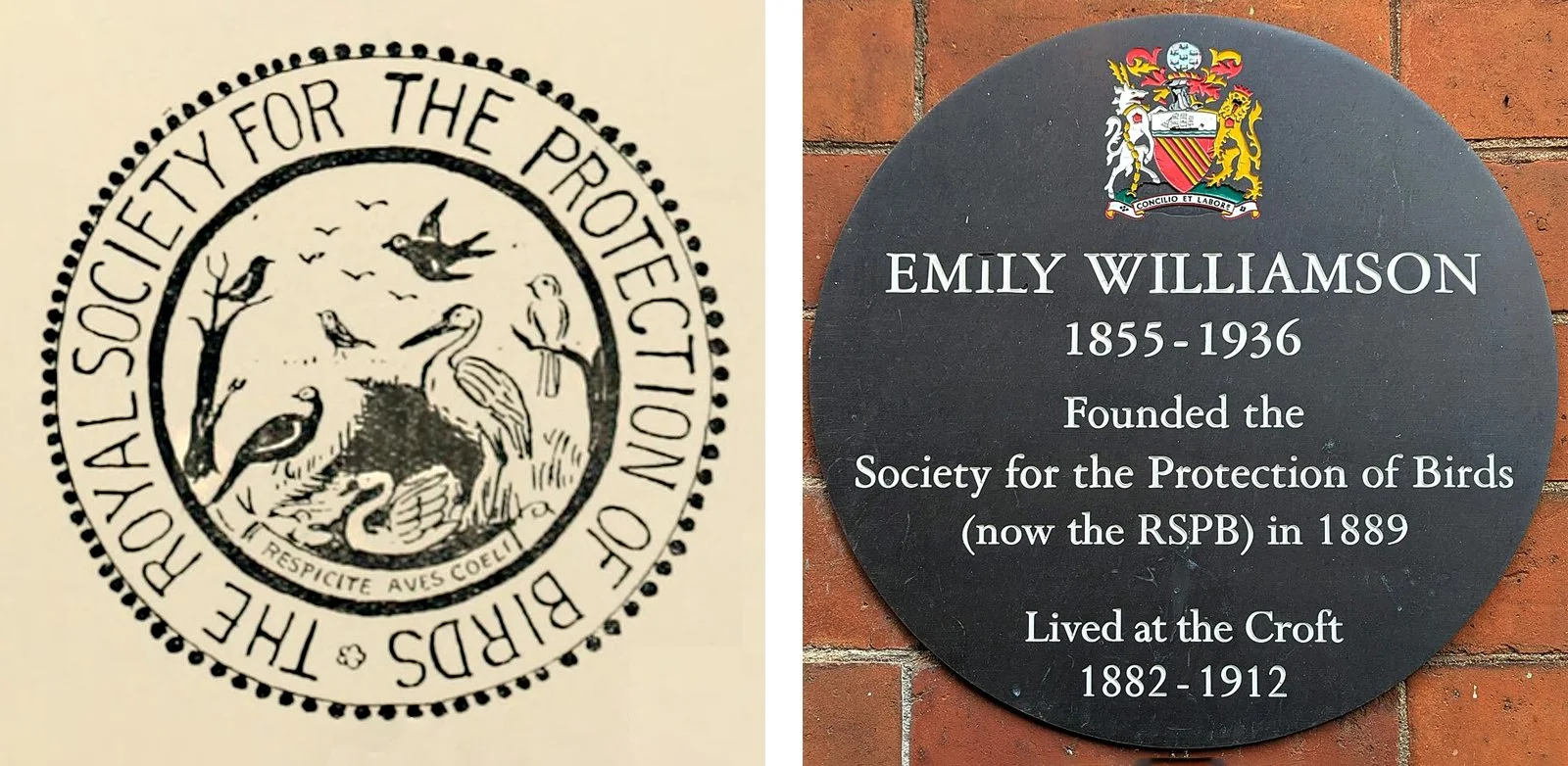
EARLY LOGO FOR THE RSPB AND A PLAQUE IN FLETCHER MOSS PARK CELEBRATING EMILY WILLIAMSON.