
THE OR FOUNDATION
A world beyond waste For most of human history, people owned less and threw very little away but in the last few hundred years, that has changed.
As a result of modern production methods, it is possible to make far more than we need and to do so quickly. Instead of slowing down, we continue to produce, buy and discard at an alarming rate.
When we throw things away, we sometimes forget that ‘away’ is not a clearly defined destination. Much of what is discarded does not stay where it was originally used and is often sent elsewhere, ‘out of sight’, leading to the rise of what is described as ‘Waste Colonialism’.
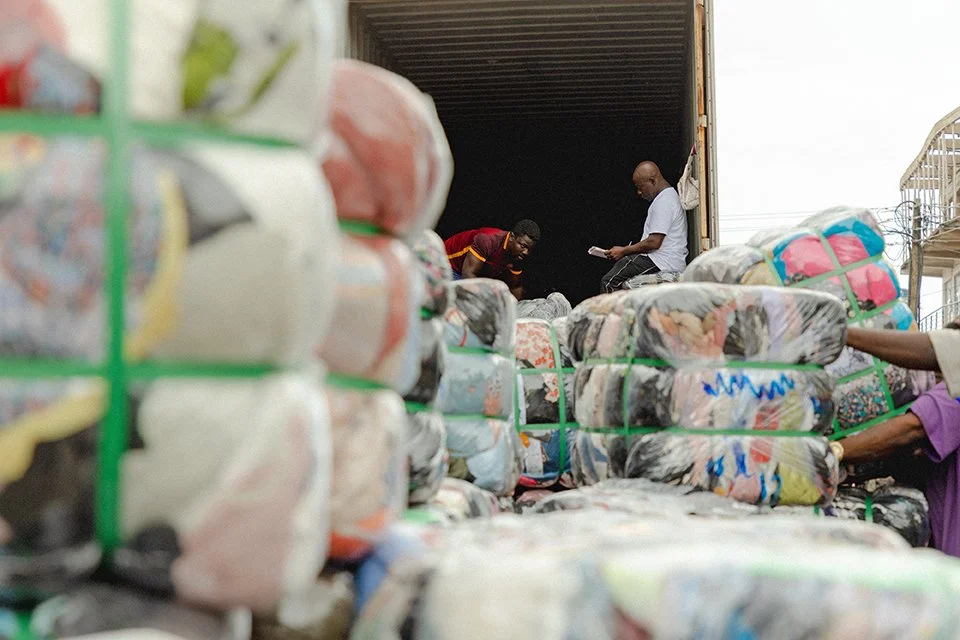
SECONDHAND CLOTHING BALES BEING OFFLOADED OFF THE SHIPPING TRUCKS AT THE IMPORTERS YARD IN THE KANTAMANTO MARKET. TONIA-MARIE PARKER, THE OR FOUNDATION.
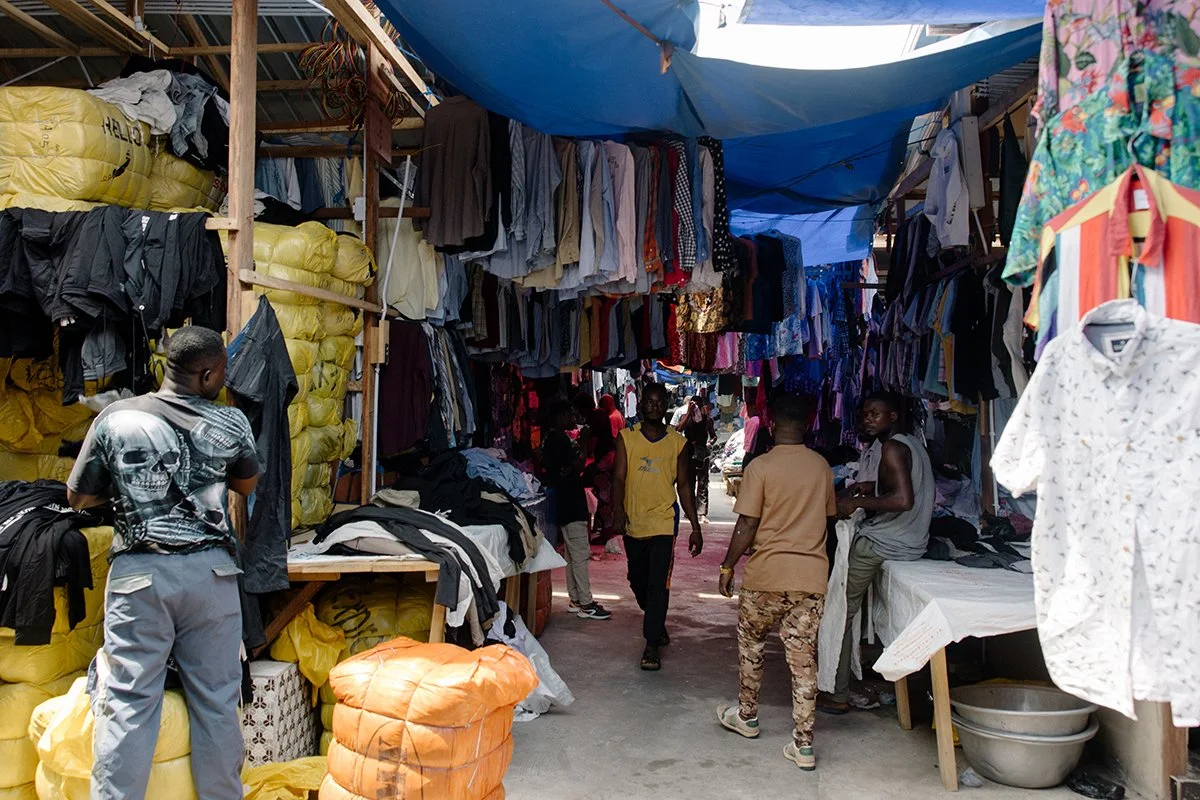
KANTAMANTO MARKET IN ACCRA, GHANA.
Each year, 92 million tonnes of textile waste is produced globally and ‘Waste Colonialism’ describes the export of this rubbish from the Global North to countries in the Global South. This shifts the responsibility for waste onto places that may not be able to manage it safely, with consequences for both communities and the environment.
These global systems are part of the story explored in the Human Natures exhibition at Manchester Museum, as are the organisations working to respond to these issues.
One such organisation is The Or Foundation, based in Accra, Ghana. Their work focuses on environmental justice, education and fashion development, addressing the impacts of overproduction and overconsumption in the fashion industry.
“Human Natures directly confronts the systems we exist to transform,” says Liz Ricketts, Co-Founder and Executive Director of The Or Foundation. “The exhibition invites visitors to reconsider their relationship with the natural world and sit with the hidden human cost of overconsumption, impacts felt most acutely by communities in the Global South, yet largely invisible to the consumers driving them. It offers a powerful space to make those connections visible and inspire more responsible choices. It is not lost on us that Manchester is home to some of the UK's largest fast fashion brands - many of whose garments end up at Kantamanto Market and on the beaches of Accra.
“We hope visitors take away a deeper understanding of the journey that their clothes take, beyond the point of purchase, to where they end up and who is impacted. We also hope to inspire people to form a relationship with fashion that extends beyond their role as a consumer, to make more intentional choices and to spark a sense of shared responsibility toward a more circular fashion industry.”
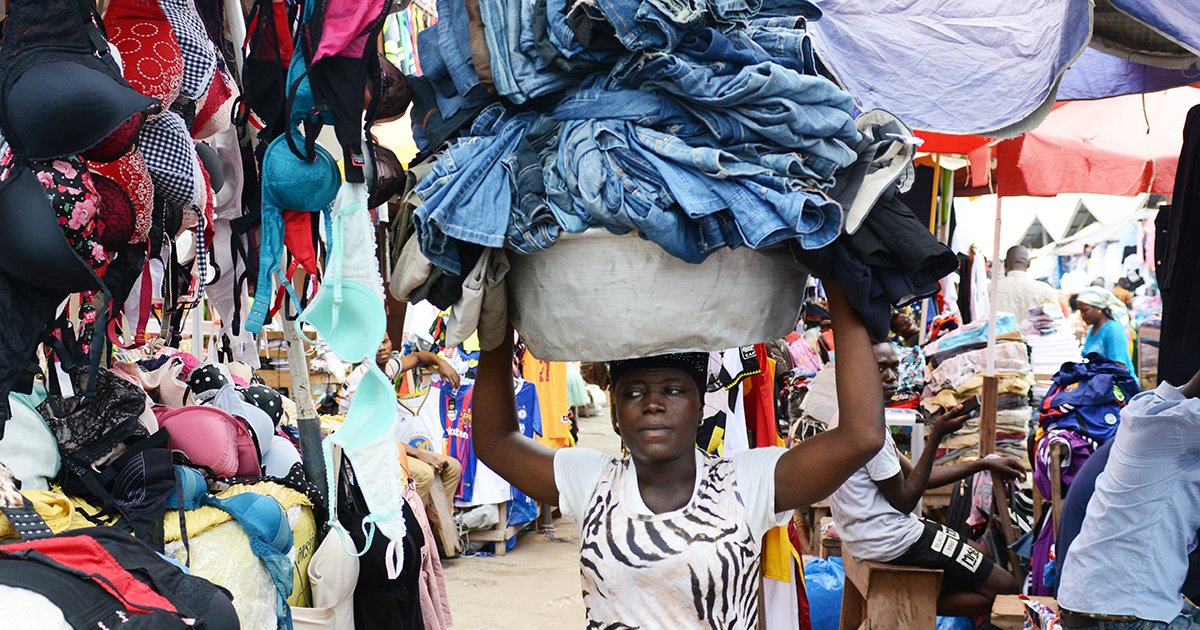
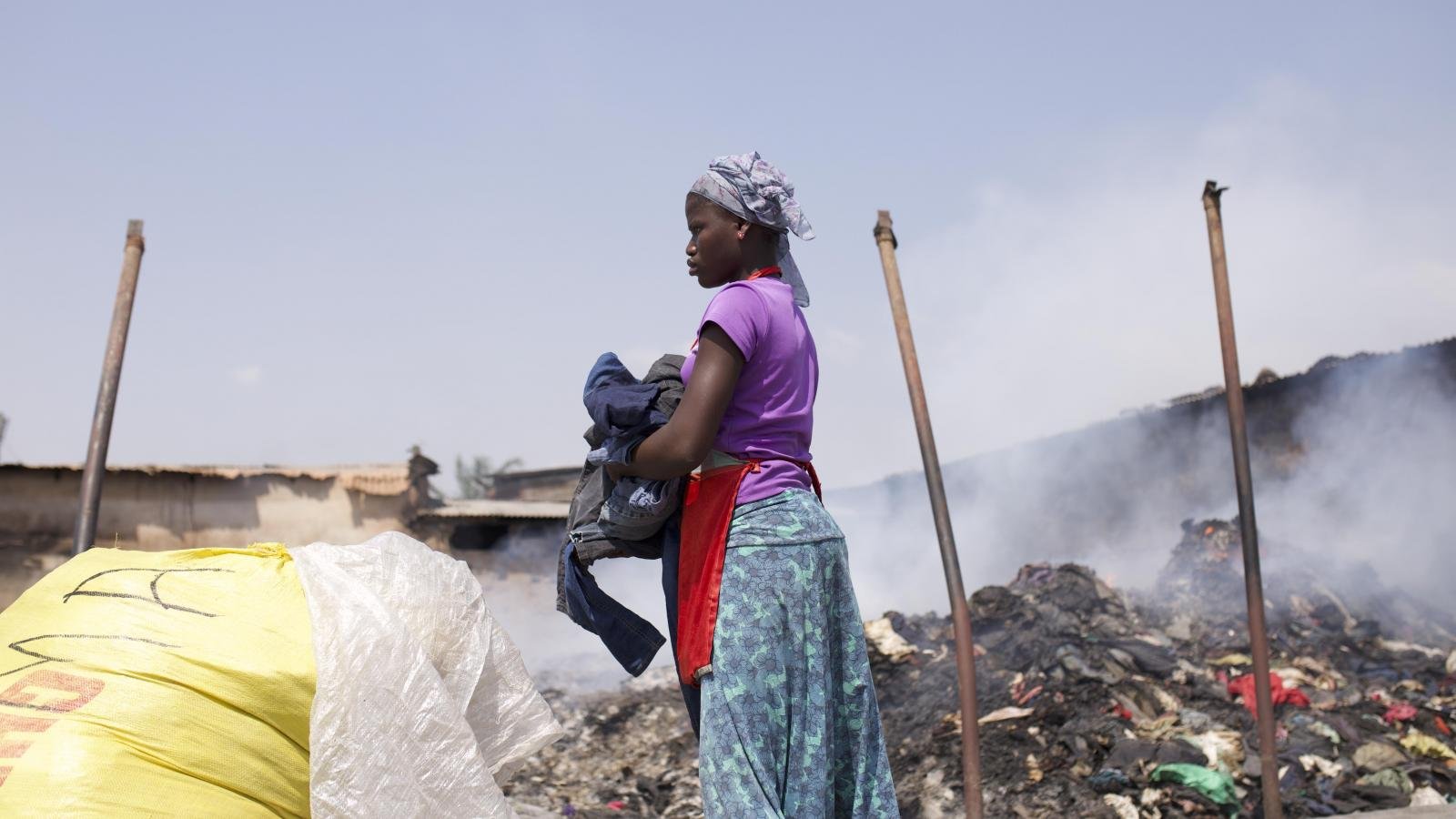
A WOMAN CARRIES PILES OF JEANS, AT KANTAMANTO MARKET IN ACCRA, GHANA.
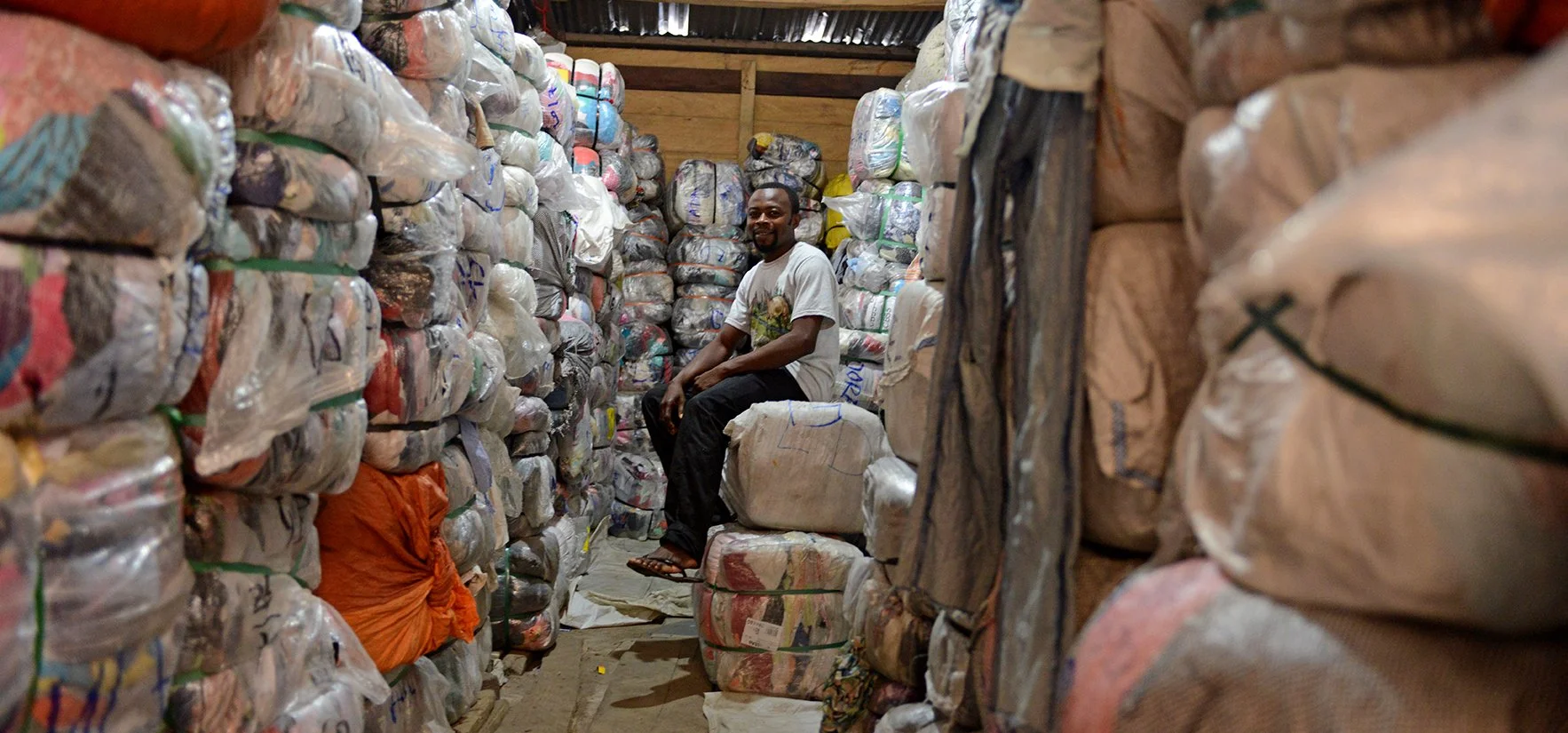
Kantamanto Market in Accra is a key site for the foundation’s work. It is the largest second-hand clothing market in the world. Around 15 million items of clothing arrive there each week, where traders sort, wash, mend and resell what they can. But it is a place of complex social and economic pressures. Women known as Kayayei carry heavy bales of clothing, often underpaid and working in difficult conditions, and many traders borrow money to buy bales and become trapped in cycles of debt, with fewer than 20% of traders making a profit.
Many items are also of such low quality that they are unusable and around 40% of clothing leaves the market as waste. Without effective solutions, this waste continues to contribute to overflowing landfill sites and wider environmental hazards.
Old Fadama, around two miles from the market, is described by The Or Foundation as the largest unsanctioned dump for clothing waste leaving Kantamanto. The area is home to at least 80,000 people, many of whom have migrated from northern Ghana, where the climate crisis is affecting farming and their homes are built on layers of rubbish. Nearby, the Korle Lagoon carries material from the dump towards the sea, where it can wash up on beaches. Each month, The Or Foundation removes around 30 tonnes of textile and plastic waste from Accra’s coastline.
It’s not just removal that is being worked on, with many forms of repair, reuse and innovation being utilised to combat the problems being faced.
When clothing cannot be extended through mending and alteration and is unable to be sold, it is being repurposed. The Or Foundation has developed fibreboards made from cotton-rich, second-hand T-shirts from Kantamanto, where the fabric is processed into fibres, combined with a cassava-based glue produced locally, then pressed and dried into solid sheets. These are used to create panels and hangers, some of which will be displayed in Human Natures.
Liz says, “The exhibition showcases not only the challenges that the Kantamanto community confront on a day to day basis as they deal with the consequences of a broken business model, but most importantly the exhibition centres solutions developed on the ground in Accra and makes space for visitors of the exhibition to play a role. Our fibreboard, made from shredded textiles, diverted from the market waste streams, is used to display imagery of our work and community.”
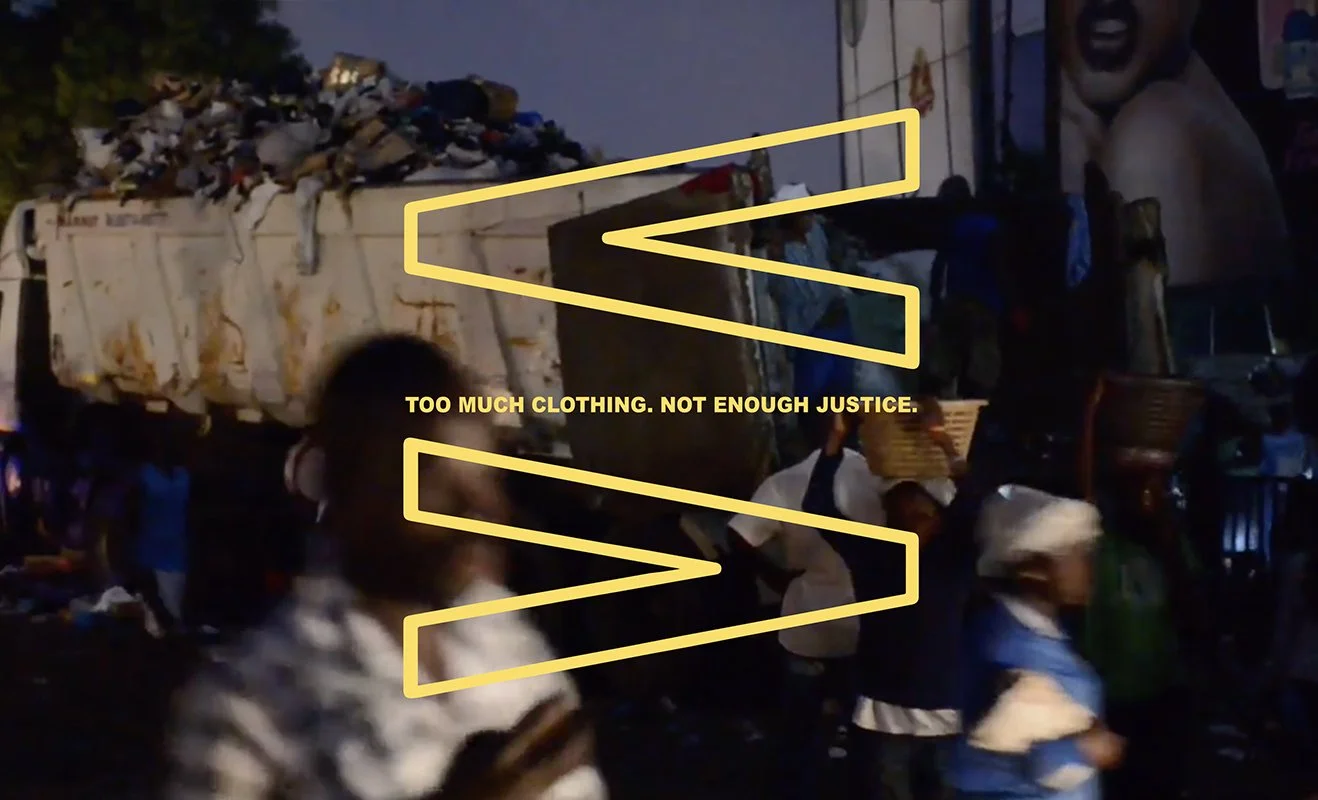
CAMPAIGN IMAGERY, PRODUCED BY THE OR FOUNDATION.
The organisation’s Speak Volumes campaign directly calls on fashion brands to release production data. It is estimated that between 80 and 150 billion garments are produced globally each year, but gaps in data make it difficult to fully understand the scale of production and its impacts.
“The more brands that Speak Volumes, the more informed we can all be about the state of the industry and what is needed to improve it. We want to work with brands on strategies to reduce the production of new clothes and enhance the reuse, upcycling and recycling of the clothing already here.”
The Or Foundation, statement from the Speak Volumes campaign.
The campaign calls for a reduction in low-quality clothing, greater transparency from brands, extended producer responsibility and support for circular economies.
Despite the progress being made, there are limits to current solutions. Materials such as recycled polyester still require energy to produce and can become waste again over time. But, crucially, The Or Foundation’s work not only promotes a sense of collective responsibility but also one of shared hope.
Liz says, “We want to encourage people to question where their clothes go when they are finished with them, and who is responsible for dealing with that waste. We also hope to trigger deeper reflection on systems like Waste Colonialism and to recognise the global inequalities embedded within fashion production and disposal systems. Ultimately, the aim is to spark a sense of shared responsibility, and demonstrate how collective action can reimagine these systems to be justice-led.”
Actions such as making less, buying second-hand, choosing natural fibres and mending clothes are all small acts within our power that, collectively, can make a big impact.
Head to The Or Foundation’s YouTube channel to hear directly from community members, workers at Kantamanto Market and people working with The Or Foundation to build a more positive future.