
Rediscovered and Restored: The Journey of Lady Barn House School’s War MemorialBY DANNY ROBERTS
From a forgotten basement to a school hall, a First World War memorial returns home after careful conservation.
In October 2024, a remarkable discovery was made in the basement of Manchester University’s Simon Building: a First World War memorial, its inscriptions obscured by layers of dirt and age. The memorial commemorates former pupils of Lady Barn House School who lost their lives in the conflict. It is believed to have been placed at the University for safekeeping when the school was evacuated to Cheshire at the start of the Second World War.
The location of its discovery adds a poignant note. Two of the names on the memorial, E. C. (Eric) Simon and H. H. (Harry) Simon, share a surname with Ernest Simon, the Manchester politician and social reformer for whom the building is named, although any direct family connection has not been confirmed.
Unusually, many of the surnames carved into the stone are of German origin, reflecting the school’s popularity among German families working in Manchester’s textile industry during the early twentieth century.
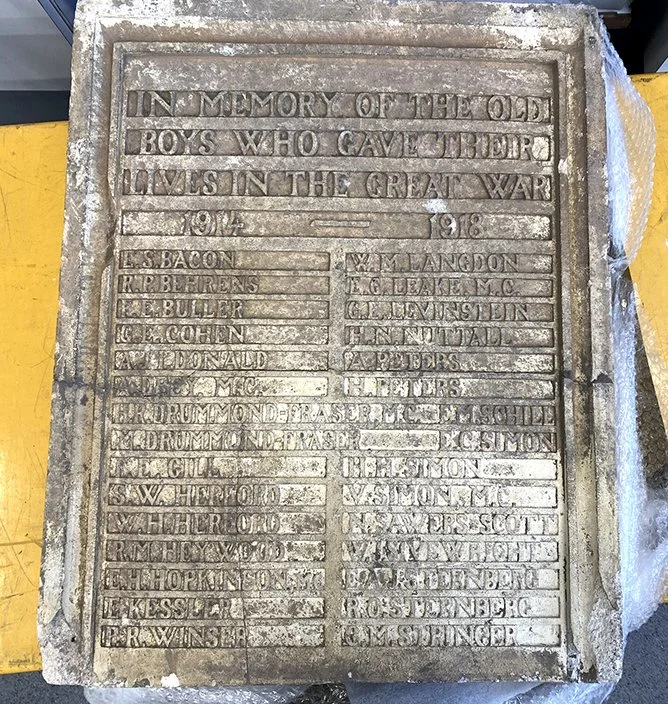
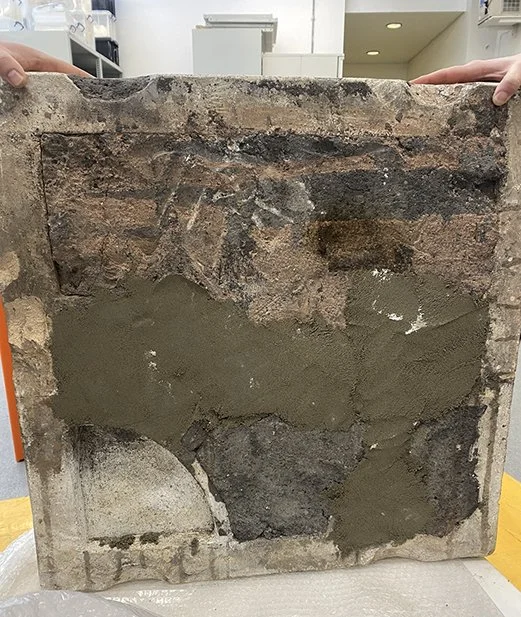
THE MEMORIAL PRIOR TO RESTORATION
Condition and Conservation
Before conservation, the memorial bore significant cracks, including one that threatened a full break. Its surface was covered with a thin layer of grey-brown dirt, likely from the composting cardboard under which it had been stored. Pollution crusts and bacterial deposits further obscured the inscriptions, which are central to the memorial’s historical value.
Discovered by Robert Brierley, a Mechanical Engineer from Estates at the University of Manchester, the memorial underwent around 35 hours of conservation at Manchester Museum’s lab; led by intern Lucy Thomas-Stanton.
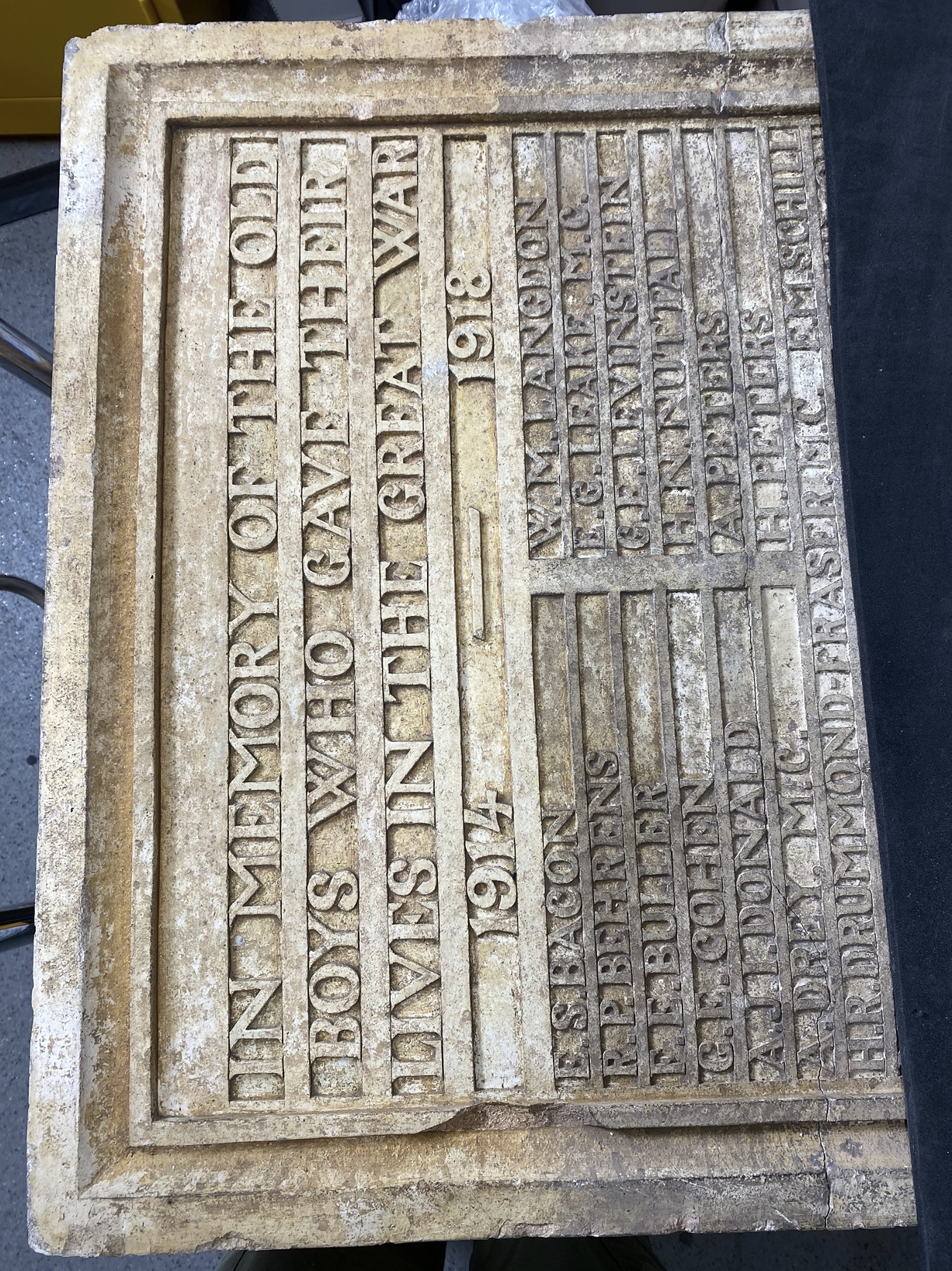
The conservation work was a careful and patient process. Loose dust was gently brushed away to reveal the carved names beneath and stubborn grime was lifted using a Nd-YAG laser, exposing the inscriptions without harming the stone. A poultice reduced yellow discolouration caused by organic deposits and a final steam cleaning removed the remaining dirt, bringing out the stone’s natural tones and subtle details.
Throughout, the team followed guidance from the War Memorials Trust, balancing the need to preserve inscriptions with respect for the memorial’s historical integrity.
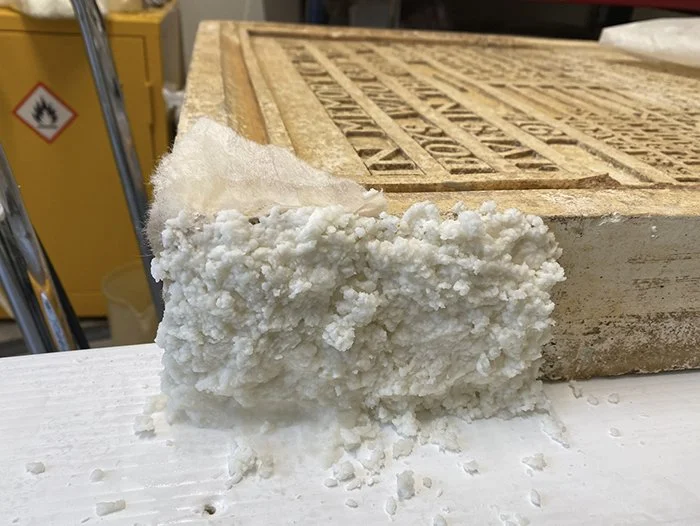
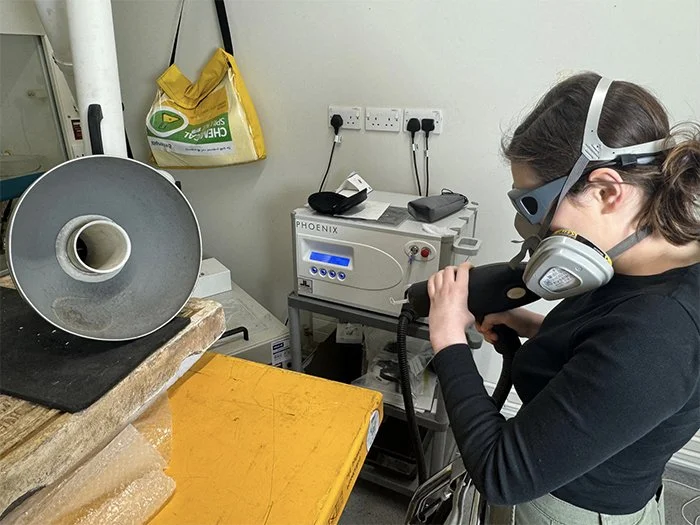
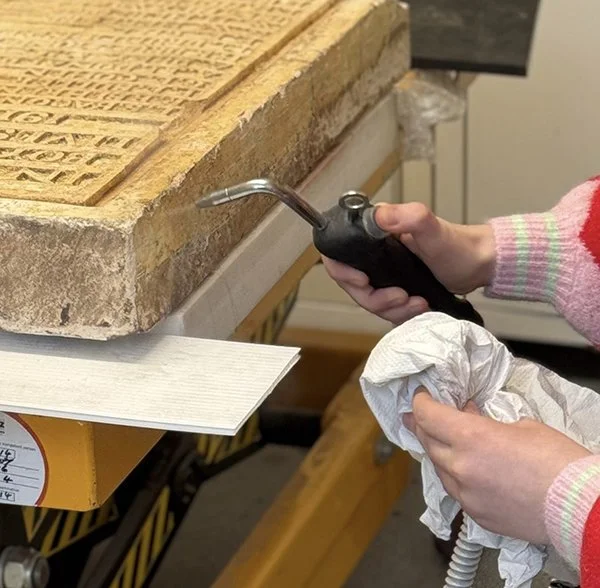
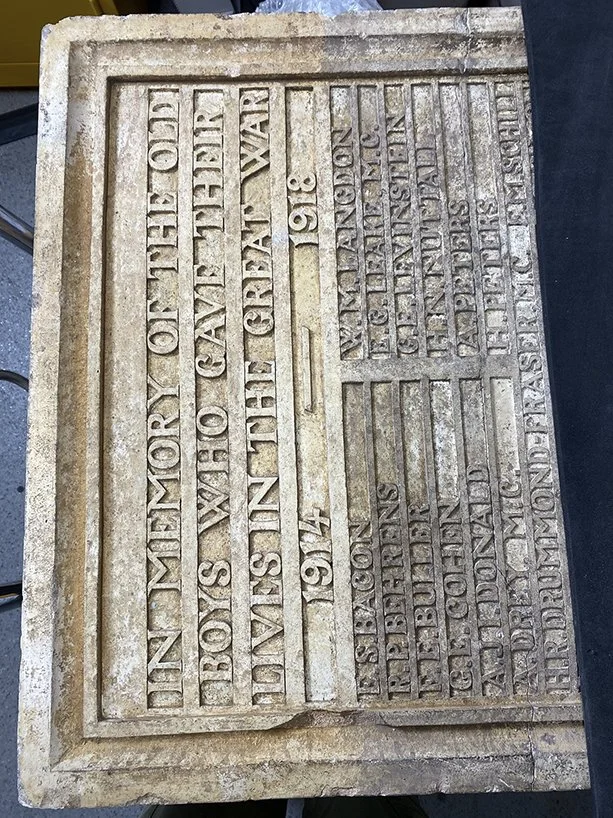
SNAPSHOTS FROM THE RESTORATION PROCESS
A Homecoming
In July 2025, the restored memorial was returned to Lady Barn House School and has been embedded in a wall in the school’s reception area. The installation is not yet fully completed, but once in place, it will serve as a focal point for pupils to learn about the First World War and the impact it had on small communities.
The rediscovery of the memorial also brought long-forgotten stories back into the light, connecting students with the history of the school and the individuals commemorated on the stone.
“We were thrilled to learn about the discovery of the memorial,”
Laura Lachevre, Head of Marketing, Admissions and Communications at Lady Barn House School.
“While going through our cellar, we found some beautiful old record books that listed the same names as those on the memorial. Among them was a letter from the Front written by one of the soldiers, W. Langdon. He thanked the Lady Barn community for a parcel containing woollen mittens, scarves and hats that had been knitted for him and his fellow soldiers. It was so lovely to read how fondly he spoke of Lady Barn House School and how the package really helped during a bitter winter.”
The memorial’s return is more than just a restoration of stone, it’s a revival of memory, connecting past generations with the present and ensuring that the sacrifices of the First World War are remembered in the place where the young lives commemorated once studied.
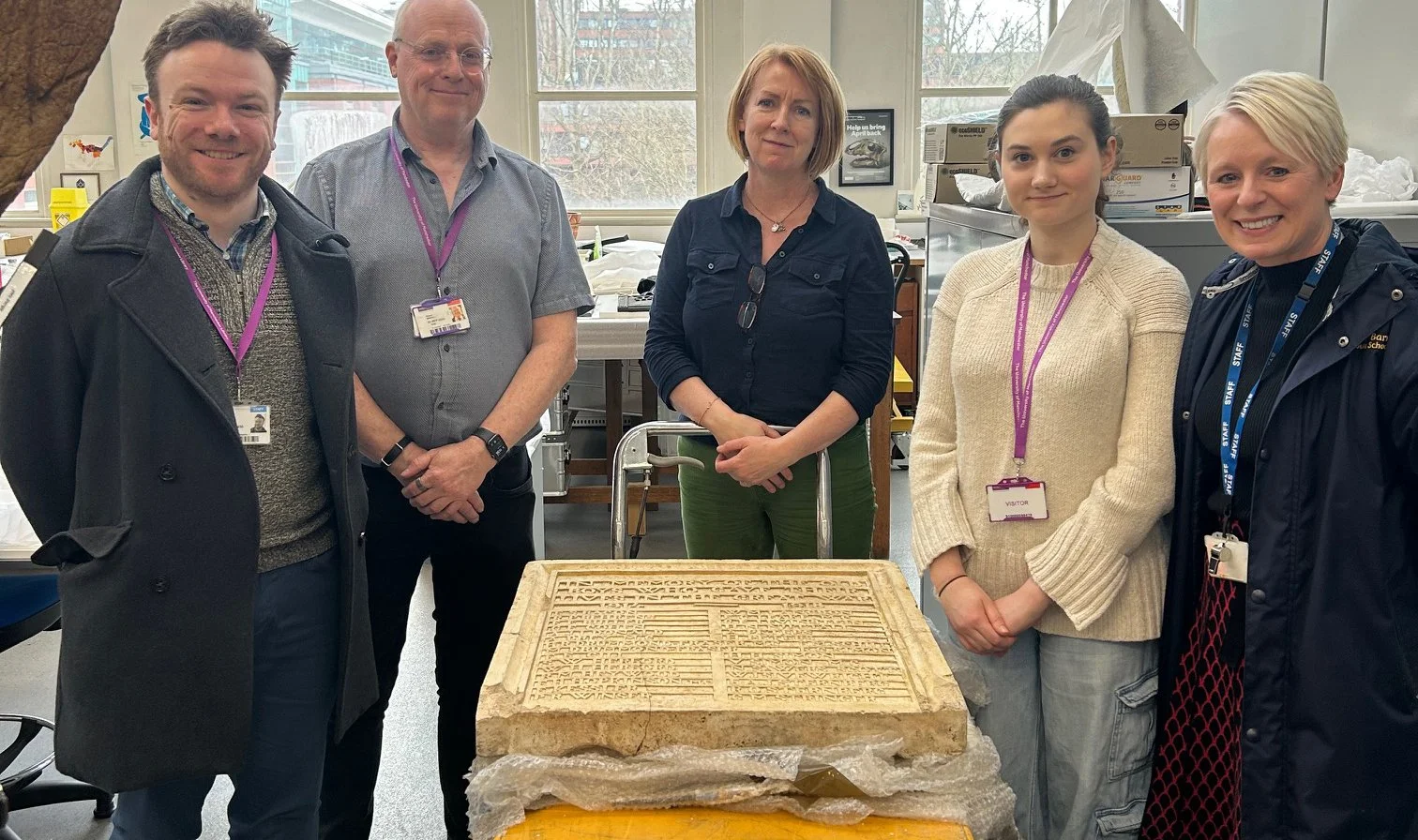
STAFF FROM THE UNIVERSITY OF MANCHESTER, MANCHESTER MUSEUM AND LADY BARN HOUSE SCHOOL WITH THE RESTORED MEMORIAL