
STORY OF THE SEASON
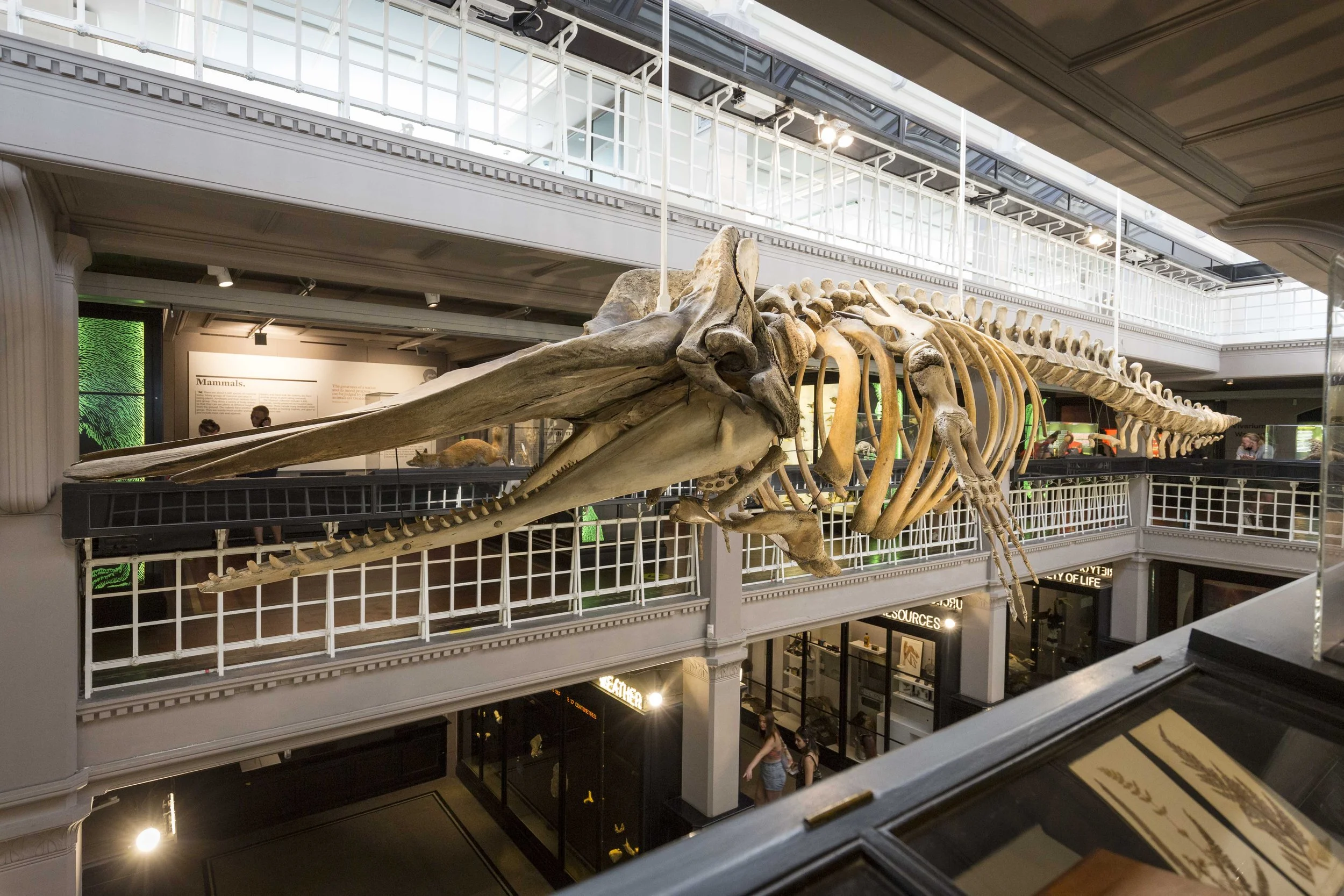
A sense of HarmonySuspended high above the floor in the Living Worlds gallery at Manchester Museum is one of the Museum’s most unforgettable residents, the skeleton of a young sperm whale.
From the moment you step into the gallery, its vast ribs and elongated jaw draw your eye, inviting you to pause, look up and take in its scale.
This skeleton has been part of the Museum’s story for more than 130 years. The whale swam the Atlantic Ocean before becoming stranded on the coast of Massachusetts in 1896 and its bones were later transported across the ocean in wooden crates, arriving in Manchester in 1898. Local taxidermist Harry Brazenor spent weeks carefully assembling the skeleton, creating the dramatic suspended display that still stops visitors in their tracks today.

HARRY FERRIS BRAZENOR, SITTING ON OUR SPERM WHALE DURING ITS INSTALLATION IN 1898.
A whale full of wonder
The sperm whale is one of the ocean’s most extraordinary mammals. As the largest toothed predator on Earth, it can dive more than a mile beneath the surface, hold its breath for over an hour and navigate the deep using powerful echolocation. Although this individual was young, the skeleton still conveys the immense presence of a species that can grow to around 19 metres in length.
Standing beneath the whale, you cannot help but think about the world it once inhabited. The bones above you once moved through cold dark water, chasing squid in the deep sea. Now they hang in the heart of Manchester, connecting an industrial city to distant oceans.
Like many historic specimens, our whale reflects changing attitudes. In the nineteenth century whales were widely hunted and their oil and baleen traded around the world. Today international protections reflect a growing understanding of their importance within fragile marine ecosystems. The skeleton is not simply a dramatic display but a reminder of our evolving relationship with the natural world.
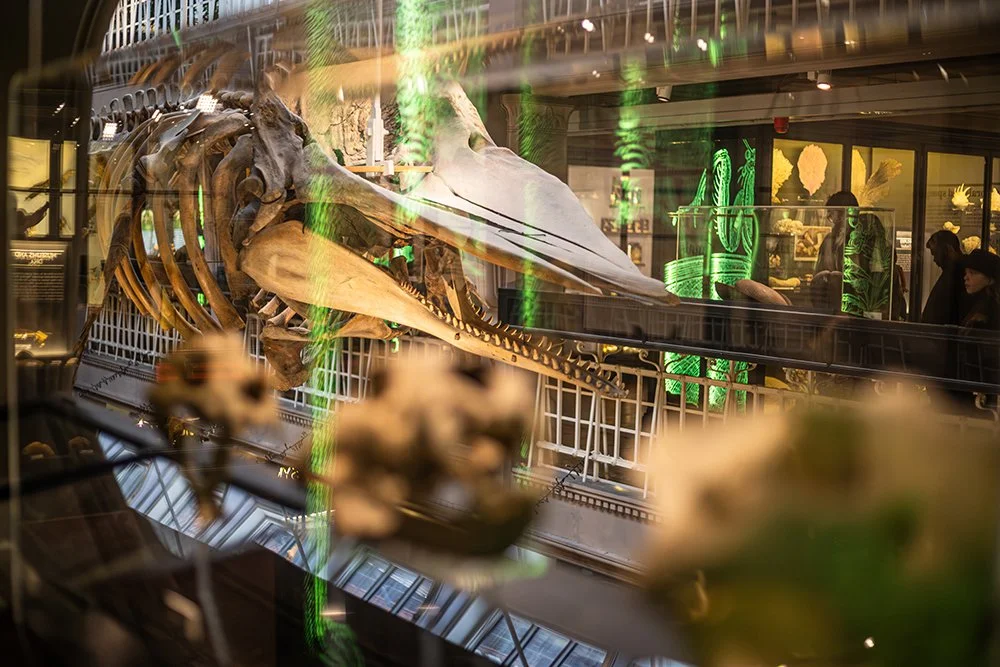
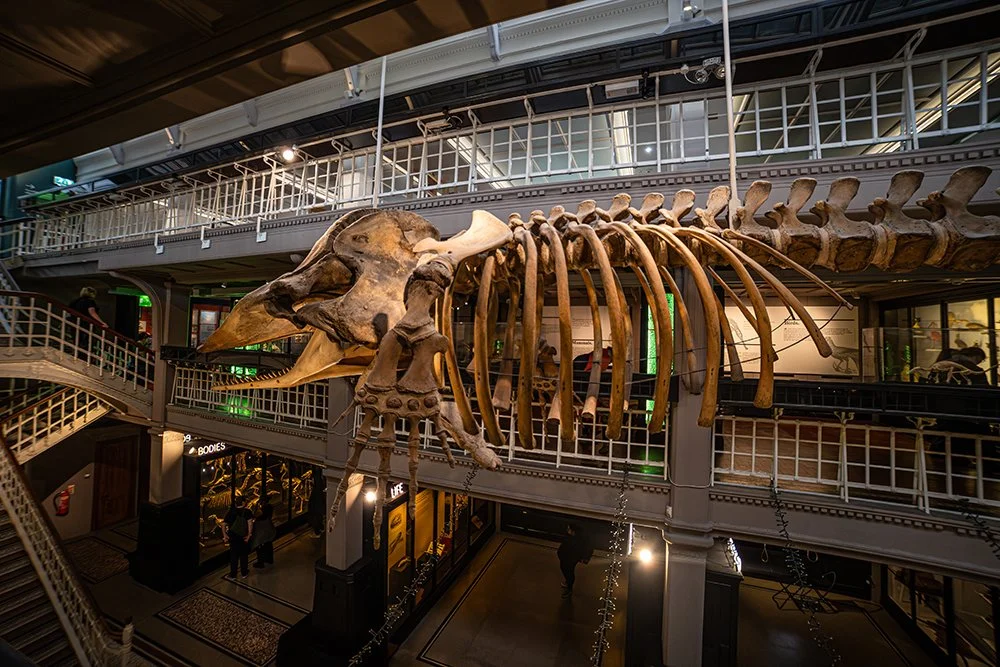
SPERM WHALE, VIEWED FROM NATURE’S LIBRARY GALLERY.
In perfect harmony
Recently, a new chapter was added to the sperm whale’s story. To mark World Whale Day, raising awareness of whale conservation, we held a competition inviting visitors to name the whale so it too could enjoy a moment in the sun alongside famous fellow Museum residents like Stan the T. rex, April the Tenontosaurus, Percy the Plesiosaur and Maude the tigon.
The winning suggestion was made by nine-year-old Radha, who chose the name Harmony because it reminded her of ‘the fact that whales communicate via beautiful noises’. This was seleted as the winner from 2,000 applications by class 3A at Heald Place Primary School in Rusholme because the pupils feel more harmony and peace is needed in the world right now.
It’s a fitting name for such a beautiful being, carrying a message that will echo through time.
If you want to say hello to Harmony on your next visit, just head to Living Worlds and look up!
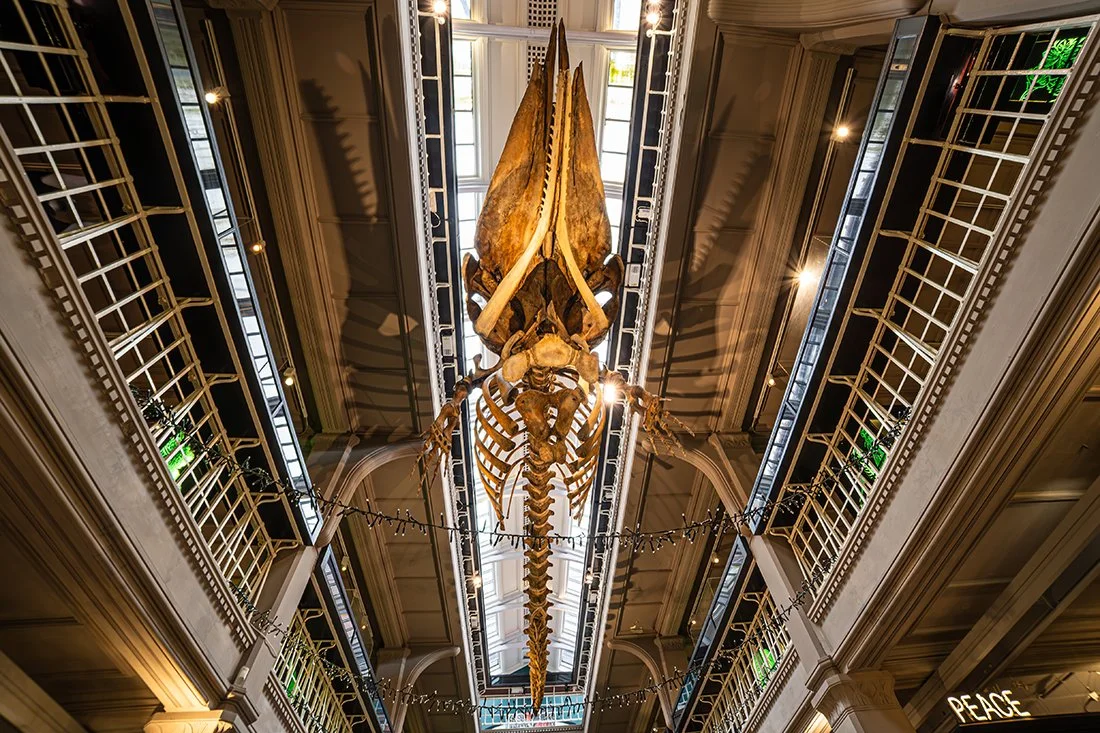
SPERM WHALE, VIEWED FROM LIVING WORLDS.