
Remembering the Forgotten: The Bengal Famine Memorial at Manchester MuseumBY DANNY ROBERTS
A moving memorial to a forgotten tragedy.
In October, Manchester Museum opened its doors to remember the three million lives lost in the Bengal Famine of 1943, one of the largest civilian losses on the Allied side during the Second World War. For decades, this tragedy, affecting British subjects in Bengal, has been largely absent from public memory. The memorial event offered a space to confront that silence and honour the lives lost.
A Space for Reflection
Visitors entering the Kanaris foyer were met with the sound of Kavita Puri’s BBC podcast Three Million playing softly in the background. The podcast, which inspired the memorial event, tells the stories of those affected by the Bengal Famine and set a reflective tone for the evening.
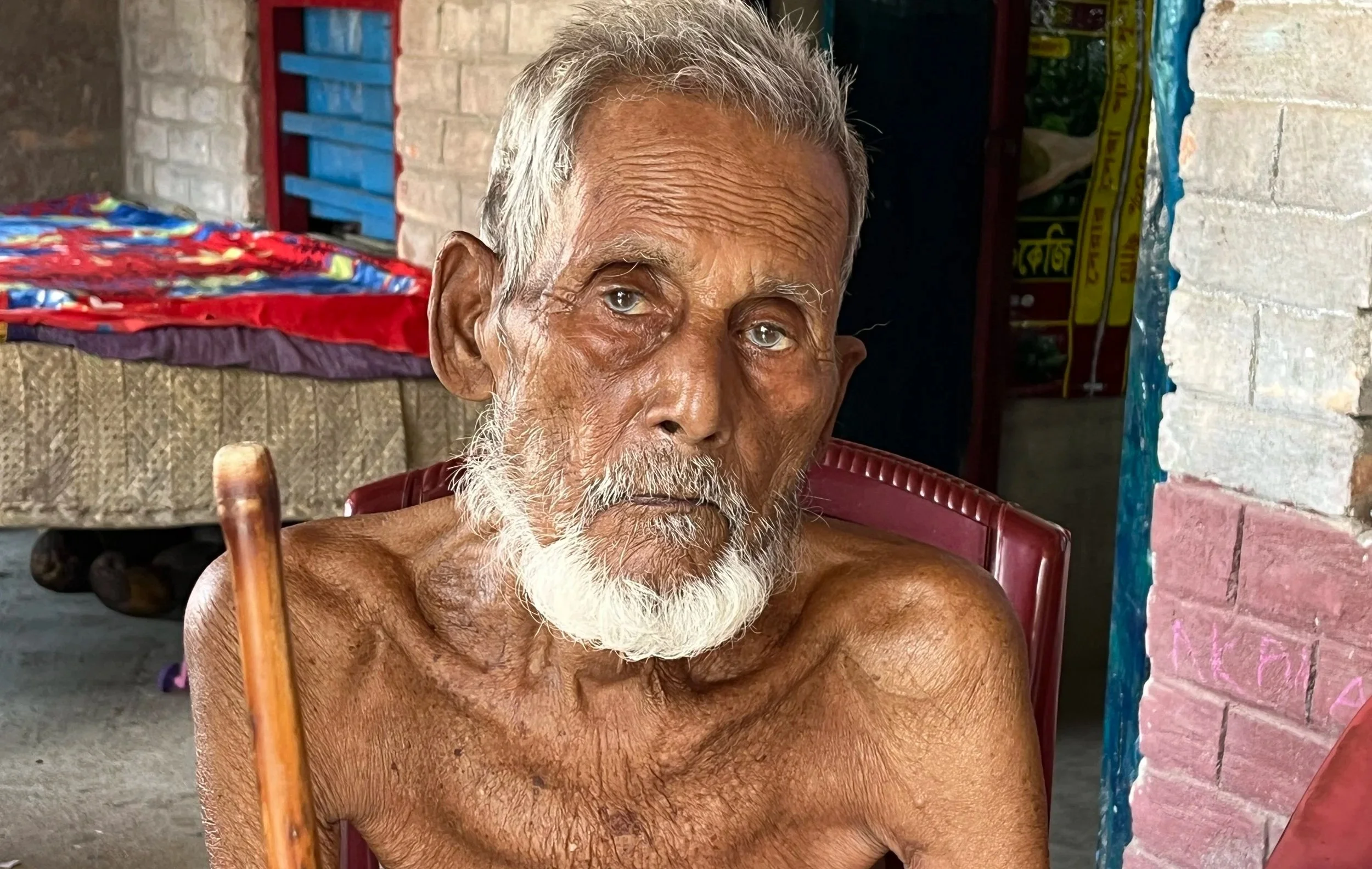
A temporary display presented survivor testimonies, letters written by Indian soldiers to their families and Japanese propaganda pamphlets showing images of the famine. These artefacts grounded the event in tangible human experience, ensuring the audience could connect with the personal realities behind historical statistics.
In the South Asia Gallery, excerpts from the documentary Bengal Shadows were projected, offering visual context for the events of 1943. Together, the two spaces created a setting where visitors could engage with the history, each area offering a distinct perspective on the lives behind the staggering numbers.
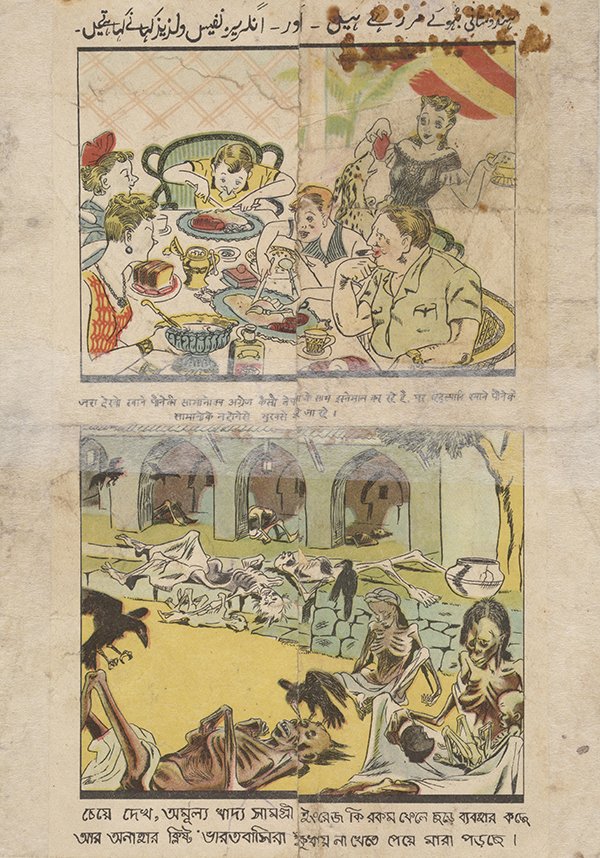
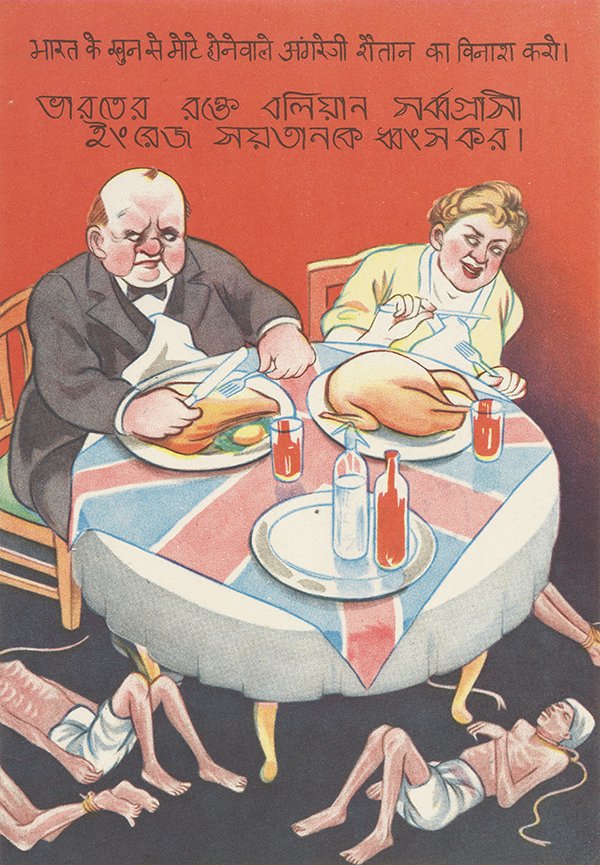
JAPANESE PROPAGANDA PAMPHLETS DROPPED FROM THE AIR IN INDIA, 1943, SHOWING BRITAIN LIVING OFF THE FAT OF THE LAND WHILE INDIANS STARVE. COURTESY OF THE IMPERIAL WAR MUSEUM.
Honouring Hidden Histories
Nusrat Ahmed, Lead Curator of the South Asia Gallery, spoke on behalf of the museum about the significance of hosting the memorial. She explained that the gallery's mission to foreground alternative narratives and give voice to histories that have often been erased or overlooked makes the museum a fitting place for the event, offering visitors a more nuanced and honest understanding of the past.
Giving Names to the Forgotten
Central to the evening was the power of testimony. Kavita Puri, creator of the Three Million podcast, reflected on her encounters with survivors:
“There is such humanity in giving a name. To say out loud the name of Kshetramohan Naik in this room is an act of remembrance for the three to four million.”
Her words crystallised the purpose of the memorial: to honour individual lives, to restore identity where history has rendered people invisible and to remind audiences that memory is both personal and collective.
“There is such humanity in giving a name. To say out loud the name of Kshetramohan Naik in this room is an act of remembrance for the three to four million.”
Kavita Puri, journalist and creator of the BBC podcast Three Million.
Looking Forward
The memorial was not only a moment to reflect on past suffering but also to consider the continuing legacy of war, famine and colonial policy. Safe spaces were provided for visitors, acknowledging the emotional weight of the material. By commemorating the famine within a public museum space, the event highlighted the role museums play in surfacing hidden histories, prompting dialogue and fostering understanding.
As Kavita Puri noted, the act of remembrance is just the beginning:
“Just because things have been forgotten doesn’t mean they always have to be forgotten.”
Kavita Puri, journalist and creator of the BBC podcast Three Million.
The Bengal Famine Memorial Event at Manchester Museum stands as a step toward recognition, an acknowledgement of lives lost and a call to ensure that this chapter of history is never again erased.
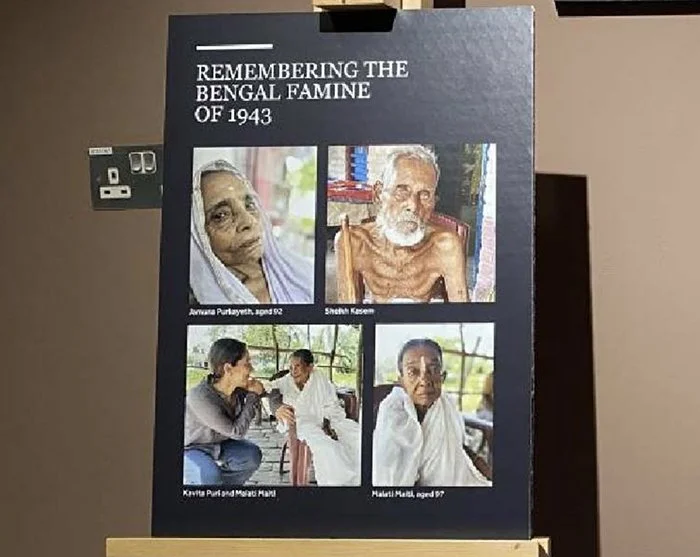
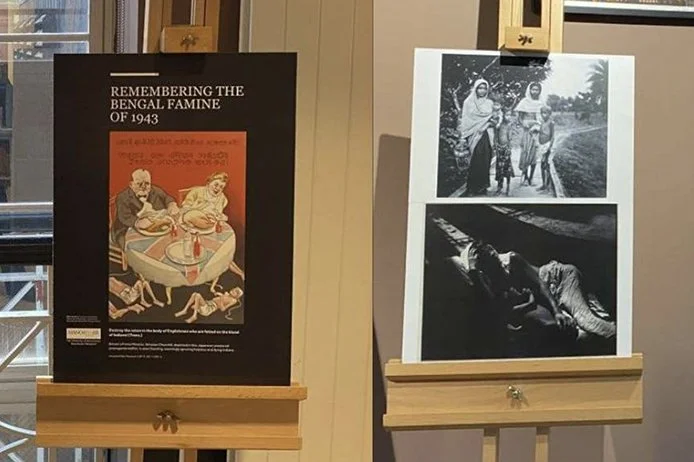
INTERPRETATION PANELS DISPLAYED AT THE BENGAL FAMINE MEMORIAL EVENT AT MANCHESTER MUSEUM.