GALLERY | FLOOR 2
The Vivarium
Habitats of Hope is a major redevelopment that will create new, bespoke naturalistic environments and provide more opportunities for you to connect with the incredible conservation work that happens right here in Manchester.
It’s been made possible thanks to a grant of £200,000 from the DCMS/Wolfson Museums and Galleries Improvement Fund and will cement our position as one of the leading centres for amphibian research and care in the UK.
Unfortunately, this means The Vivarium will be closed to the public from 2 November 2026 until May 2027 but don’t worry, we’ll provide plenty of opportunities to stay in touch with our amazing amphibians and reptiles. Just keep an eye on this page throughout the redevelopment.
Like the amphibians it cares for, The Vivarium is undergoing an exciting metamorphosis.
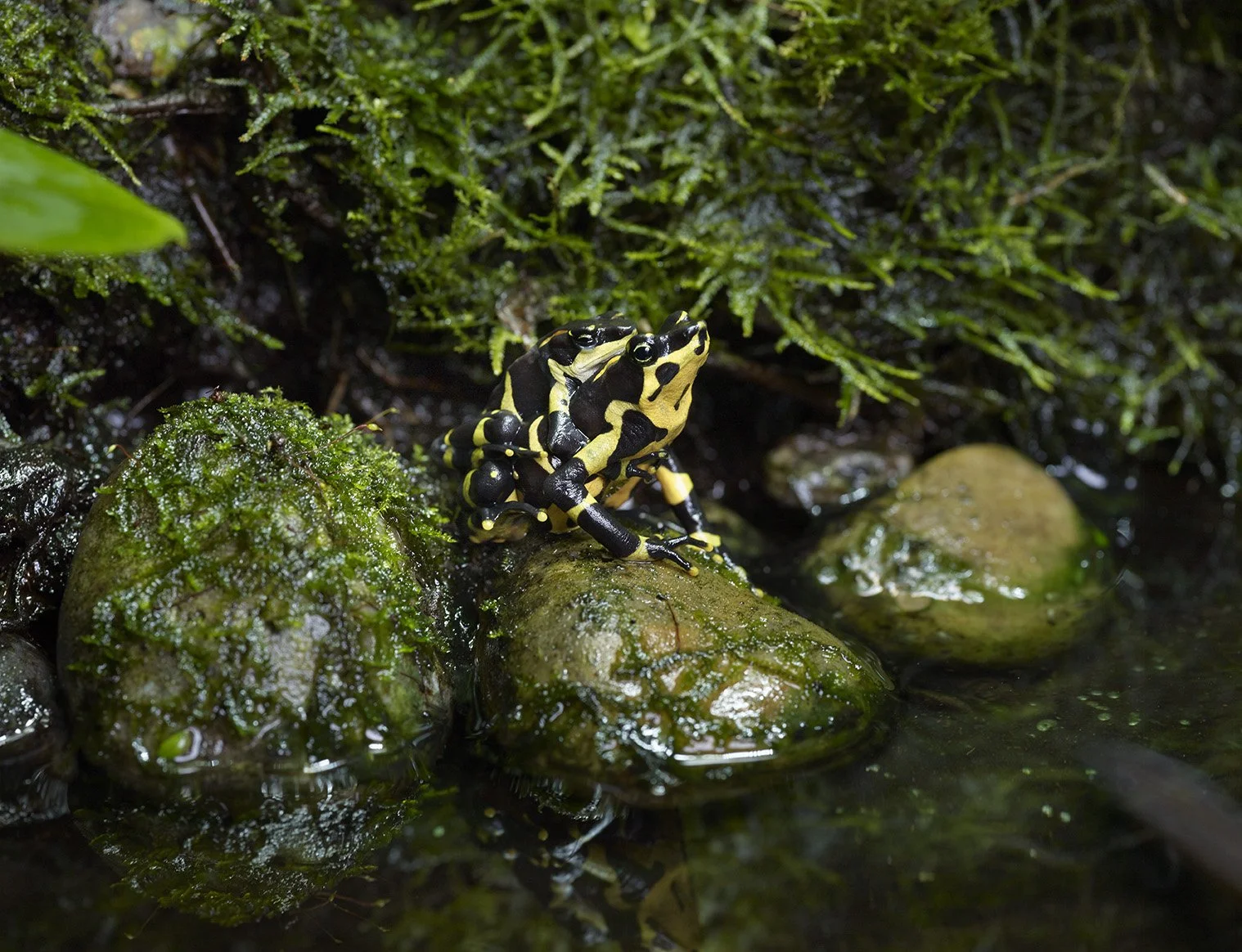
HARLEQUIN TOADS, IN AMPLEXUS WITHIN THEIR ENCLOSURE IN THE VIVARIUM.
It is unusual for a museum to care for live animals, but Manchester Museum has done so for 60 years, offering a unique opportunity to see rare and beautiful creatures and watch conservation in action. The collection of amphibians and reptiles housed here includes some critically-endangered species.
Did you know that The Vivarium is the only place outside the Americas where you can find the Variable harlequin toad, also known as Atelopus varius. Numbers of this tiny amphibian have declined drastically in recent years but your Museum houses the world’s only captive ‘back-up’ population, thanks to a successful breeding programme.
This programme will help to secure the future of a species that could have disappeared entirely and results from years of hard work and collaboration between Manchester Museum, Panama Wildlife Conservation Charity (PWCC) and the Faculty of Medicine, Biology and Health at the University of Manchester.
If you cast a close eye at the displays in The Vivarium, you’ll see the team have recreated the exact conditions of the variable harlequin toad’s habitat in Panama, providing precise temperatures and lighting and mimicking turbulent tropical streams with boulders and rocks to encourage egg-laying. In 2021, in a moment of triumph, the team found a cluster of white eggs among the rocks in the tank.
But this is one of many success stories resulting from the work done by The Vivarium in collaboration with researchers both at The University of Manchester and across the world. More recently, a collaboration with Derek Gow Consultancy (DGC) and Keep It Wild saw hundreds of captive-bred glow worms reintroduced to a site at at Coombeshead, Devon.
Take a quick look at The Vivarium
Stories from the gallery
Giant green anoles (Anolis biporcatus)
Curator of Herpetology, Matthew O’Donnell, talks about the success of your Museum’s anole breeding programme and the joy in seeing young visitors play ‘spot the anole’.
Golden mantella (Mantella aurantiaca)
Curatorial Assistant Sam Hurley talks about the amazing Golden mantella frogs being bred in the Vivarium.
Lemur leaf frog (Agalychnis lemur)
Curator of Herpetology, Matthew O’Donnell, introduces the Lemur leaf frog and talks about the breeding programme, which is vital to the future of the species.
Glow worm (Lampyris noctiluca)
Pete Cooper, from Derek Gow Consultancy, and Bethany Dean, Curatorial Assistant in the Vivarium, talk about the captive breeding programme that saw glow worms reintroduced into the wild in Devon.
Gallery highlights
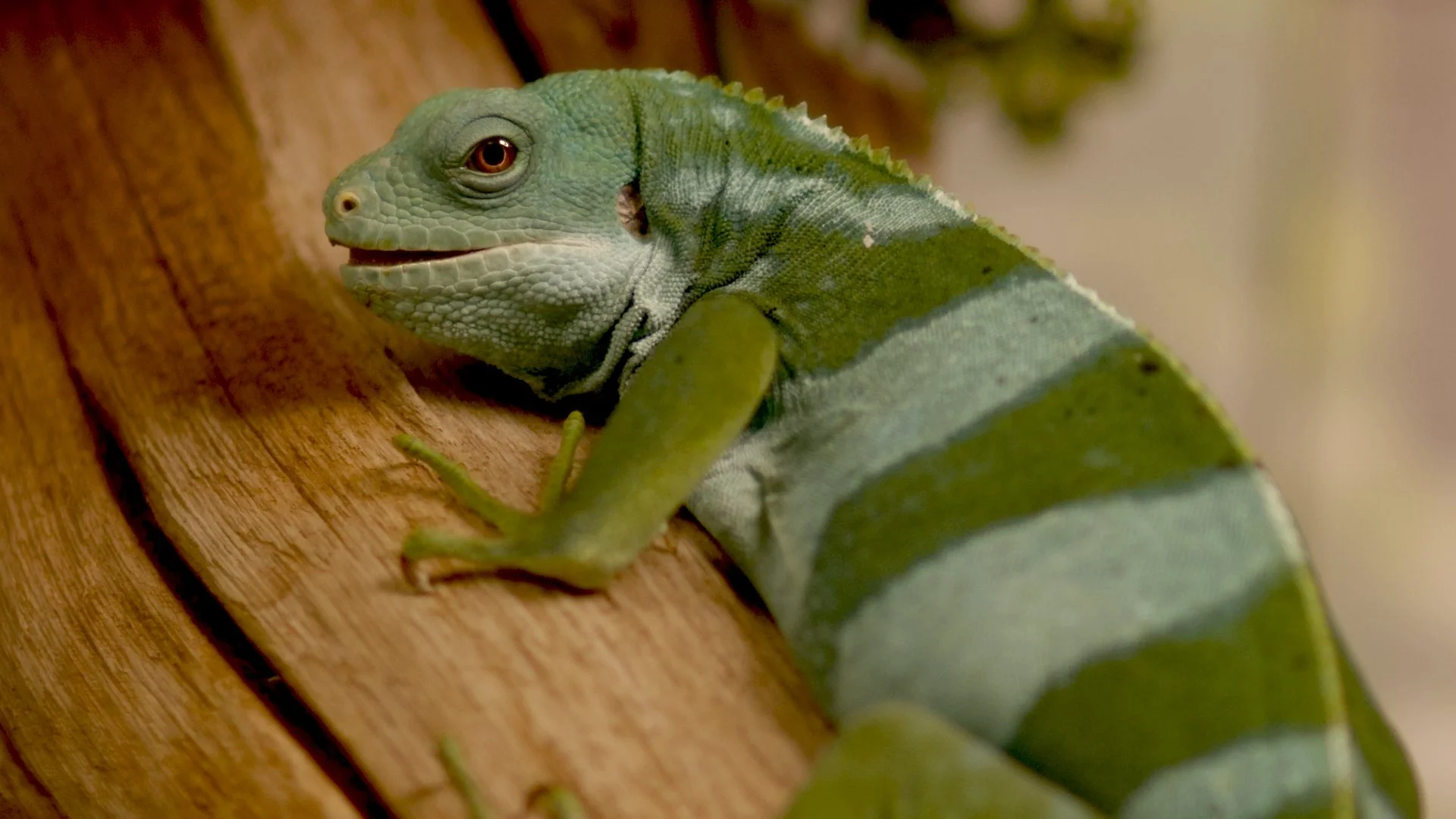
Fiji banded iguana (Brachylophus fasciatus)
This striking iguana from Fiji is part of conservation and research efforts at Manchester Museum, highlighting its threatened status, unique behaviour, and the importance of protecting Pacific island habitats.
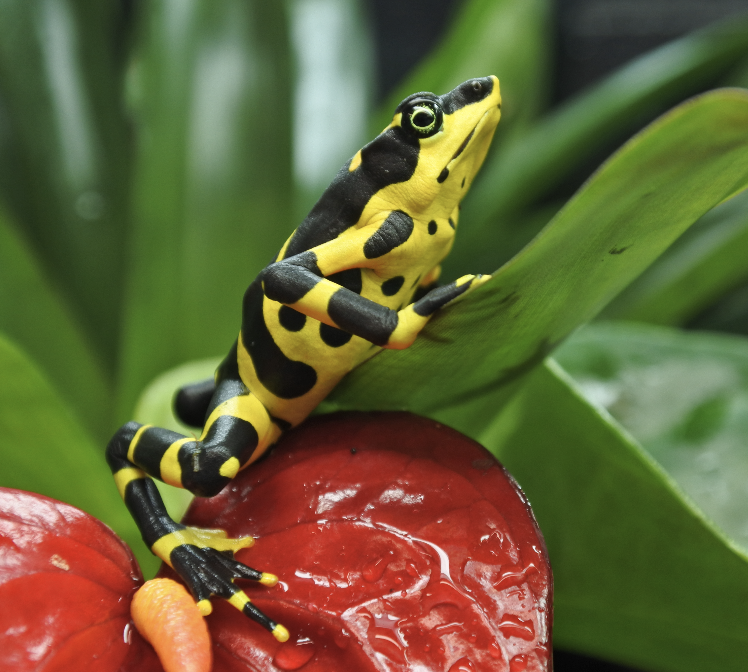
Variable harlequin toad (Atelopus varius)
This critically-endangered toad has been successfully bred in captivity at Manchester Museum, outside its native range. The Vivarium exhibit showcases its habitat and highlights the importance of amphibian conservation.
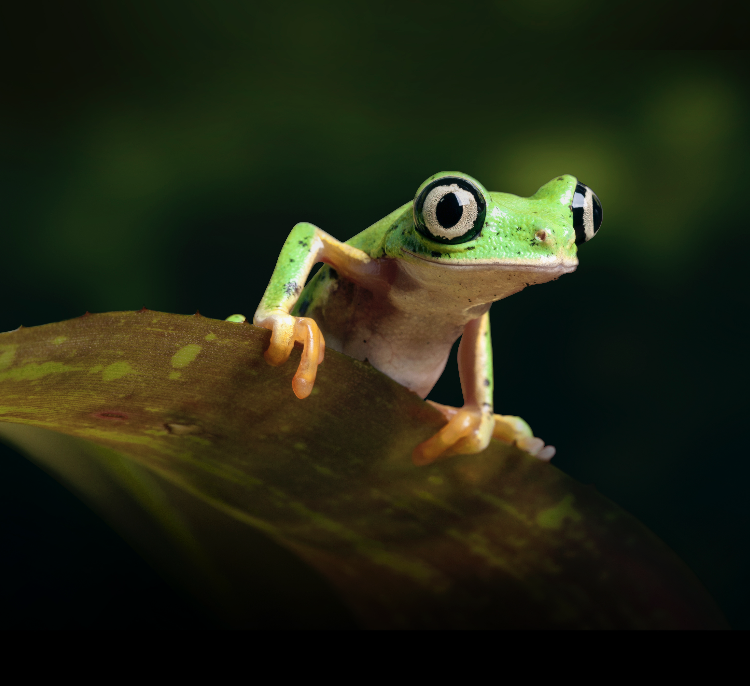
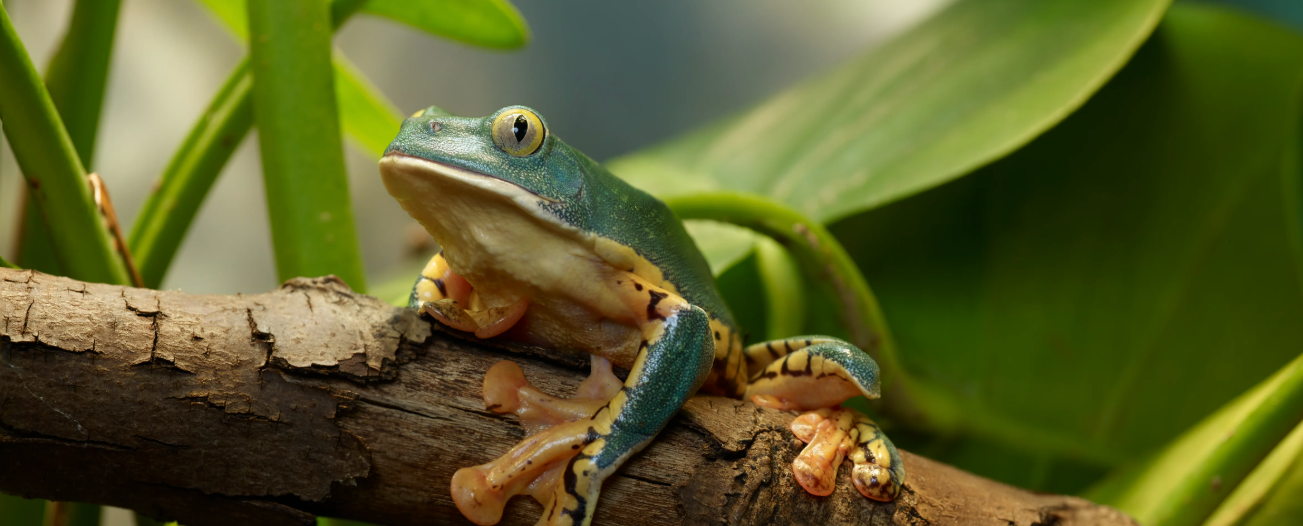
Lemur leaf frog (Agalychnis lemur)
This colourful tree frog from Central America is part of conservation and research work at Manchester Museum, highlighting the importance of protecting rainforest habitats and studying its ecology and behaviour.
The Frog Blog