
GALLERY | FLOOR 1
South Asia Gallery
A place for emotional connections and new perspectives, where lived experiences and collections come together.
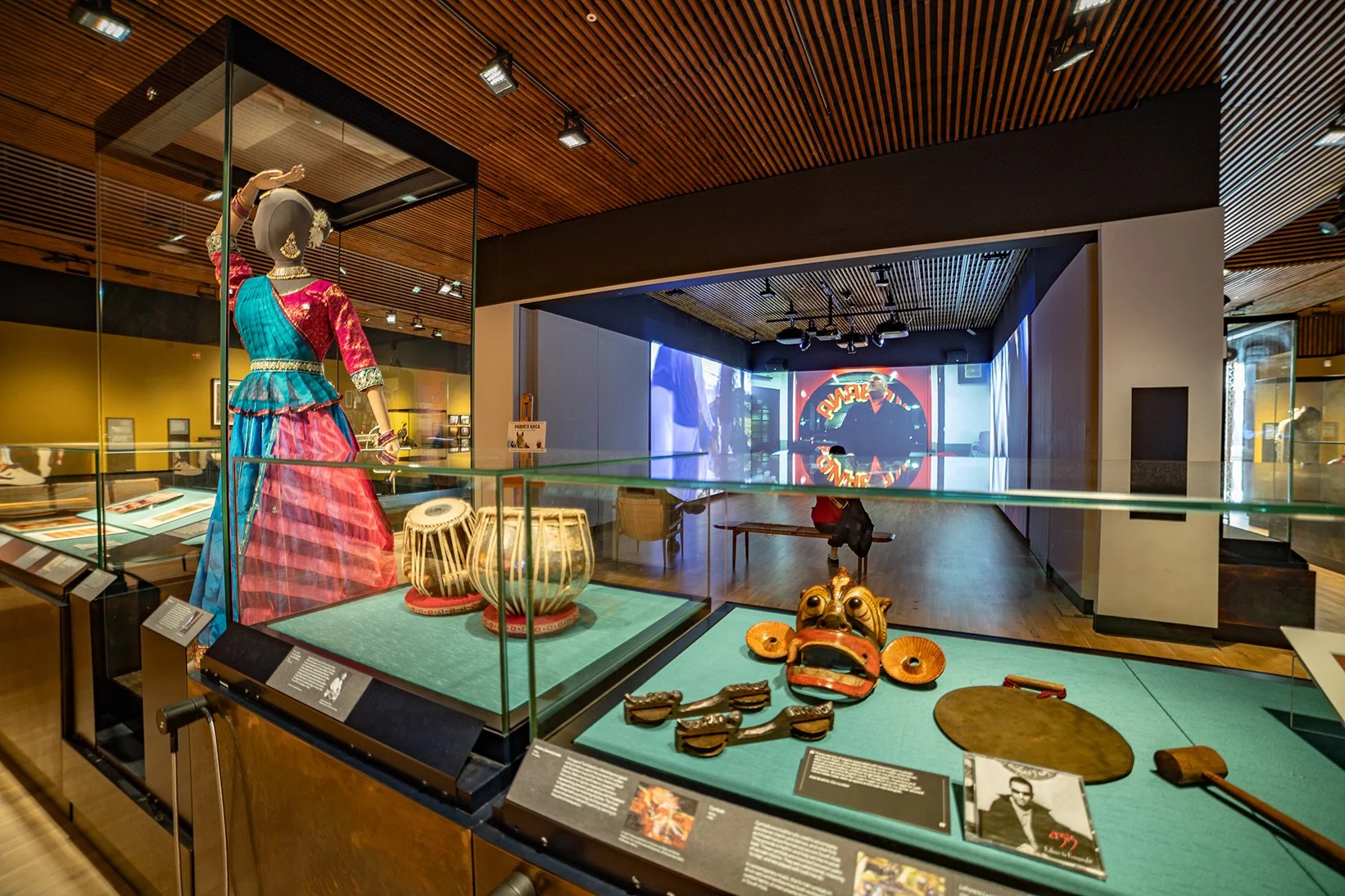
The South Asia Gallery, a British Museum partnership, presents a compelling, contemporary take on South Asian and British Asian culture. It is the first permanent gallery in the UK to celebrate the experiences and contribution of the South Asian diaspora, and it displays world-class material from the British Museum alongside the best of South Asian collections in Manchester.
Most importantly, this multilingual gallery was designed and built with members of the communities it represents, in the form of the South Asia Gallery Collective. It offered a chance for them to tell their stories, in their words and on their terms, capturing a unique spirit of collaboration and co-curation.
The gallery’s story-led design reflects multiple voices and perspectives on South Asia through six overarching themes: Past & Present, Lived Environments, Science & Innovation, Sound, Music & Dance, British Asian and Movement & Empire.
The South Asia Gallery was generously supported by UK Government through DCMS and Arts Council England, The National Lottery Heritage Fund, Simon and Shalni Arora, ZVM Rangoonwala Foundation, and Ashok and Anna Kallumpram (Premier Textiles Ltd).
AN INTRODUCTION TO THE SOUTH ASIA GALLERY, WITH NUSRAT AHMED, LEAD CURATOR OF THE SOUTH ASIA GALLERY.
Take a quick look at the South Asia Gallery
SOUTH ASIA GALLERY COLLECTIVE
The South Asia Gallery Collective is an inspiring group of 30 individuals from across the South Asian diaspora in the north of England, including community leaders, educators, artists, historians, journalists, scientists, musicians, students and others. They came together through a common desire to share their lived experiences and stories they are passionate about. The gallery contains many of their own, personal objects and it is their input that ensures the South Asia Gallery is, at its core, humanistic.
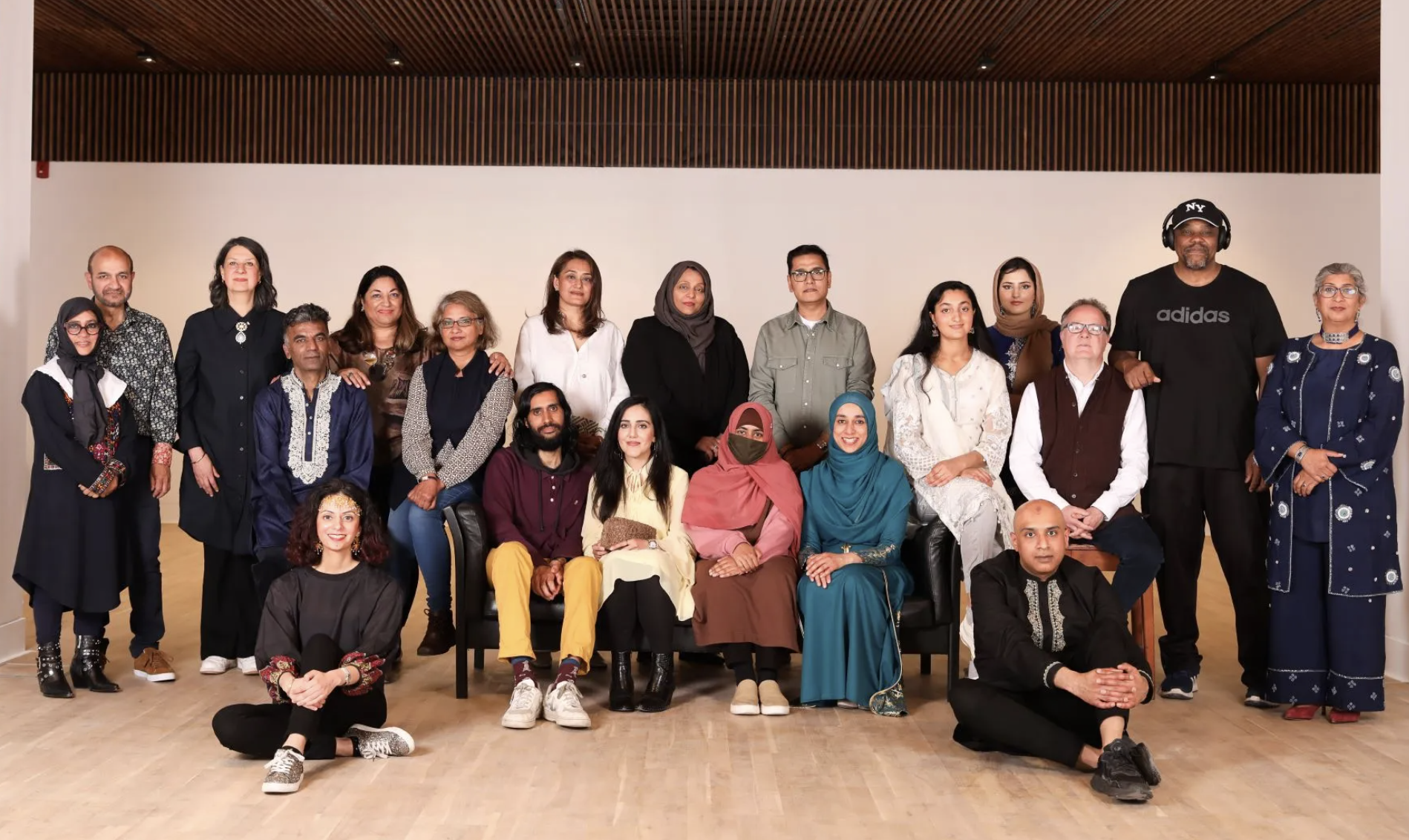
MEMBERS OF THE SOUTH ASIA GALLERY COLLECTIVE.
Stories from the gallery
Curator tour
Join Nusrat Ahmed, Lead Curator of the South Asia Gallery, on an in-depth tour of the award-winning gallery, to find out more about some of its incredible stories.
I Beg You to Define Me
Artist Azraa Motala explains her stunning self-portrait I Beg You to Define Me, which is one of the most striking objects on display in the South Asia Gallery.
Khawaab Mahal
Khawaab Mahal (Dream Palace) was an installation in the South Asia Gallery Project Space that invited you to step inside the world of Tipu Sultan, the legendary 18th-century ruler of the Kingdom of Mysore in South India, to experience his dreams and witness a conversation across time. The installation reimagines Tipu Sultan’s tent, which was looted by Clive of India’s son Edward Clive, after Tipu died in battle.
Qur’an cube
Maya, from your Museum’s Visitor Team, shares the heartbreaking story of Furqan Ali Siddiqui, a doctor who came to Manchester from Pakistan and tragically passed away while working on the Covid response in 2020. His family kindly allowed us to display his Qur’an cube in the gallery in order to tell his important story.
Gallery highlights
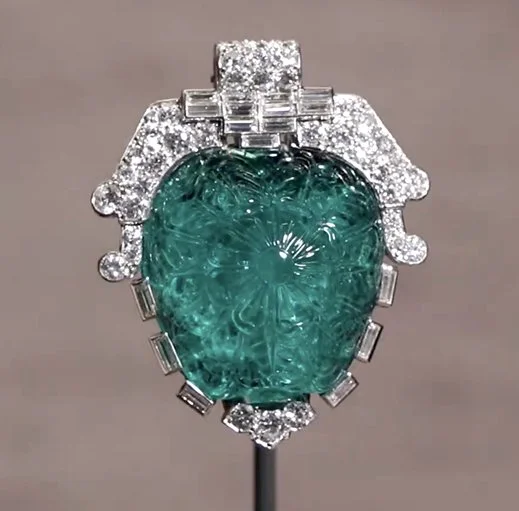
Cartier brooch
This 1930s brooch, on loan from the British Museum, features a dazzling emerald at its centre. The floral carvings on the stone indicate its from the Mughal period (late 17th to early 18th century), indicating that it had a story long before it became part of the brooch. This object aims to raise questions around ownership and the ways in which museums traditionally accumulated collections.
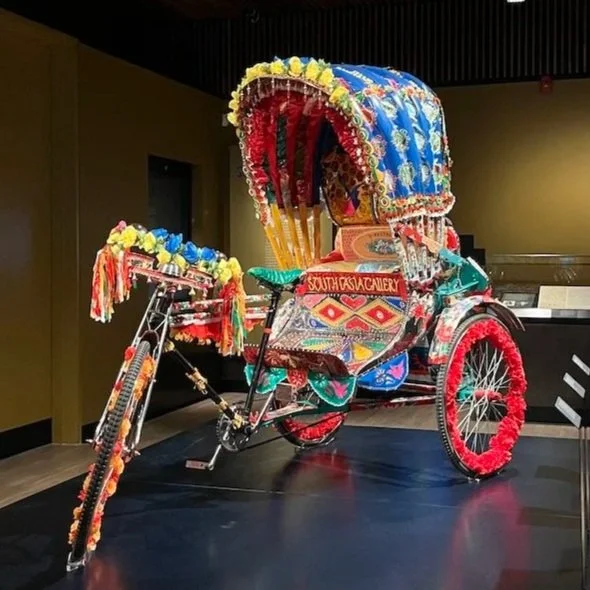
Rickshaw
Made in Dhaka, Bangladesh, this rickshaw is one of two commissioned by Manchester Museum. Three British Asian artists, Daya Bhati, Sahena Shabnun and Helen Abdul, decorated the vehicle under the mentorship of Bangladeshi rickshaw artists Syed Ahamed Hossan and Z.A. Saleh Zebermai. Rickshaws are a major form of transport in many countries in Asia, and are often brightly decorated like this.
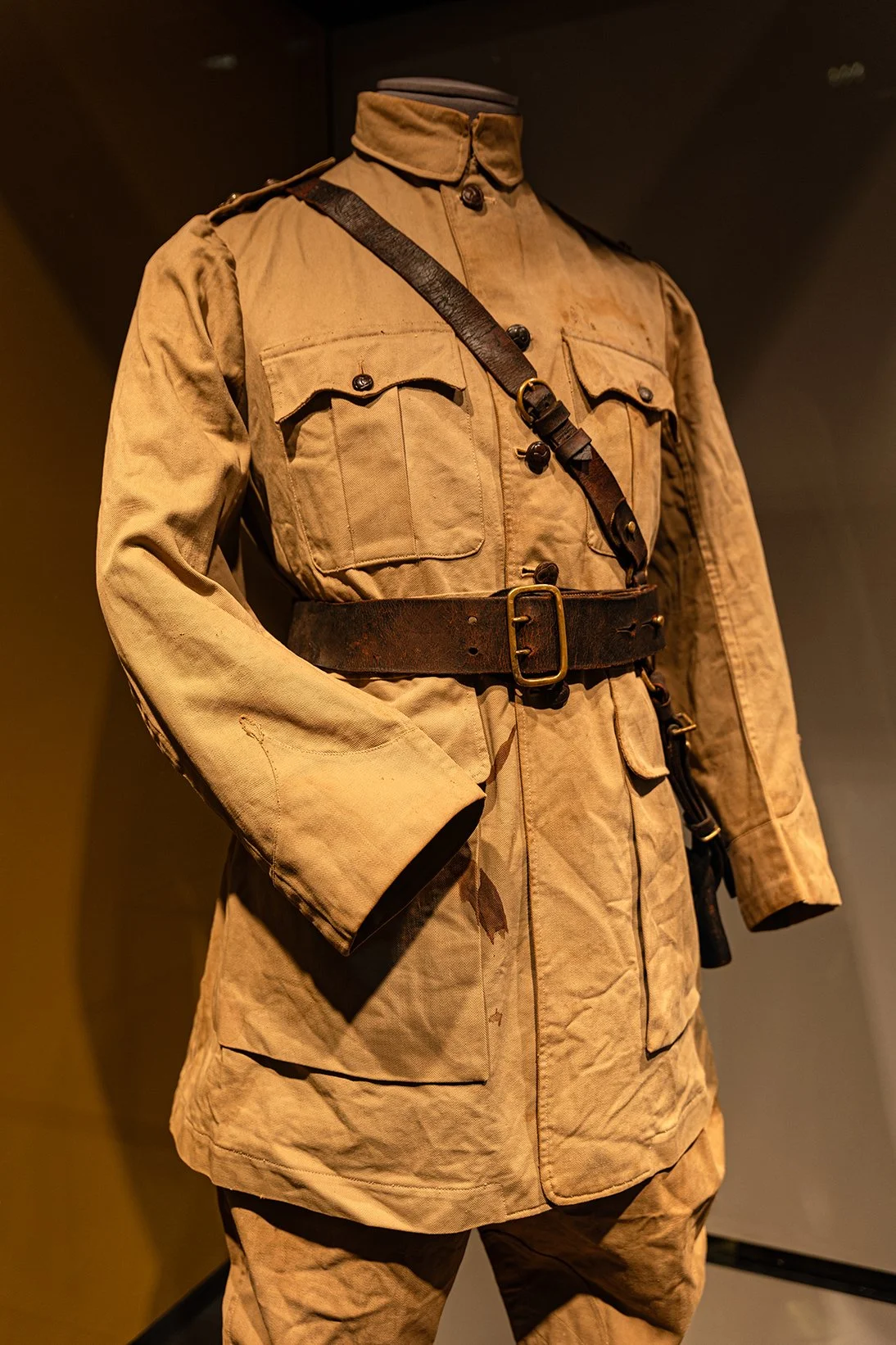
World War I uniform
This uniform was generously provided by Talat-Farooq Awan and belonged to his great-grandfather Subedar Mohammed Ali. He found it on a visit to his father’s village in Pakistan, crumpled, smudged and worn but otherwise well preserved as a reminder of the soldiers from Britain’s colonies who fought in Europe’s major 20th-century conflicts.