
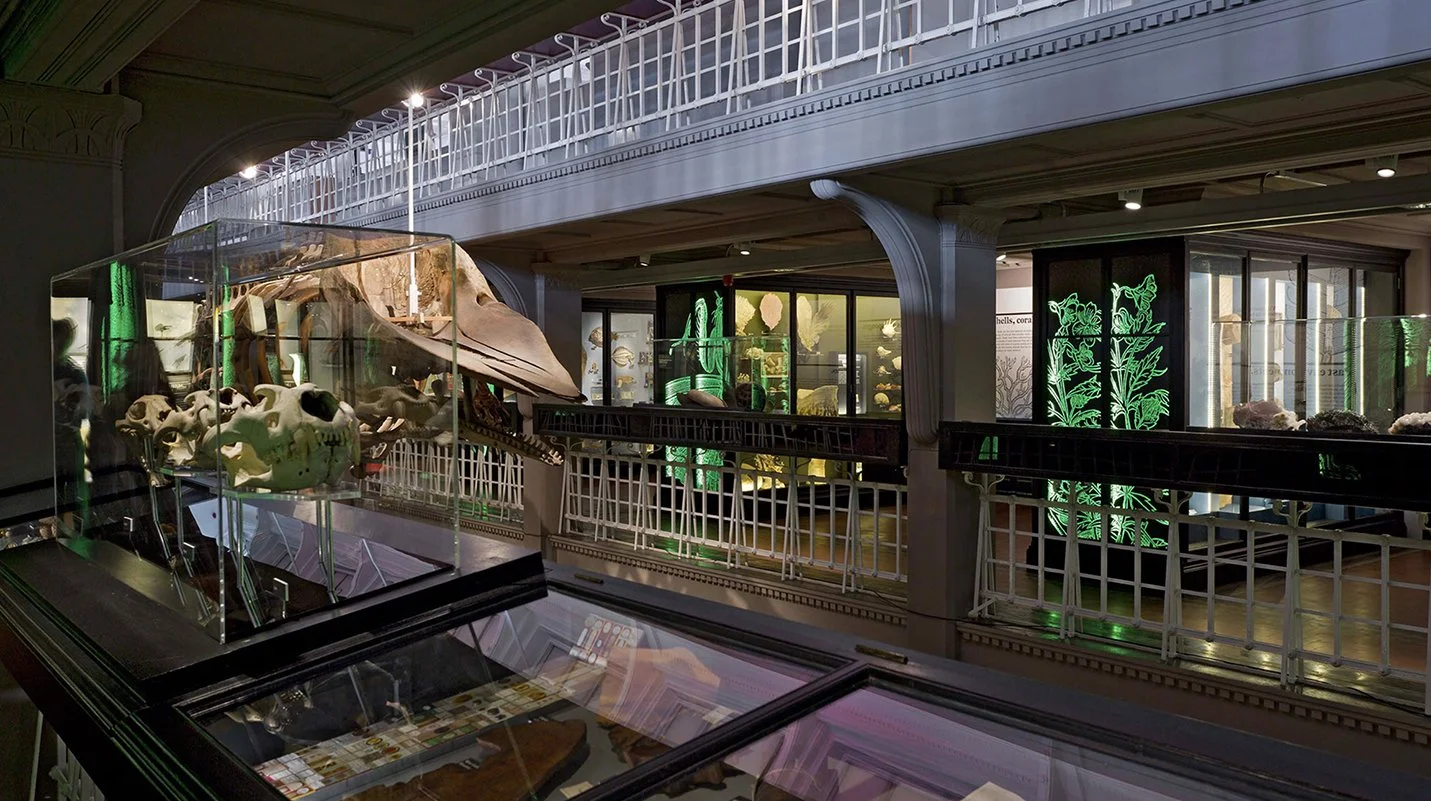
GALLERY | FLOOR 2
Nature’s Library
Discovering the diversity of life on Earth .
Nature’s Library showcases the remarkable collections that have helped scientists and naturalists understand the living world for more than a century. From rare plants and insects to minerals and fossils, the gallery reveals how Manchester Museum’s natural history collections continue to inform research, education and our understanding of biodiversity.
Here, visitors can explore how specimens are collected, cared for, and studied, and how they help us answer vital questions about evolution, climate change, and conservation. Together with the Living Worlds Gallery, Nature’s Library celebrates the beauty and complexity of life on Earth, inspiring wonder and stewardship for the natural world.
Take a quick look at Nature’s Library
Gallery highlights
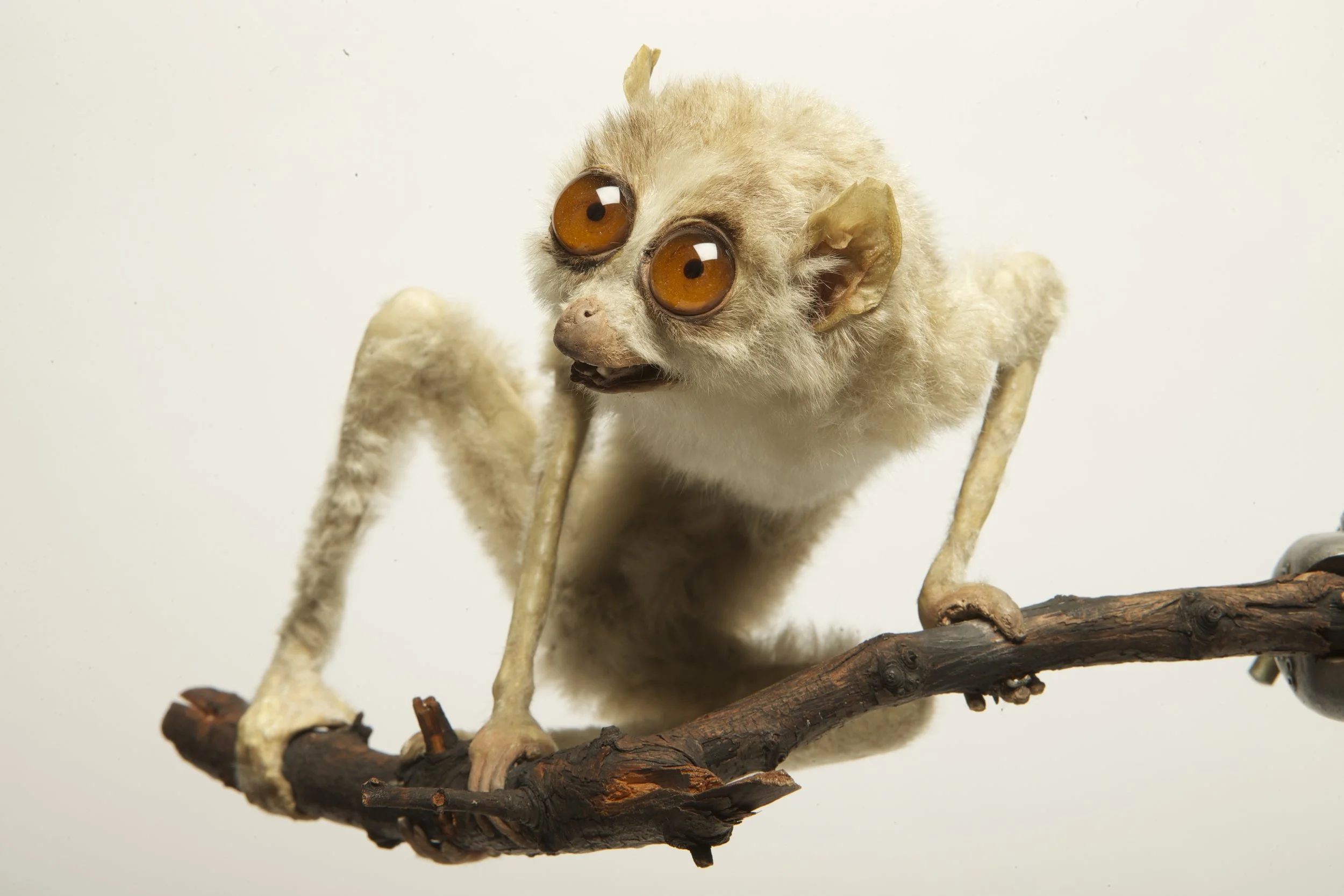
Red slender loris (Loris tardigradus)
This small, slender primate is distinguished by large forward-facing eyes used for precise depth perception, long slender limbs, a well-developed index finger, the absence of tail, and large prominent ears, which are thin, rounded and hairless at the edges.
Emperor penguin (Aptenodytes forsteri)
The tallest and heaviest of the 18 penguin species found today. Wild Emperor penguins are only found in Antarctica and they spend their entire lives in and around the Antarctic ice. They breed and raise their young mostly on ‘fast ice’, a floating platform of frozen ocean which is connected to the land or to ice shelves.