
GALLERY | FLOOR 1
Living Worlds
Exploring nature and people’s relationships with nature.
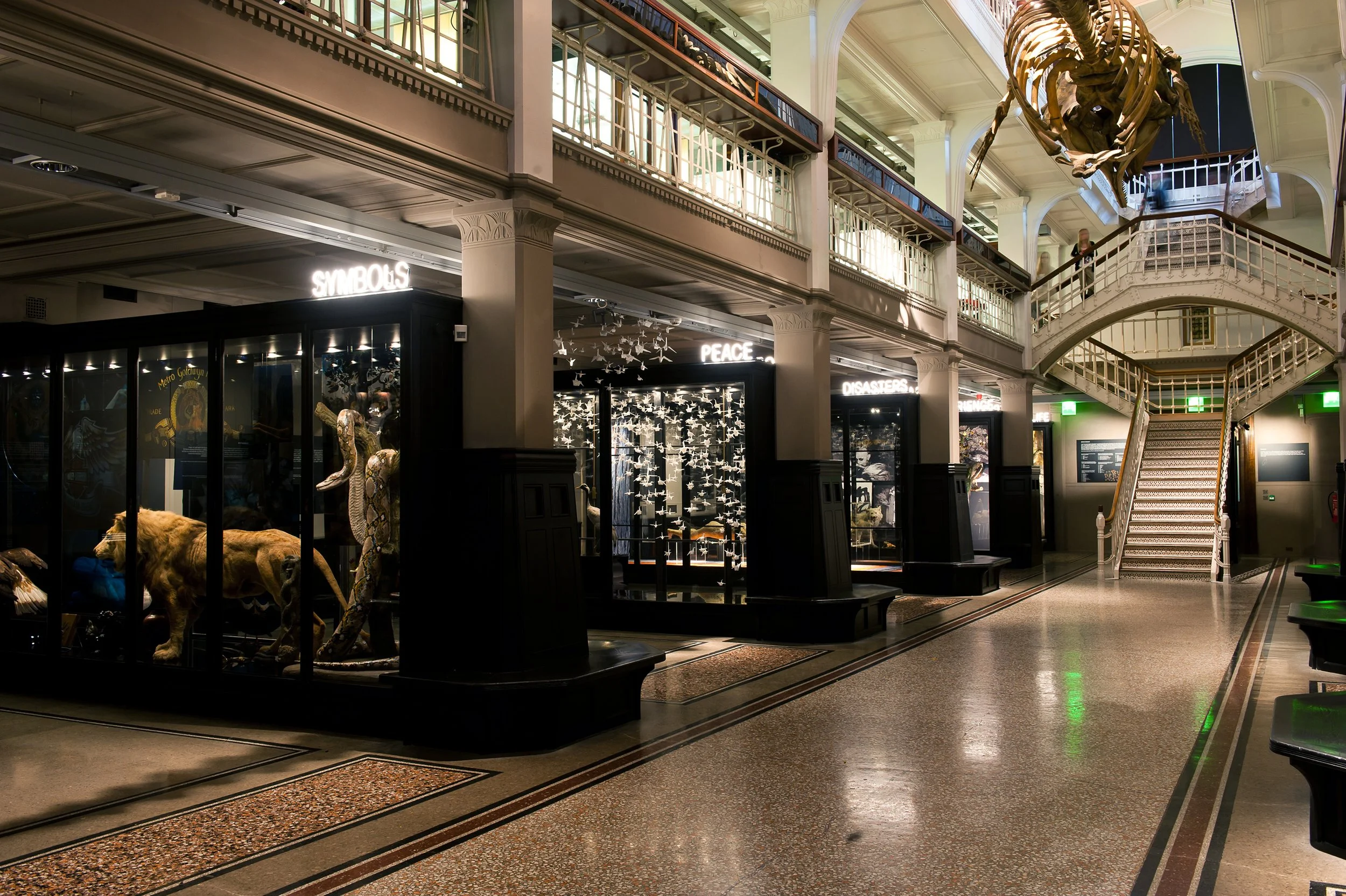
Living Worlds celebrates the dynamic connections between people and the natural world. The gallery brings together specimens from zoology, entomology, botany and earth sciences to explore how humans experience, depend on and impact nature.
From the skeleton of a sperm whale that has watched over the space for more than 130 years to displays that encourage reflection and action, Living Worlds invites visitors to discover the incredible diversity of life on Earth and to consider their own place within it.
Opened in May 2011, Living Worlds transformed the former Mammal Gallery into a space designed to inspire care and curiosity about the environment. The gallery concept drew on the work of the late Stephen Kellert of Yale University, the Five Ways to Wellbeing, and ideas that promote connection, empowerment, and sustainability. It was designed by villa eugénie, a Brussels-based creative studio, as their first museum gallery project.
Take a quick look at Living Worlds
Stories from the gallery
Henry Dresser’s A History of the Birds of Europe
Find out how Manchester Museum and The John Rylands Library, both part of The University of Manchester, worked together to acquire Henry Dresser’s personal copy of his anthology A History of the Birds of Europe, ensuring this invaluable resource remains in the UK for future generations. The acquisition of this ‘national treasure’ was made possible with support from The University of Manchester, Art Fund, with a contribution from the Wolfson Foundation, the Arts Council England/V&A Purchase Grant Fund and Friends of the Nations’ Libraries.
Gallery highlights
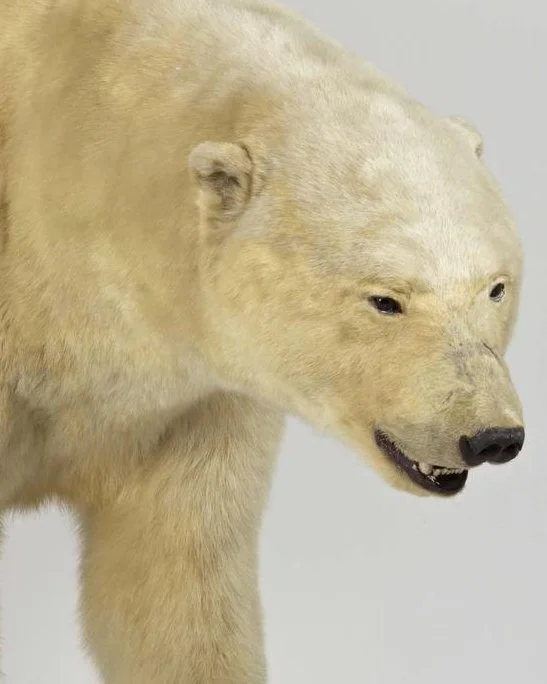
Polar bear
Polar bears are the largest land carnivore on Earth. They can weigh up to 700kg and be up to 3m long. They are found around the North Pole, and spend most of their year on floating icebergs to hunt seals.
As sea temperatures rise and the ice in the polar regions begins to melt, polar bears are dying of starvation because they cannot hunt, or being pushed towards human settlements in search of food. Find it in the Connect case.
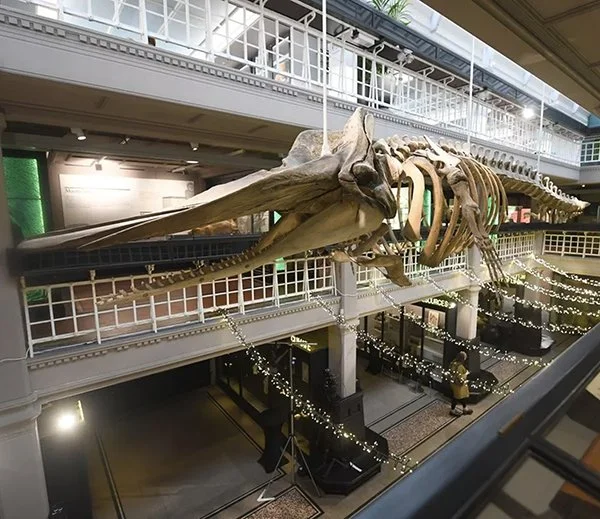
Sperm whale skeleton
When the Living Worlds Gallery was originally built, the architects were instructed to design it so that it was ‘as tall as a giraffe and as long as a whale’, and with good reason! This Sperm Whale skeleton, stranded in Massachusetts in 1896, has amazed Manchester visitors since 1898, revealing the immense scale, deep-diving power and remarkable lives of these extraordinary ocean giants.
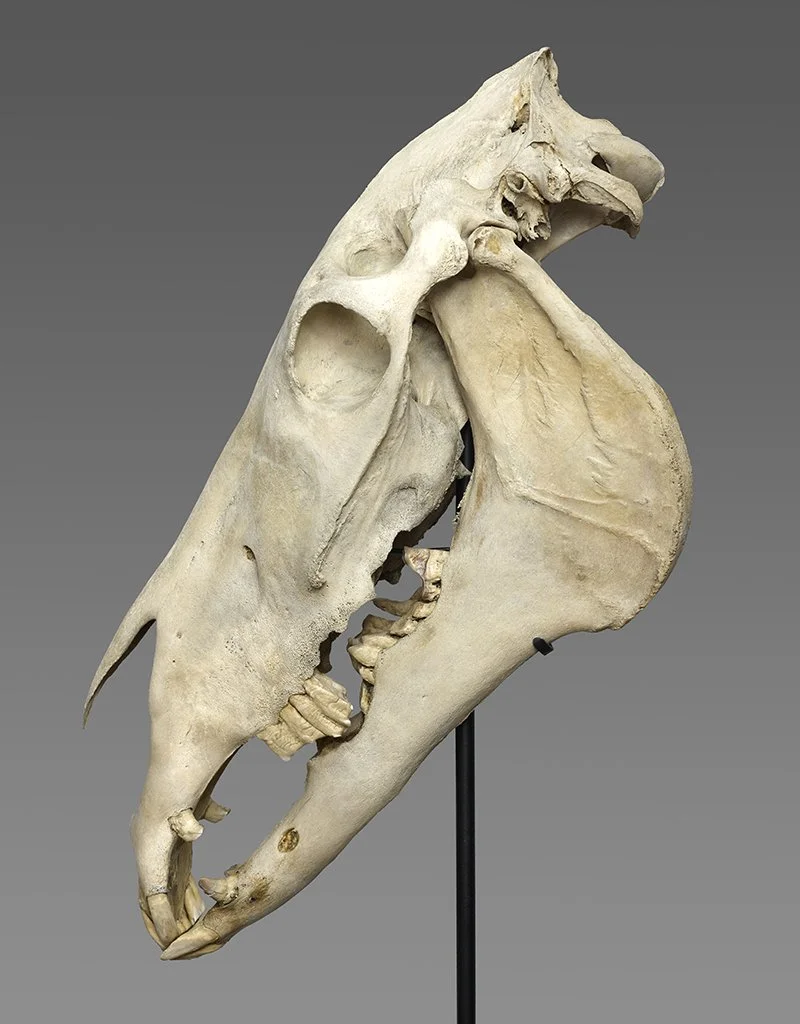
Old Billy
Born in 1760 near Warrington, Old Billy became the world’s oldest horse, living until 1822. He worked for the Mersey and Irwell Navigation Company for many years before retiring to the banks of the River Mersey. Charles Towne painted 'Old Billy' on 11 June 1822, only a few months before the horse died. Find this story in the Old Billy case.