
EXHIBITION ARCHIVE / Jallianwala Bagh 1919: Punjab under Siege
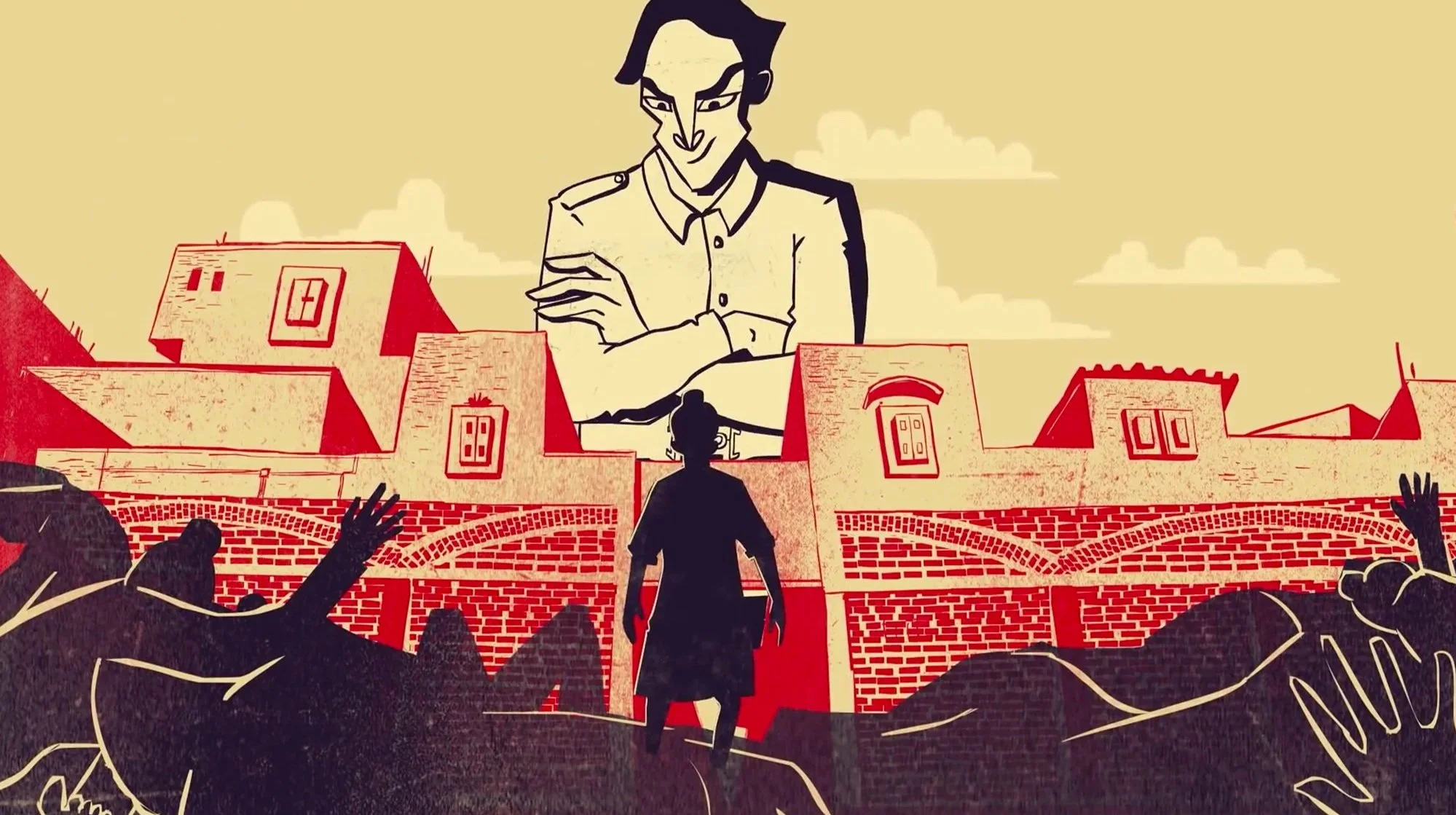
Jallianwala Bagh 1919: Punjab under Siege
6 April – 2 October 2019
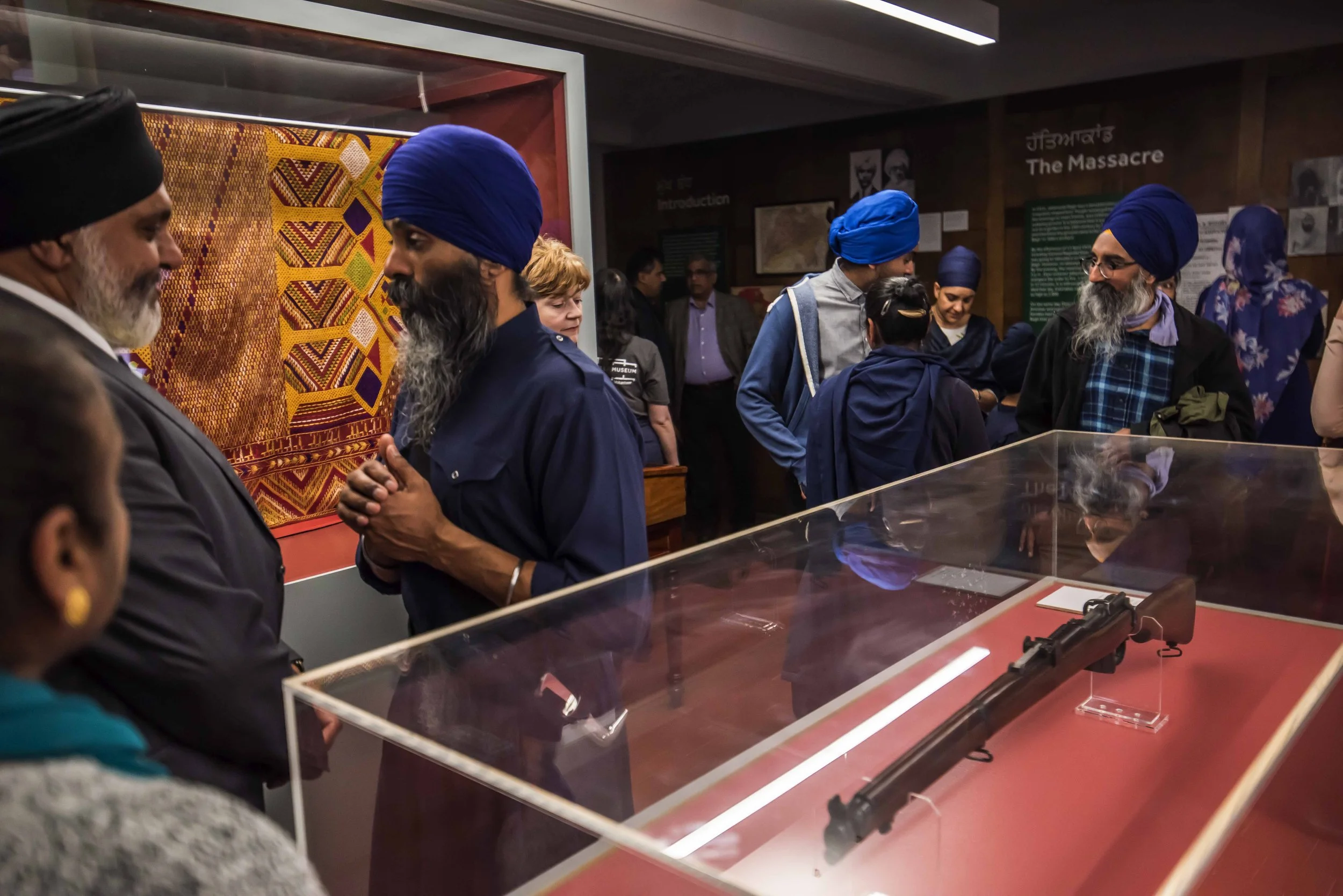
Manchester Museum came together with the Partition Museum in Amritsar, India, to commemorate 100 years since the Jallianwala Bagh Massacre.
For the first time in Indo-UK history, two Museums located in cities deeply affected by colonialism, Amritsar and Manchester, came together to reexamine the brutal massacre that eventually brought about the end of the British empire.
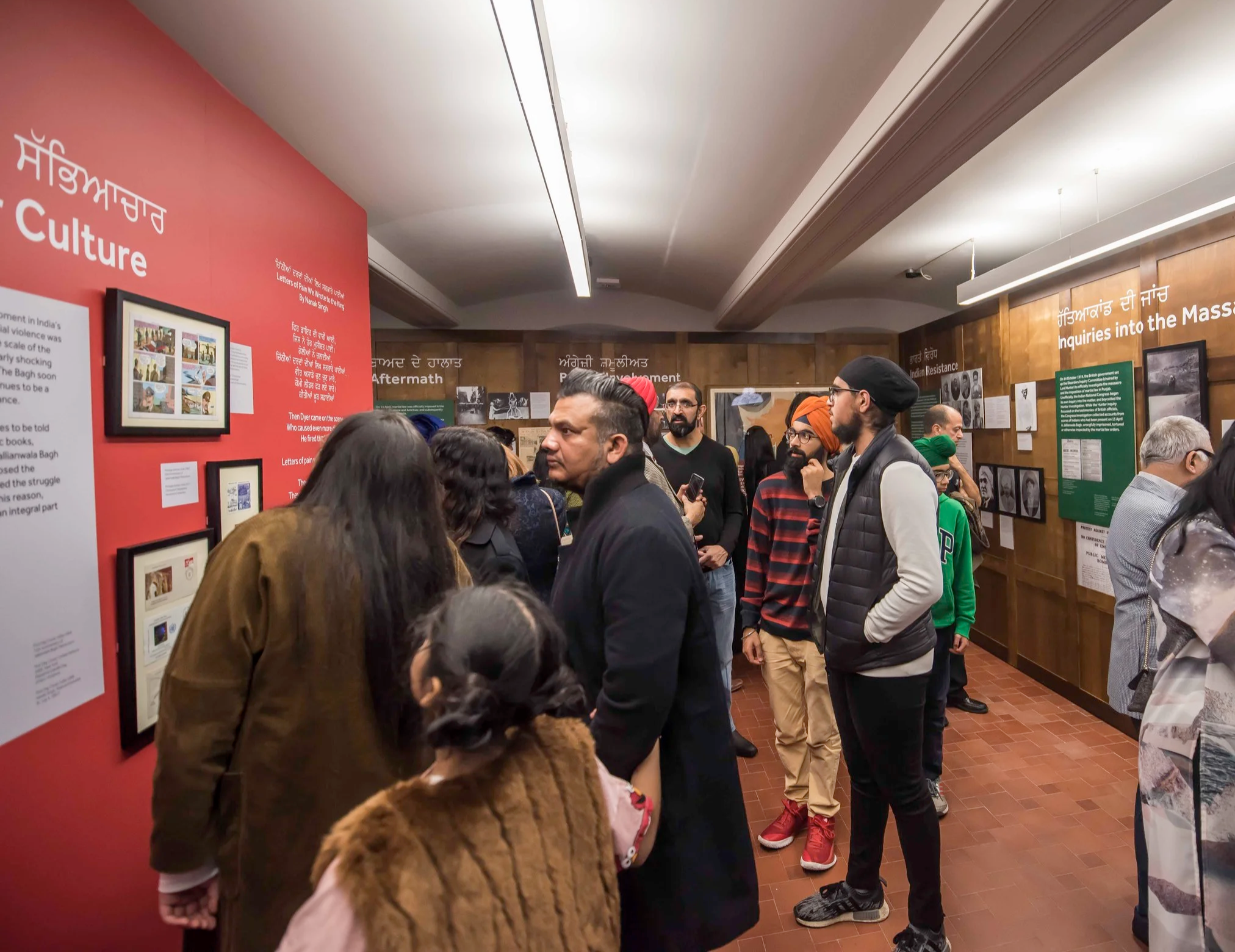
The co-curated exhibition Jallianwala Bagh 1919: Punjab under Siege coincided with the centenary of the Jallianwala Bagh massacre in April 2019, and the bicentenary commemorations for the Peterloo massacre.
The exhibition explored what we remember, how we remember it, and what we have forgotten, both in India and the UK. Jallianwala Bagh 1919: Punjab Under Siege looked at the causes of the unrest before, during and after the events of 13 April 1919 when British troops opened fire on Indian protesters.
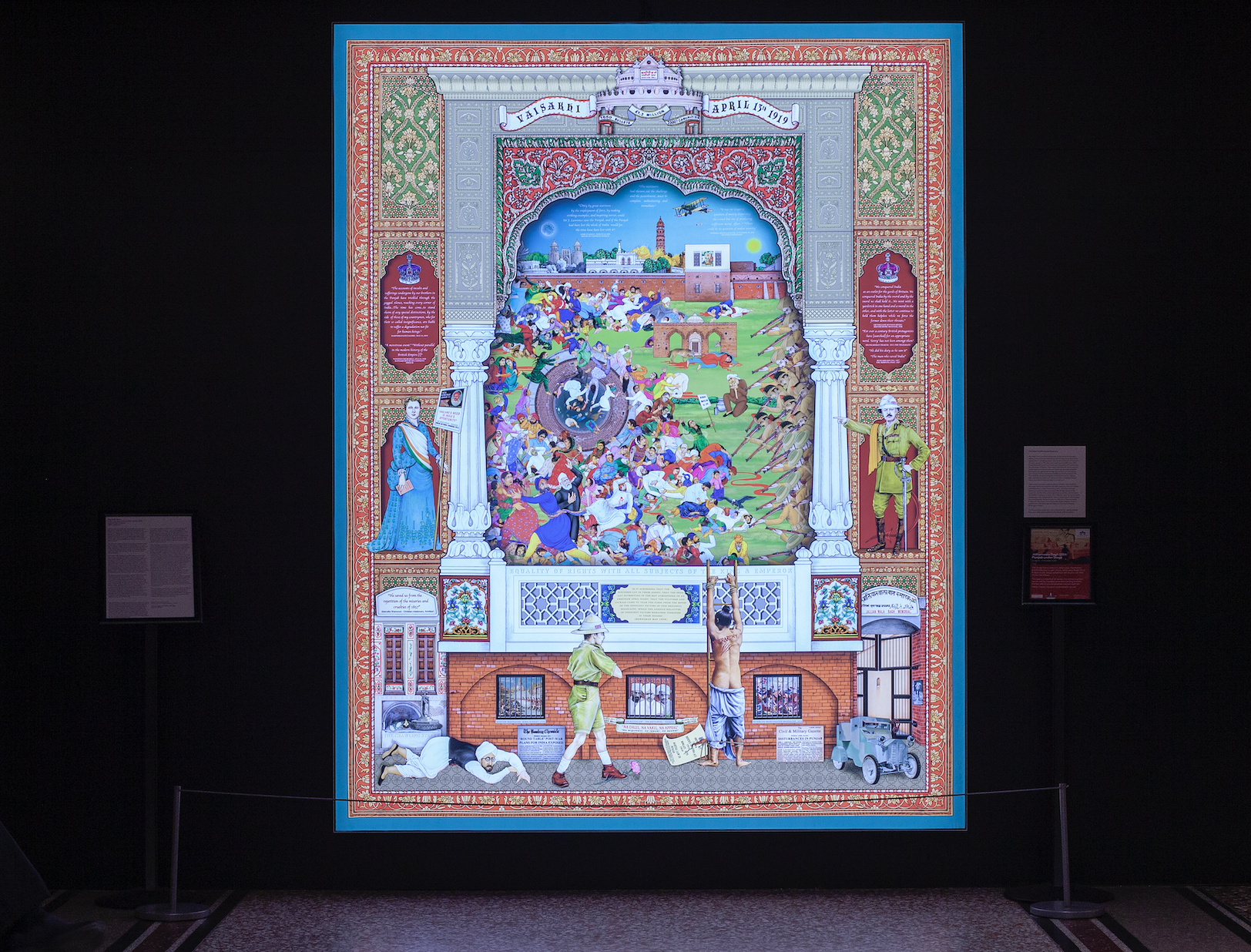
The Singh Twins, Jallianwala: Repression and Retribution 2019 Digital mixed medium
The exhibition also featured artwork commemorating the 100th anniversary of the Jallianwalla Bagh massacre by Internationally renowned, contemporary, artists, The Singh Twins, whose award winning work explores important issues of social political and cultural debate.
The artwork comprised of three panels; the left provides historical context highlighting the oppression of India under the British Empire and Raj, the centre focuses on the massacre itself and how it divided opinion in India and Britain. The right panel explores the impact and legacies of Jallianwala, referencing India's freedom struggle.
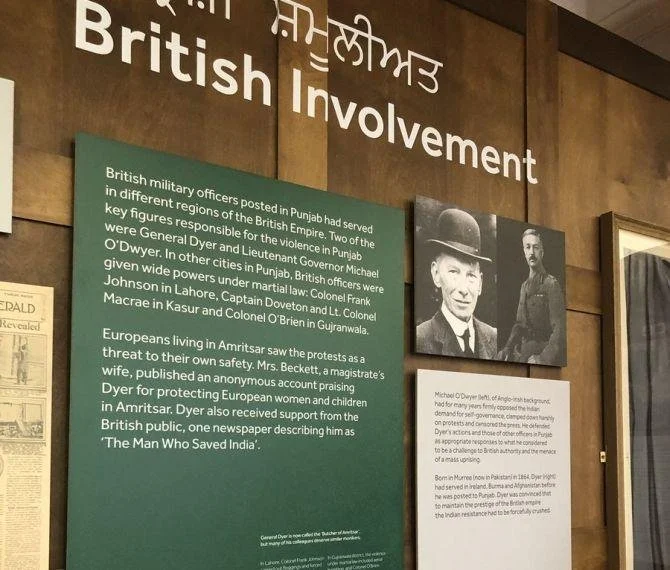
IMAGE: Courtesy @cladle/Twitter